






The group stage is over. Every team has played their three matches, every upset has happened, every star has either delivered or disappointed, and the 48-nation field has been trimmed to 32 teams entering the knockout rounds. We now know exactly who is in this tournament, how they are playing, and what the road to MetLife Stadium looks like for each of the genuine contenders.
Which means there has never been a better moment to ask the question that every football fan in the world is arguing about right now: who is actually going to win the 2026 FIFA World Cup?
This is not a pre-tournament prediction based on squad lists and hopeful projections. This is a verdict based on what we have actually seen — the group stage performances, the form of key players, the injuries sustained, the tactical decisions that have worked and those that have not, and the specific path each team now faces through five knockout matches before the trophy is lifted in New Jersey on July 19.
Here is the full picture.
The Live Odds — What the Market Is Saying Right Now
Before any analysis, the numbers. These are the current outright World Cup winner odds as of June 28, 2026, as the Round of 32 begins:
France: +350 to +413 (FanDuel / Kalshi) Argentina: +430 to +344 (FanDuel / Kalshi) Spain: +550 to +851 (FanDuel / Kalshi) England: +700 to +750 Brazil: +1200 to +1600 Portugal: +1300 Netherlands: +1500 Belgium: +6500
The market has made its position clear: this is a two-team race between France and Argentina, with Spain and England as legitimate secondary contenders and everyone else operating at a significant distance. The gap between England at +750 and Portugal at +1300 is large enough to represent a genuinely different tier of probability.
Both France and Argentina came through the group stage with three wins each — a perfect group stage record that no other team in the tournament matched. That shared excellence is the primary reason they sit at the top of the market. But the stories behind those perfect records are very different, and the differences matter enormously for what comes next.
France — Why the Favorites Are Deserving Their Status
Let’s start with the team that every serious analyst, every betting market, and every tournament simulation currently places at the top: France.
France won all three group stage matches — a 3-1 win over Senegal, a dominant 3-0 win over Iraq, and then a 4-1 victory over Norway to clinch Group I and confirm their place as the strongest team in the group stage by any measurable standard. Three wins. Ten goals scored. Two conceded. A goal difference of plus-eight that is the best of any team entering the knockout rounds.
But the statistics only partially explain why France looks so convincing right now. The deeper story is about how they have won those matches. France has not just beaten three opponents — they have controlled three opponents. Their pressing intensity, led by Mbappé from the front, disrupts opposition build-up before it can develop into something dangerous. Their midfield — Adrien Rabiot setting the tempo, with attacking support from the wide forwards — gives them control in phases of the game where other teams simply cannot compete. And their defensive structure, built around Lucas Hernández and Ibrahima Konaté in central defense, has given away very little space behind the press.
France are the betting favorites at +413 to win the 2026 World Cup, with an implied probability of around 21% — meaning the market believes that roughly one-in-five outcomes across the remaining five knockout matches ends with France lifting the trophy. That is exactly what you would expect from the best team in the field when there are still 32 teams competing.
Kylian Mbappé is the individual reason France are favorites, and he has started this tournament in exactly the form that justifies that status. He has goals, he has assists, and most importantly he has the specific quality that only the very best players in major tournaments possess: the ability to create something from nothing in the moments when a match has reached its most difficult point and all the tactical plans have been neutralized. France did not need Mbappé at his absolute best to win every group game. In the knockout rounds, against Argentina or Spain in the semi-final, they might.
France’s Round of 32 match is against Sweden on Tuesday July 1. It is a manageable first test. The path beyond that — likely through the quarter-final and a potential semi-final that most brackets project as a clash with Argentina or Spain — is where this team will prove whether the group stage dominance translates into the kind of knockout football that wins World Cups.
The case for France winning this tournament is built on three pillars: the best forward in world football at the peak of his powers, the deepest squad in the competition, and a head coach in Didier Deschamps who has won a World Cup, reached a final, and managed every pressure situation that international football produces. When you stack those three things together, it is genuinely difficult to build a stronger case for any other team.
Argentina — The Defending Champions, Messi Rewriting History
If France is the team that looks most likely to win based on the group stage, Argentina is the team that looks most capable of stopping them.
Argentina topped the oddsboard alongside France after completing a perfect group stage, sitting at +430 to lift the trophy. And the manner of Argentina’s group stage has been as impressive as France’s, though in a very different way.
Where France have won through system and collective excellence, Argentina have won through the combination of individual brilliance and collective organization that has defined this team since they won the 2022 World Cup. Messi, at 38, is doing things at this World Cup that most 28-year-olds would struggle to produce. His hat-trick against Algeria in the opening game took his career World Cup tally to 16 goals, making him the outright all-time leading scorer in men’s World Cup history. He has followed that with further contributions in the subsequent group games, and Argentina have looked like a team playing with the specific freedom that comes from knowing you have already won this competition and understanding exactly what it takes to do so again.
The squad around Messi is genuinely strong. Julián Álvarez — described by one pre-tournament analysis as “Germany’s Julian Alvarez” before catching himself, noting the Manchester City striker now plays for Atlético Madrid — leads the line with the pressing intensity and clinical finishing that scored four goals at the 2022 World Cup. Emiliano Martínez in goal is arguably the best goalkeeper in this tournament, a player who has proven in the biggest moments that he can win a penalty shootout. The midfield of Alexis Mac Allister and Rodrigo De Paul gives Argentina a physical and technical balance that wears down even excellent opposition over 90 minutes.
Argentina’s Round of 32 match is against Cape Verde on July 3. That is a very manageable assignment for the defending champions. What follows — a likely Round of 16 against Uruguay or Spain’s group runner-up, and potentially a quarter-final against a strong European side — is where Argentina’s resilience and experience will be tested properly.
The specific scenario where Argentina win this World Cup is one that many analysts consider the most emotionally compelling story in the tournament: Messi, in his final competition, leading the defending champions to back-to-back titles that would cement his legacy as the greatest footballer in history beyond any remaining doubt. Football being football, that narrative makes it neither more nor less likely to happen. But the squad quality is there to make it entirely possible.
Spain — The Europeans Who Cannot Be Ignored
Spain went through a shocking 0-0 draw against World Cup debutants Cape Verde in their opening match before responding with a comprehensive 4-0 win over Saudi Arabia. Their third group game against Uruguay was a further test of character, and Spain came through with a result that confirmed their place as Group H winners heading into the knockout rounds.
Spain’s current odds sit at around +550, reflecting their status as the third favorite at Kalshi with an implied probability of around 15%. The market has adjusted from the start of the tournament, when Spain was considered the second favorite behind France, partly because the Cape Verde draw introduced a question mark about their consistency that had not existed before the tournament began.
But here is what the odds do not fully capture: Spain has the most technically gifted squad in this tournament. Their midfield — Rodri, Pedri, Vitinha if you count Portuguese comparisons, and the creative options behind them — is unmatched for quality and variety. And Lamine Yamal, who scored his first World Cup goal against Saudi Arabia and has been building his form and fitness across the group stage, is the kind of player who gets better as tournaments get bigger. The quarter-finals and semi-finals are exactly the stage designed for his talent.
Spain’s knockout path runs through opponents of increasing quality, but the reigning European champions have beaten France and England in successive major tournament knockout matches within the past two years. That experience of winning the most important games in the most pressured conditions is not a small thing.
The case for Spain: they have the best midfield at this tournament, a generational talent in Yamal who is improving with every game, and the specific record of winning when it matters against the teams they will likely face in the knockout rounds. At +550, they represent the most interesting combination of genuine probability and market value of any team in the top tier.
England — 58 Years of Waiting, This Generation’s Best Shot
England dropped slightly from their pre-tournament position, moving to around +750 after their 0-0 draw against Ghana was followed by a final group game that confirmed their progression in second place in Group L. The Ghana draw was the kind of result that drains confidence slightly — a team ranked 64th in the world earning a point against one of the tournament favorites — and it shifted England from joint-third with Spain to a tier below in the current market assessment.
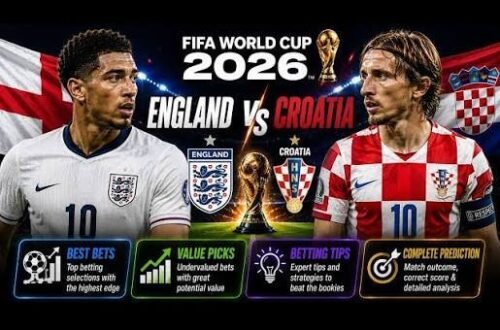
But the broader picture around England at this World Cup remains genuinely encouraging. Their 4-2 win over Croatia was one of the most complete attacking performances of the group stage — four goals, relentless pressing, and Jude Bellingham producing the kind of contribution that separates the very best players from everyone else. Harry Kane scoring twice drew him level with Gary Lineker’s England World Cup record of ten goals. The squad depth, while not at France’s level, is genuine enough to navigate five knockout matches.
Thomas Tuchel has built a tactical identity for this England team that is more sophisticated than anything Gareth Southgate’s England produced. The pressing is more coordinated, the attacking combinations are more varied, and the belief — built through the Croatia performance above all — is real. Bellingham’s influence, when he is at his best, gives England a dimension that makes them capable of beating any team in this tournament on a given day.
At +750, England offers the specific combination that makes a bet interesting: genuine quality, a realistic path to the semi-finals and potentially the final, and enough variance in how tournament brackets play out that the difference between winning and losing ultimately comes down to three or four individual moments across five matches.
England’s World Cup prediction: they reach the semi-finals. Whether they win the tournament depends on whether they can beat either France or Argentina in the knockout rounds, which are both contests they can win on their best day. That is not certainty. It is honest possibility.
Brazil — The Sleeping Giant, Finally Waking Up?
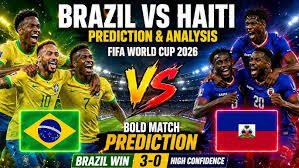
Brazil had a complicated group stage — a 1-1 draw with Morocco in the opener before bouncing back with 3-0 wins over Haiti and Scotland, with Vinícius Júnior scoring in all three matches and Matheus Cunha adding two goals in the Haiti match. They enter the knockout rounds as Group C winners, having recovered from an early stumble in a way that suggests a squad that has found its momentum at exactly the right moment.
Carlo Ancelotti, managing his first senior international tournament after leaving Real Madrid, has Brazil at around +1600 in the current market. The odds reflect a genuine concern: Brazil has not won a World Cup since 2002. They went out in the quarterfinals in both 2022 and at the 2024 Copa América. The underperformance in major tournaments has become a pattern that even the arrival of the world’s most successful club manager has not yet broken.
But Vinícius Júnior in full flow is one of the most dangerous attackers in world football. Bruno Guimarães leads the midfield with a quality that makes Brazil competitive against any team. And Ancelotti’s tactical intelligence, accumulated across decades of Champions League management, gives Brazil a coaching advantage they have not had in recent tournaments.
At +1600, Brazil is the long shot with the most justifiable case. If Vinícius stays fit and delivers at his peak level, and if Ancelotti can stabilize the defensive structure that was exposed against Morocco, Brazil has the individual quality to go very deep in this tournament. The odds say they probably will not. The talent says they conceivably could.
The Dark Horses — Who Could Actually Surprise Everyone?
Every World Cup produces a team nobody expected to reach the semi-finals. In 2022 it was Morocco. In 2018 it was Croatia. In 2026, the candidate most frequently discussed is Mexico.
Mexico won all three group stage games — a 2-0 win over South Africa, 1-0 over South Korea, and 3-0 over Czechia — going through the group stage without conceding a single goal and setting up a Round of 32 match against Ecuador. As co-hosts playing in front of passionate Mexican crowds in cities where the support is overwhelming, El Tri has a specific home-crowd advantage that is difficult to quantify but impossible to dismiss.
The Netherlands, at +1500, are the other team operating just below the top tier who have genuine knockout-round pedigree. They have three World Cup final appearances in their history. Their squad, with Virgil van Dijk anchoring the defense and Cody Gakpo providing attacking threat from midfield, is organized and technically solid. A favorable bracket matchup could carry them a long way.
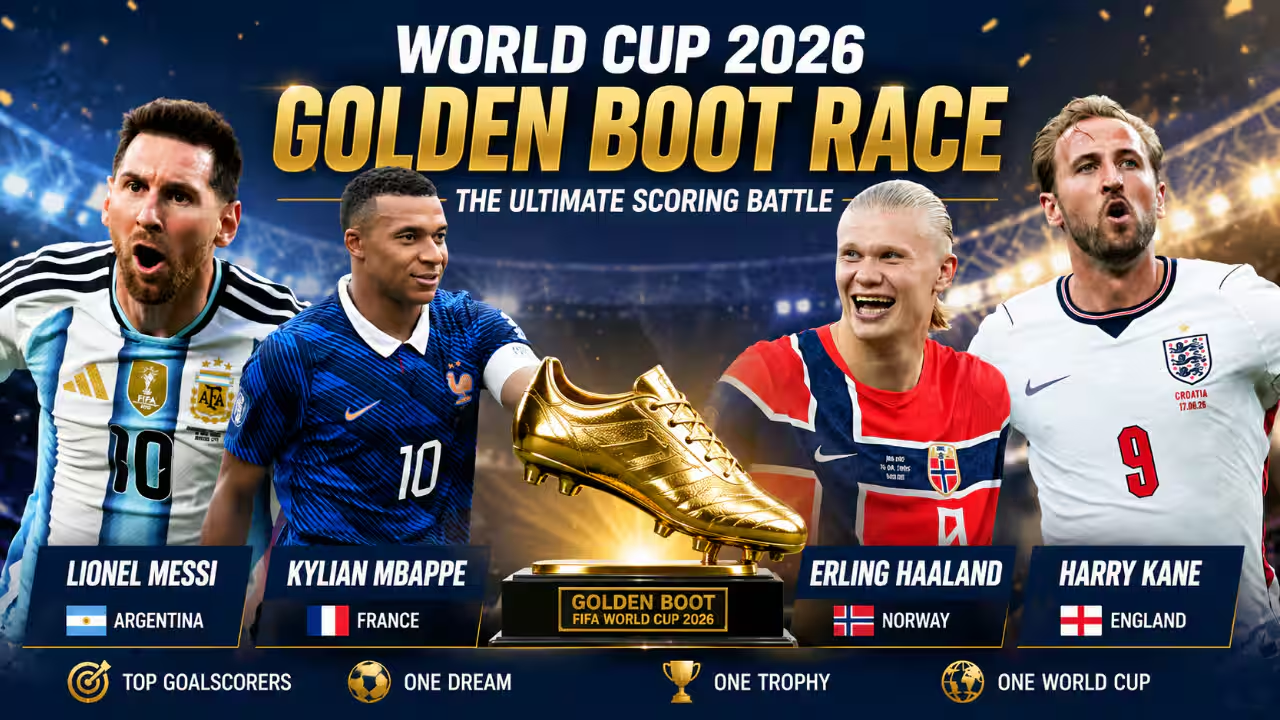
Norway, despite losing to France 4-1 in the final group game, remain interesting. Erling Haaland scored in each of their first two group matches and approaches the knockout rounds as one of the most dangerous individual forwards at the tournament. If Norway can keep Haaland healthy and find a way to protect him better than they managed against France, a Round of 16 run is entirely realistic.
The Path to the Final — What the Bracket Tells Us
The bracket has now been determined by the group stage results, and the structure of the knockout rounds reveals something important about which teams have drawn favorable paths and which face the most difficult route to the final.
France, as Group I winners, faces Sweden in the Round of 32 before a likely Round of 16 against the runner-up from another group. Their projected semi-final opponent, based on the bracket structure and probability weights, is Argentina — which would represent the single most anticipated match in recent World Cup history, and possibly the final individual contest between Mbappé and Messi at a major tournament.
Argentina faces Cape Verde in the Round of 32, one of the most manageable possible first knockout assignments. Their bracket projects a potential semi-final against France — which Messi has described as the team he respects most and fears most in equal measure.
Spain’s bracket takes them through opponents who are beatable but not comfortable — Uruguay in the final group game decider, then the knockout rounds in a path that could eventually produce a semi-final against England or Brazil.
England’s bracket, as Group L runners-up, takes them through the more difficult side of the bracket, with potential Round of 16 opponents of significant quality and a projected quarter-final that could involve Spain or a South American team.
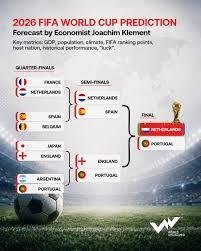
The final four that the bracket and the odds make most probable: France, Argentina, Spain, England. The most likely final: France vs Argentina — a rematch of 2022, with Mbappé and Messi meeting one final time on the world’s biggest stage, the result this time potentially determining which man ends the tournament as champion and which closes the book on a World Cup career defined by what might have been.
The Verdict — Who Will Win the FIFA World Cup 2026?
Here it is. The honest prediction, based on everything this tournament has shown us across the group stage and everything the bracket tells us about what comes next.
France wins the 2026 FIFA World Cup.

The argument is not complicated. They are the only team at this tournament that combines all four things a World Cup winner needs: the best individual player in the knockout-round context — Mbappé, who performs better as tournaments get more important — the deepest squad in the competition, the most experienced head coach in the field with specific World Cup winning knowledge, and a group stage performance that was not just good but dominant in a way that suggests they are building toward their best football rather than already at it.
Argentina is the team that can beat them. Messi’s form, the collective experience of the defending champions, and Emiliano Martínez’s ability to win penalty shootouts make Argentina the most dangerous possible semi-final opponent for anyone. If France and Argentina meet — which the bracket suggests is the most likely semi-final outcome — it will be the game that determines everything.
But France’s squad depth, particularly in wide attacking positions where they have world-class options at every level of the bench, gives them the specific advantage in a high-intensity knockout match that becomes decisive when substitutions are made in the final 30 minutes. Argentina does not have France’s depth. Spain does not have France’s individual brilliance from their best player. England does not have France’s experience.
The prediction: France beat Argentina in the semi-final, in a match that goes to extra time. England or Spain reach the other semi-final, with England the marginal choice based on current bracket positioning. The final at MetLife Stadium on July 19 is France versus England — a match that would generate the kind of global attention that comes once in a generation — and France win it, with Mbappé’s goals and Deschamps’ tactical management combining to deliver France their third World Cup title in history.
That is the prediction. Football, as always, is under no obligation to cooperate with it.
For official FIFA World Cup 2026 fixtures, live results, match schedule and full tournament updates, visit the FIFA official website: https://www.fifa.com/en/tournaments/mens/worldcup/canadamexicousa2026


One comment on “Who Will Win FIFA World Cup 2026? — The Full Prediction and Analysis”