






Football has never quite known what to do with Cristiano Ronaldo at a World Cup. He is too big to ignore, too complicated to simply fit into a tactical system, and too proud to accept a reduced role without it becoming a story that threatens to consume the entire tournament. At 41 years old, with six World Cup appearances and 143 international goals, he is the most decorated scorer in men’s football history — and the most debated player at the 2026 FIFA World Cup.
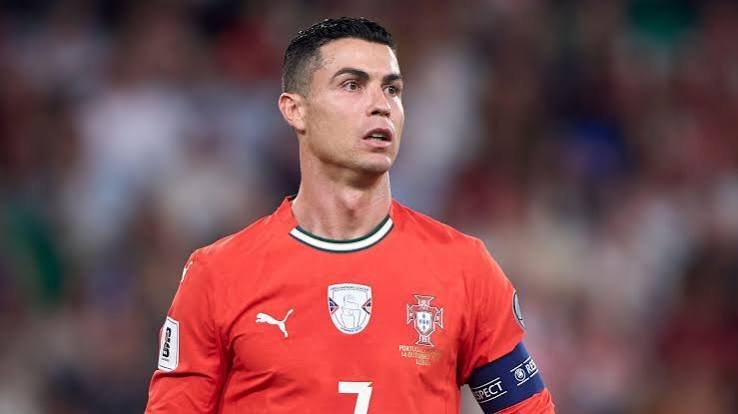
Two games into Portugal’s Group K campaign, the debate has not settled. It has intensified. A quiet, criticised 90 minutes against DR Congo followed by a stunning two-goal masterclass against Uzbekistan — that is the Ronaldo 2026 story in its most compressed, most vivid form. Brilliant one day, a source of collective anxiety the next. The question of what Ronaldo’s real role is in Roberto Martinez’s Portugal — and what it should be — is the most fascinating subplot running through this entire tournament.
Let’s work through it properly.
The Numbers That Define His Legacy
You cannot begin a conversation about Ronaldo’s role at this World Cup without acknowledging the scale of what he represents. The numbers are not just impressive — they are historically unprecedented.
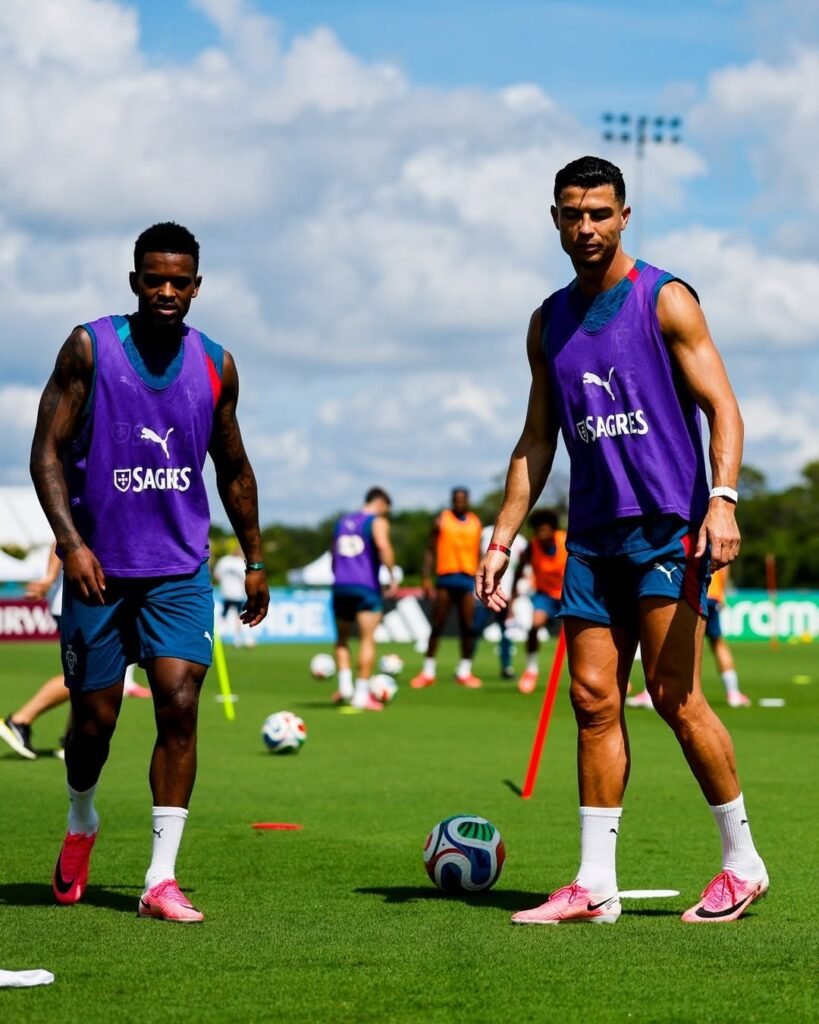
He has made 226 appearances for Portugal, wearing the national shirt more than any man in the history of the national team. He has scored 143 goals — both figures are men’s world records. He was the leading scorer in European qualifying for this tournament, contributing five goals across Portugal’s six qualifying matches to help them finish top of UEFA Group F with ease. He scored at the 2006, 2010, 2014, 2018, and 2022 World Cups, making him the first player in history to score at five different editions of the tournament. At 41, he is the oldest outfield player to start a World Cup match in the history of men’s football.
These are not warm tribute statistics. These are the raw facts of one of the most extraordinary international careers football has ever seen. Whatever happens in the next few weeks, they will not change.
And yet — these numbers also create the trap. They are the reason Roberto Martinez finds it almost impossible to drop him, even when the tactical argument for doing so is legitimate. They are the reason the dressing room and the nation align behind him even through poor performances. They are the reason opponents, paradoxically, have stopped genuinely fearing him while also giving him the psychological advantage of respect.
Game One — The DR Congo Problem
Portugal’s opening Group K match against DR Congo on June 17 in Houston was supposed to be the moment Ronaldo answered those who questioned whether a 41-year-old belonged at this level. It was not that.
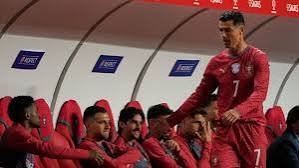
He played all 90 minutes. He finished without a single shot on target. He recorded just 25 touches — the fewest of any Portugal starter in the match, and at least 10 fewer than the DR Congo striker who eventually equalized to earn a 1-1 draw. He created no chances. He made two progressive carries and completed 17 of 22 passes, the majority going sideways or backwards. By every measure available — touches, shots, chances created, defensive contribution — it was a performance that a manager with full freedom would have used as grounds for a substitution at halftime.
Martinez kept him on for the full 90 minutes. When asked about that decision afterwards, the Portugal coach said: “It makes no sense to get the best goal scorer in world football out in a game that you need goals.” It was a sentence that revealed the bind he is in. The logic is circular — you keep on a player who is not performing because he has historically been good at the thing you currently need. But historical form is not the same as present-day reality.
The most uncomfortable quote from that evening came not from a pundit or a journalist, but from DR Congo’s 21-year-old midfielder Ngal’ayel Mukau, who was asked whether his team had a specific plan to stop Ronaldo. His answer was candid and, in its own way, damning: “To be honest, not really. We know that he isn’t the same as before. He’s a bit older now. But still, he’s one of the greatest. Much respect to him.”
When the opposition is no longer gameplanng around your star striker, something fundamental has shifted.
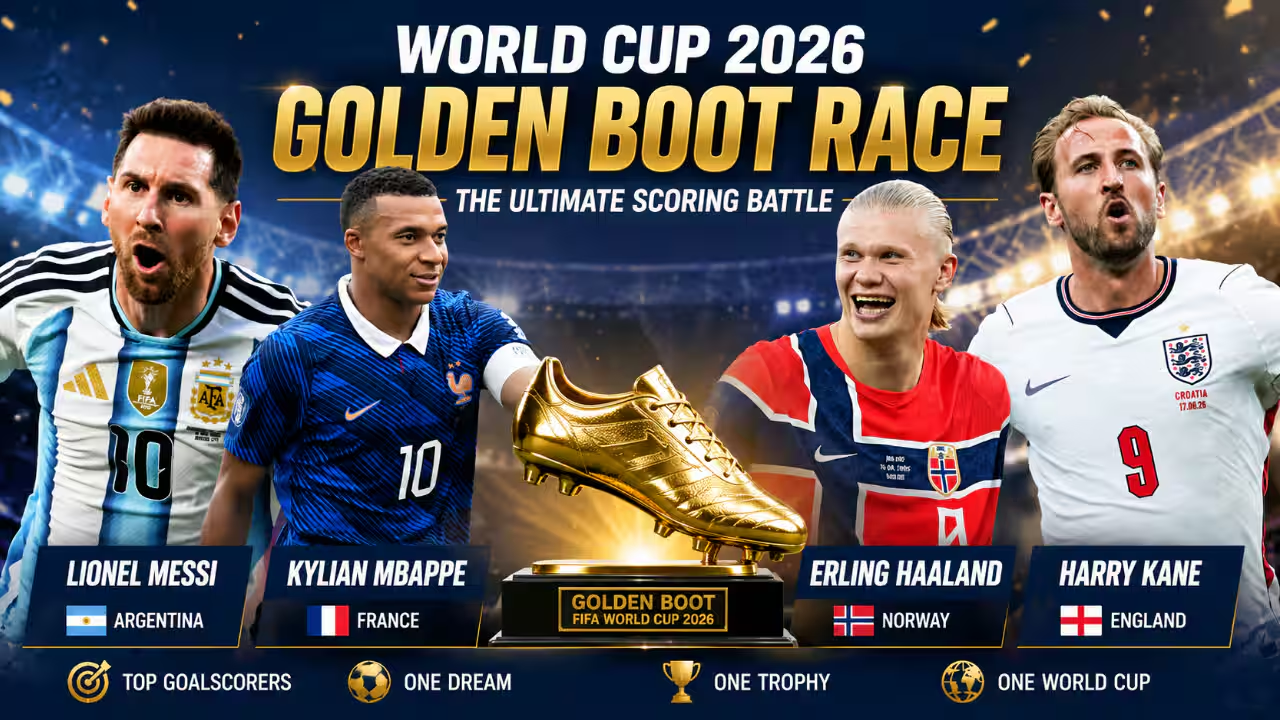
The reaction across the global football media was severe. Former players, analysts, and fans questioned whether Portugal could genuinely challenge for the World Cup title with Ronaldo as a guaranteed starter. The criticism became even louder as the same evening saw Messi score a hat-trick for Argentina, Mbappé continue his tournament in excellent form, and Haaland add to his tally for Norway. The contrast was visible and it was painful.
The Shift — How Portugal Are Designed Around Ronaldo When It Works
Before writing off the DR Congo performance as evidence of an unsolvable tactical problem, it is worth understanding what Portugal actually look like when the system is working in Ronaldo’s favour.
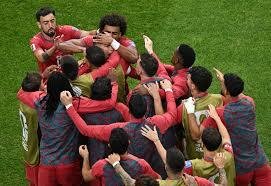
The key detail from that match — one that was largely lost in the noise around the result — was that Portugal rarely created the specific types of chances that suit Ronaldo’s 2026 version. He is no longer a winger who receives the ball and drives past defenders. That version of Ronaldo existed between roughly 2005 and 2016. The current version is a box striker — a player who needs to be found in the penalty area, who needs crosses into his path, who needs set-pieces that allow him to use his still-elite aerial ability, and who needs a team structure that repeatedly creates the kind of final-third positions where he can arrive late and finish.
Against DR Congo, Portugal’s attacking play was disjointed. The service into Ronaldo was inconsistent and often came from the wrong angle for his preferred finishing positions. The runs made by the players around him — Bruno Fernandes, Bernardo Silva, Rafael Leão — did not consistently create the overloads in the channels that would give Ronaldo the opportunities he needs.
When Portugal use Ronaldo correctly, they look like a different team entirely.
Game Two — The Uzbekistan Masterclass
June 23. NRG Stadium, Houston. Portugal versus Uzbekistan. Everything riding on the performance — not just in terms of Group K positioning, but in terms of the entire narrative surrounding Ronaldo’s place in this tournament.
What followed was the kind of performance that reminds you why this man has defined football for two decades.
Ronaldo scored twice. The first goal was a reminder of his greatest strength — reading the position, arriving at the right moment, finishing with the composure that 143 international goals have built into his muscles and his mind. The second came before halftime, a clinical finish from a brilliant Bruno Fernandes pass that gave Portugal a 3-0 lead and completed a first half so dominant that the debate about whether Ronaldo should start had, temporarily at least, been answered on the pitch.
Portugal won 5-0. It was a statement result, a statement performance, and a statement from Ronaldo himself. In the post-match interview, his emotion was raw and visible — he acknowledged the criticism of the previous match, he spoke about the difficulty of the days before this game, and he made his intentions for the rest of the tournament absolutely clear.
What the Uzbekistan match also demonstrated was the specific tactical adjustment Martinez made to get more out of his captain. Against DR Congo, Ronaldo was often isolated and looking for the ball to come to his feet in areas outside the penalty box. Against Uzbekistan, Martinez set up Portugal to create crosses, to build situations where Ronaldo could attack the penalty area from deeper positions, and to give Bruno Fernandes the freedom to find him with through-balls rather than trying to involve him in buildup play. That approach brought immediate results and confirmed that Ronaldo’s role in this Portugal team is effective — but only when the team is specifically designed to support him in those moments.
The bigger question now is whether that Uzbekistan performance represents what Portugal can consistently produce, or whether it was the ideal performance against a team that is not equipped to defend at the level Portugal will face in the knockout rounds.
The Real Tactical Question — Ronaldo or Gonçalo Ramos?
This is the question that Roberto Martinez has been avoiding answering directly, and the one that Portugal’s supporters are most divided on.
Gonçalo Ramos is a 23-year-old striker at Paris Saint-Germain who scored a hat-trick in his first World Cup start in 2022 — coming on as a substitute for Ronaldo in the Round of 16 and immediately transforming Portugal’s attack. He is mobile, he presses the defensive line with energy and intelligence, he can receive the ball with his back to goal and hold it up while waiting for runners, and he finishes with quality in both feet. He is, in the assessment of most tactical analysts, the striker who fits Portugal’s midfield better — because he allows Bruno Fernandes, Bernardo Silva, and Vitinha to play their natural game without the constraint of always looking for a specific type of delivery.
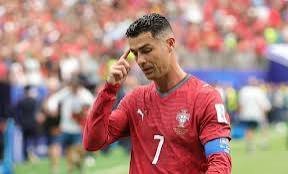
The case for Ramos is not an attack on Ronaldo’s legacy. It is simply a recognition that the Portugal squad, built around one of the finest midfields in world football, produces more goals and more fluid attacking play when the striker does not require the team to repeatedly reshape its movement around his specific positioning needs.
But Martinez has shown — through two group games now — that he is not prepared to drop Ronaldo. The Uzbekistan performance has given him the result he needed to justify that choice for at least one more game. Whether the same approach works against Colombia in the group stage decider on June 28, and then against the kind of opposition Portugal will face in the knockout rounds, will tell us far more about the real limitations and possibilities of this team.
The Squad Around Ronaldo — Why Portugal Can Win Without Him Being the Best Player
Here is the part of the story that gets underreported: Portugal does not need Ronaldo to be their best player to win the World Cup. They need him to be an effective striker. Those are two very different standards.
The Portugal midfield going into this tournament is, by most serious analytical measures, the best in the competition. Bruno Fernandes arrives as Manchester United’s captain and talisman, a player who creates goals with a frequency that puts him among the top three attacking midfielders on the planet. Vitinha finished third in the 2025 Ballon d’Or voting and is described by PSG’s coaching staff as a metronome — a player who controls the tempo of any match he is in with the kind of quiet, total confidence that is almost impossible to defend against when he is in full flow. João Neves, just 21 years old, is developing at a pace that makes analysts reach for comparisons to the very best midfielders of the previous generation. Bernardo Silva, one of the most intelligent footballers in the world, makes every team he plays in better.
That is four world-class midfield players. Around them, Nuno Mendes attacks from left-back with the energy of an extra forward, and Rúben Dias in central defense provides the defensive anchor a team playing this high up the pitch absolutely requires.
Portugal also won the 2025 UEFA Nations League — beating Germany in the semi-final and Spain on penalties in the final. They arrived at this World Cup having won eight of their last ten competitive matches. The squad is in form, the belief is genuine, and the only unresolved question — the only one — is what role Ronaldo plays and whether that role limits what the team can become.
Roberto Martinez — The Manager Who Cannot Afford to Get This Wrong
Portugal’s Spanish coach Roberto Martinez has been one of the most interesting figures in this entire World Cup story. His previous major tournament in charge — Belgium at the 2022 World Cup, where an extraordinarily talented squad went out in the group stage — still follows him as evidence that he struggles to make the hard decisions when the competition is at its most intense.
The Ronaldo question is the hardest decision he has ever faced in management. On one side, you have a 41-year-old with 143 international goals, a squad captain, a national icon, and a player who, when used correctly, is still capable of scoring decisive goals at the highest level. On the other, you have the clearest evidence in recent Portuguese football history that the team functions more fluidly and more dangerously when the striker is not requiring the entire attack to be reshaped around his positioning needs.
Martinez’s compromise so far has been to keep starting Ronaldo but to adjust the team’s attacking structure to make better use of him — more crosses, more direct service, more set-piece situations. The 5-0 win over Uzbekistan validated that approach. But the test of whether that compromise holds will come in the knockout rounds, when teams with defensive organization and tactical sophistication will be far more difficult to break down than Uzbekistan.
The one thing that cannot be allowed to happen — and Martinez knows this — is for the Ronaldo question to become the story of Portugal’s World Cup. If they go out in the Round of 16 and the post-mortem centers on whether Ronaldo should have started, Portugal will have wasted the best midfield they have ever assembled.
What Happens in the Knockout Rounds?
Portugal face Colombia on June 28 to close out the group stage. A win would confirm them as Group K winners and potentially give them a more favorable Round of 32 draw. The Colombia match will be the third data point in the argument about Ronaldo’s role — a side-by-side with a team of genuine quality that will test whether the Uzbekistan performance was a system working at its best or a statistical outlier.
Beyond that, Portugal’s projected knockout path runs through opponents of increasing quality. A potential Round of 16 meeting with a competitive team from South America, and then the quarterfinals where France, Spain, or England could be waiting — these are the moments that will define whether Ronaldo’s role as captain and starter is a strength or a constraint.
The +1100 odds to win the tournament and +220 odds to reach the semi-finals reflect exactly this uncertainty. Portugal has the squad quality to reach the final. Whether they can translate that quality into results depends on questions that are still being answered in real time.
Final Thought — The Most Complex Story in World Football
There is no easy answer to the question of Ronaldo’s role in Portugal’s 2026 World Cup campaign. He is their captain, their record scorer, their emotional leader, and the player the nation rallies around when everything else feels uncertain. He is also, at 41, a striker whose best contributions require a specific type of team structure that does not always unlock the full potential of the extraordinary midfield around him.
The truth is somewhere in the middle, and it shifts from game to game. Against Uzbekistan, the system worked and Ronaldo reminded the world why he is still here. Against DR Congo, it did not, and the limitations were visible. Colombia, and whatever follows, will tell us which version of this story is real.
What is certain is that no World Cup storyline in 2026 carries more weight, more history, or more genuine emotional stakes than this one. This is Ronaldo’s last chance. Portugal’s best squad in twenty years is built around and alongside him. The outcome — whatever it is — will define a legacy that already stands among the greatest in football history.
For official Portugal fixtures, squad details, and match updates, visit the FIFA official website: https://www.fifa.com/en/tournaments/mens/worldcup/canadamexicousa2026/teams/portugal/team-news


3 Comments on “Portugal Ronaldo World Cup 2026 Role — Captain, Starter, or Question Mark?”