Every World Cup tells two stories simultaneously. There is the team story — the nation lifting the trophy in New Jersey on July 19, the manager embracing his players, the captain raising the gold above his head. And then there is the individual story. The player who, across six or seven or eight matches of brutal, unforgiving knockout football, scored more goals than anyone else on the planet.
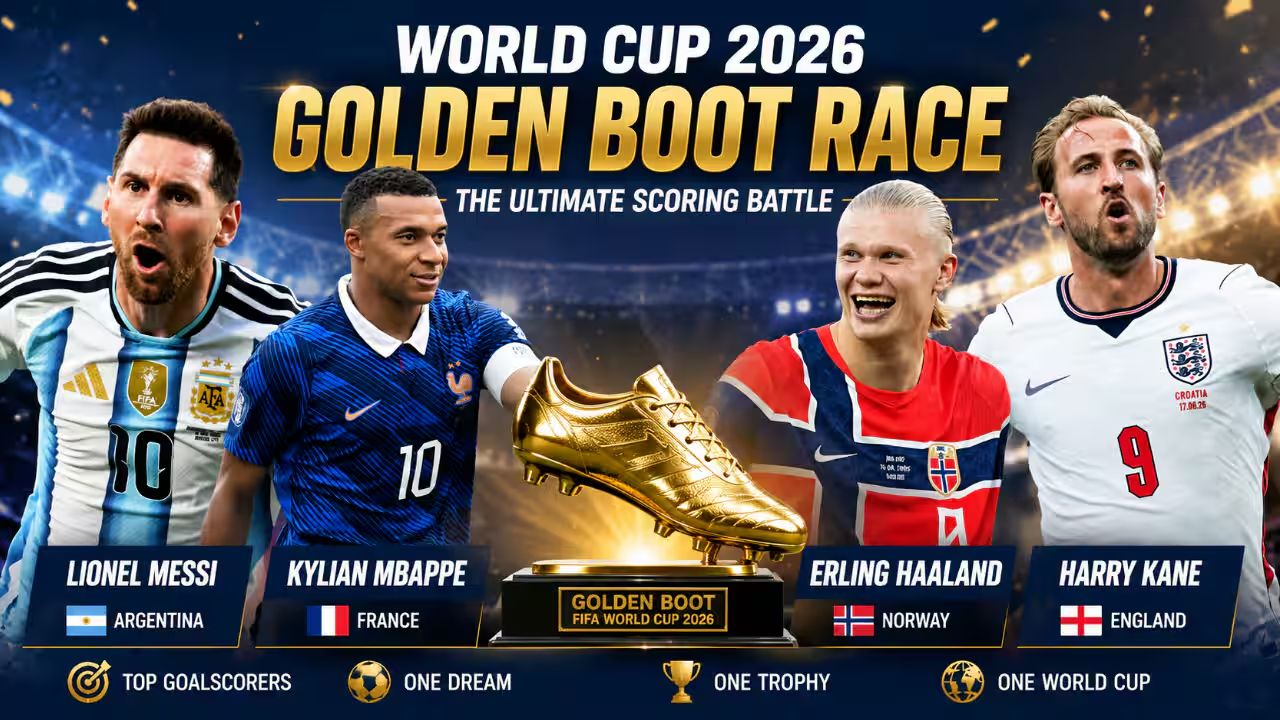
The adidas Golden Boot. The award that places a forward’s name alongside Eusébio, Gerd Müller, Gary Lineker, Ronaldo, and Kylian Mbappé in a list that runs through the entire history of modern football. A personal crown that cannot be taken away by a team’s exit or a penalty shootout defeat. Just goals — more than anyone else — at the biggest tournament in sport.
The group stage is complete. Thirty-two teams have survived and are preparing for the Round of 32 beginning June 28. And the Golden Boot race has already produced more drama, more history, and more genuine competition than almost any previous edition of the tournament. Messi has rewritten the record books. Dembélé exploded with a hat-trick nobody saw coming. Haaland showed why he terrifies defenders across four goals in two matches. Kane became England’s all-time World Cup leading scorer. And Mbappé, the reigning holder, has been doing exactly what the reigning holder is supposed to do — accumulating goals while France march through the group stage as the tournament’s most feared team.
Who takes the Boot? Here is the full picture.
How the Golden Boot Works — The Rules That Matter
Before the contenders, the rules — because in a race this close, the tiebreakers might matter as much as the goals themselves.
The adidas Golden Boot is awarded to the player who scores the most goals during the FIFA World Cup tournament finals. Every goal scored during the tournament counts, including goals in the group stage, all knockout rounds, the third-place playoff, and the final. Goals scored during penalty shootouts do not count — but penalties taken during the run of play, or in extra time, do. Own goals are not credited to any individual player.
The tiebreaker system, if two or more players finish level on goals, works as follows: assists are counted first, and the player with more assists wins the award. If assists are also equal, total minutes played becomes the deciding factor — with fewer minutes indicating greater efficiency, so the player with less time on the pitch wins. If all three criteria are identical after that, the players share the award jointly.
In a tournament where the winning goal tally historically falls between five and eight goals — and where the expanded 2026 format, with potentially eight matches for teams that reach the final, could push that ceiling higher — assists could genuinely decide this award if two players are chasing each other into the final stages of the competition.
For the official live Golden Boot standings throughout the tournament, visit: https://www.fifa.com/en/tournaments/mens/worldcup/canadamexicousa2026/articles/adidas-golden-boot-race-top-scorer
The Live Standings After the Group Stage
Going into the Round of 32, here is where the race stands based on the latest available data from ESPN, FOX Sports, Goal.com, and Planet Football’s running trackers as of June 28, 2026:
Ousmane Dembélé (France) — 4 goals Erling Haaland (Norway) — 4 goals Lionel Messi (Argentina) — 5 goals Kylian Mbappé (France) — 4+ goals, multiple assists Harry Kane (England) — 3+ goals, with more expected Vinicius Junior (Brazil) — 4 goals Denis Undav (Germany) — 3 goals (primarily from substitute appearances) Jonathan David (Canada) — 3 goals
The top five in this race — Messi, Dembélé, Haaland, Mbappé, and Kane — are not just statistically close. They represent the five most dangerous individual attackers at this tournament, playing for five of the eight most likely teams to reach the semi-finals. The structure of the competition rewards exactly these players, because the teams that go deepest in the knockout rounds provide the most opportunities to score.
Ousmane Dembélé — The Ballon d’Or Winner on Fire
When Ousmane Dembélé was named the 2025 Ballon d’Or winner, there were people in football who felt it was slightly premature — that the award reflected what he might become rather than what he had definitively proven at the very highest international level. The 2026 World Cup is his answer to that argument.
His group stage in this tournament has been one of the great individual stretches of any French player in recent World Cup history. He scored in France’s 3-1 win over Senegal. He added another against Iraq. And then, in France’s final group game against Norway, he delivered the moment that put his name at the top of the Golden Boot conversation: a blistering first-half hat-trick, twice cutting inside from the right and firing curling efforts into the far corner with a precision that made Norway’s goalkeeper look helpless, then completing the treble with a close-range finish that came with the instinct of a player who is currently in the form of his life.
That hat-trick against Norway in 32 minutes is not just a Golden Boot story — it is a statement. Dembélé arrived at this tournament as the world’s best player by the Ballon d’Or measure and has spent three group games proving that assessment was correct.
His path to the Golden Boot runs through France’s expected deep run in the knockout rounds. France face Sweden in the Round of 32, and if they progress through to the quarterfinals and semi-finals as the market strongly expects, Dembélé will have four or five more matches to add to his tally. The one concern is straightforward: penalties. France have not taken one yet at this tournament, but when they do, Mbappé takes them — and those goals go to his colleague, not to Dembélé. In a race that might be decided by a single goal, that detail could matter.
Lionel Messi — History Already Made, More Still to Come
Messi entered this World Cup with 13 career World Cup goals. He left the group stage with 17. The hat-trick against Algeria in the opening match was the moment that made him the all-time leading scorer in the history of the men’s FIFA World Cup, surpassing Miroslav Klose’s record of 16 that had stood since 2014. He then added further goals in the subsequent group games, including one coming off the bench against Jordan that confirmed his astonishing contribution even when not starting.
At 39 years old — yes, 39 — Messi is leading the Golden Boot race going into the knockout rounds. That sentence does not become less extraordinary no matter how many times it is written.
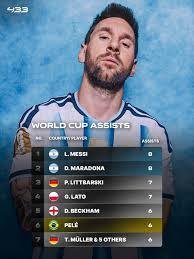
The case for Messi winning the Golden Boot is built on two foundations. The first is the obvious one: he is scoring at a rate nobody anticipated, in a tournament context where he has already achieved more than anyone expected, against opposition that includes teams of genuine quality. The second is that Argentina, as defending champions and current second favourites to win the tournament, are expected to go very deep into the knockout rounds. With Argentina in the semi-finals or final, Messi will have multiple additional matches to score in.
The concern is the same one that has followed Messi’s World Cup career across six tournaments: consistency over the full stretch of a competition. He scored a hat-trick in the opener and then was managed carefully in subsequent games, including coming off the bench against Jordan. Whether Martinez will give him the minutes required to compete for the Golden Boot in the knock-out stage, or whether the priority is keeping him fresh for Argentina’s trophy challenge, is a question that only the tournament itself will answer.
If Messi wins the Golden Boot in 2026, it would be the capstone on an individual World Cup story that is already unlike anything football has seen. It would also be the kind of ending that the sport occasionally, generously, actually provides.
Kylian Mbappé — The Defending Champion, Building His Case Quietly
Here is something interesting about Kylian Mbappé’s 2026 World Cup so far: he has not been the most explosive performer in terms of raw goal numbers — that distinction belongs to Dembélé and Messi — and yet most analysts, most betting markets, and most serious observers still consider him the most likely player to win the Golden Boot by the time July 19 arrives.
The reason is straightforward when you look at the full picture. Mbappé became France’s all-time men’s leading scorer — surpassing Olivier Giroud — when he scored in the group stage opener against Senegal. He added goals against Iraq and has continued to build his tally methodically across three group games. He is France’s primary penalty taker, meaning that any spot kicks France earn in the knockout rounds go directly to his total. He is the focal point of the world’s best attacking team going into the knockout stages, meaning he will have the most opportunities of any player to score across four or five remaining matches.
And there is the 2022 comparison that the market is clearly pricing in: Mbappé scored eight goals at Qatar 2022, including a hat-trick in the final. That is the most goals scored by any player at a World Cup in over 30 years. His ability to deliver not just in the group stage but in quarterfinals, semi-finals, and finals against elite defensive opposition is the specific quality that separates him from Dembélé, who has never played in a World Cup knockouts game before this tournament.
No player in the history of the award has won the Golden Boot twice. If Mbappé wins it in 2026 to add to his 2022 crown, he becomes the first player in World Cup history to do so. That historical context adds a layer of motivation that, for a player of his ambition and pride, is not irrelevant.
Current odds have Mbappé at around +550 to +600 to win the Golden Boot — the clear favourite in most markets. Those odds are fair, perhaps even slightly generous, given what the group stage has shown.
Harry Kane — The 2018 Winner, This Time With a Better Team Around Him
Harry Kane arrived at this tournament having just completed one of the greatest individual goalscoring seasons in the history of club football. At Bayern Munich in 2025-26, he scored 61 goals across all competitions — a number that is not a typo. A second European Golden Shoe in three years. The form of a man who is 32 years old and somehow getting better.
He opened his World Cup account with a brace — including a retaken penalty — in England’s 4-2 win over Croatia, and then made history by heading home against Panama to surpass Gary Lineker as England’s all-time leading World Cup scorer. That milestone came in his 13th World Cup match, six fewer than it took Lineker to set the record. Kane is not just good at scoring World Cup goals — he is historically elite at it.
The specific argument for Kane winning the 2026 Golden Boot is one that multiple analysts are making with genuine conviction. England, under Thomas Tuchel, has been set up with Kane as the central organizing principle of the attack. He takes the penalties. He receives the service from Bellingham, Saka, and the wide players in the positions he likes. He is, at 32, physically as sharp as he has ever been by his own assessment and by the evidence of what he produced at club level this season.
If England reach the semi-finals — which their +700 odds to win the tournament suggests is a realistic, perhaps likely, outcome — Kane will have played five, six, possibly seven matches. At the rate he has been scoring, that is five to nine goals. At the higher end of that range, he wins the Golden Boot.
At 7/1 to 8/1 in the pre-knockout betting, Kane represents the kind of value that experienced tournament observers recognise immediately: a player with the specific combination of team strength, set-piece role, and individual finishing quality that historically produces Golden Boot winners.
Erling Haaland — Goals Guaranteed, But Can Norway Go Deep?
Ask anyone who has watched Erling Haaland play football to describe him in one sentence, and the answer will almost always contain some version of the same thought: he was built to score goals. The Manchester City forward, 25 years old and at the absolute peak of his physical powers, scored 16 goals in UEFA qualifying — twice as many as any other player — and arrived at this World Cup as the single most physically imposing striker in the field.
He scored twice in Norway’s opening win over Iraq. He scored twice more in a hard-fought 3-2 win over Senegal. Four goals in two matches. In the third group game against France, Norway were beaten 4-1, and Haaland was rested in the second half after France had established their lead.
The Golden Boot argument for Haaland is the simplest possible: give him the ball in the right areas and he scores. His conversion rate is already among the best in World Cup history for a player through four appearances. If Norway continue to build their attack around him — and with Martin Ødegaard supplying him intelligently from midfield, they have the creative quality to do exactly that — he will keep scoring.
The counter-argument is equally simple: Norway have never made it past the first knockout round at a World Cup. Their opponents in the Round of 32 will be studying Haaland specifically, organising defensive systems around eliminating his threat. And if Norway go out in the Round of 32 or Round of 16, four goals may not be enough.
The Golden Boot race is ultimately a competition about who goes furthest with the most goals. Haaland will score more goals per minute of football than anyone else in this tournament. Whether his country gives him enough minutes is the question everything else depends on.
Vinicius Junior — The Wildcard Who Keeps Scoring
Before this tournament began, Vinicius Junior was rarely mentioned as a Golden Boot favourite. He is a winger, not a centre-forward. He creates as much as he scores. His club stats at Real Madrid — impressive though they are — are not the raw goal numbers that tend to dominate top scorer conversations.
And then he scored four goals in the group stage. Brazil beat Haiti and Scotland 3-0 each, with Vinícius scoring in both matches, and after a difficult opener against Morocco that ended 1-1, he suddenly finds himself among the tournament’s leading scorers heading into the knockout rounds.
Carlo Ancelotti has set up Brazil around Vinícius in a way that gives him both the defensive freedom to roam and the specific attacking responsibility to deliver. Under Ancelotti’s management at Real Madrid, Vinícius learned when to score and when to create — a balance that made him the world’s best winger across multiple Champions League campaigns. He has brought that intelligence to the international stage in 2026.
At +1600 to win the World Cup, Brazil is not expected to go the distance. But if they progress through three or four knockout rounds with Vinícius at his best, his goal tally will keep climbing. He is the dark horse of this Golden Boot race, and the race is genuinely open enough for him to finish on top.
The Dark Horses — Three Names Worth Watching
Denis Undav has been the most remarkable story of the group stage. Germany’s substitute striker — used primarily off the bench — has scored three goals already, with multiple assists, in a role that nobody expected to produce Golden Boot numbers. His conversion rate across this tournament is extraordinary, and if Germany go deep and Undav earns more starting minutes in the knockout rounds, he is a legitimate sleeper pick.
Mikel Oyarzabal of Spain wobbled early — setting a record for going 30 minutes against Cape Verde without touching the ball — before finding his form with two goals against Saudi Arabia and proving that he belongs at this level. Spain’s expected deep run gives him plenty of matches to keep scoring, and at 13/1, he remains in the conversation.
Folarin Balogun of the United States scored twice in the group stage opener against Paraguay and has the clinical finishing at Monaco this season to back that up across more matches. If the USA advance deep, which Pochettino’s team is building toward, Balogun is the kind of attacker who scores in waves rather than consistently.
The Verdict — Who Wins the 2026 Golden Boot?
Here is the honest assessment: this is the closest Golden Boot race since France in 1998, and the answer depends enormously on which teams advance through the knockout rounds.
If France reach the semi-final and final as the market expects, Mbappé and Dembélé will each have four or five more matches to score in. The question between them is not quality — both are world-class — but role: Mbappé takes the penalties, Mbappé is the focal point, and Mbappé has the specific history of delivering in the knockout stages that Dembélé does not yet have. In the head-to-head between two French teammates, Mbappé wins.
If Argentina match France’s progression — which their +430 odds and Messi’s form both suggest is realistic — then Messi, already the all-time World Cup leading scorer, will keep adding to his historical total. The possibility of Messi winning the Golden Boot at his final World Cup, at 39 years old, is the single most romantic outcome available in this race, and romance has a way of materialising in football when the talent backs it up. His talent backs it up.
The prediction: Kylian Mbappé wins the 2026 FIFA World Cup Golden Boot with eight to ten goals across five knockout matches and the group stage. France’s tournament run, his penalty duties, and the combination of individual excellence and team structure that makes him the most likely scorer in the most likely deep-run team tip the balance in his direction.
But if Argentina and Messi meet France and Mbappé in the semi-final — which is the most probable single match in this entire bracket — one of them will be eliminated. The survivor will almost certainly take the Golden Boot with them.
For the official live Golden Boot standings updated after every match of the 2026 FIFA World Cup, visit the FIFA official website: https://www.fifa.com/en/tournaments/mens/worldcup/canadamexicousa2026/articles/adidas-golden-boot-race-top-scorer