







Saudi Arabia World Cup 2026 results, Saudi Arabia Group H 2026, Saudi Arabia World Cup 2026 goals, Green Falcons World Cup 2026, Saudi Arabia Spain 2026, Saudi Arabia Uruguay 2026

When the FIFA World Cup 2026 draw was made in Washington DC on December 5, 2025, Saudi Arabia’s placement in Group H alongside Spain, Uruguay, and Cape Verde produced a reaction that was equal parts excitement and quiet concern.
On one hand, this was a group Saudi Arabia could realistically navigate. Cape Verde were making their World Cup debut. Uruguay, while traditionally strong, had been inconsistent in South American qualification. Spain were the top seed and the clear group favourite, but with only four teams per group at this expanded 48-team tournament, the two places available for automatic advancement — plus the potential lifeline of a best third-place spot — gave Saudi Arabia a credible path.
On the other hand, Spain are the reigning European champions. Uruguay have been one of the most competitive sides in CONMEBOL for three consecutive World Cups. And Cape Verde, as it turned out, were not the easy three points many assumed they would be for anyone.
Two games in, Saudi Arabia sit in third place with one point. One game remains — against Cape Verde, tonight at NRG Stadium in Houston. It is the biggest ninety minutes Saudi Arabia have played at a World Cup since they beat Argentina in Qatar in 2022. And the stakes could not be more simply defined: win and potentially advance as one of the eight best third-place teams, or draw or lose and go home.
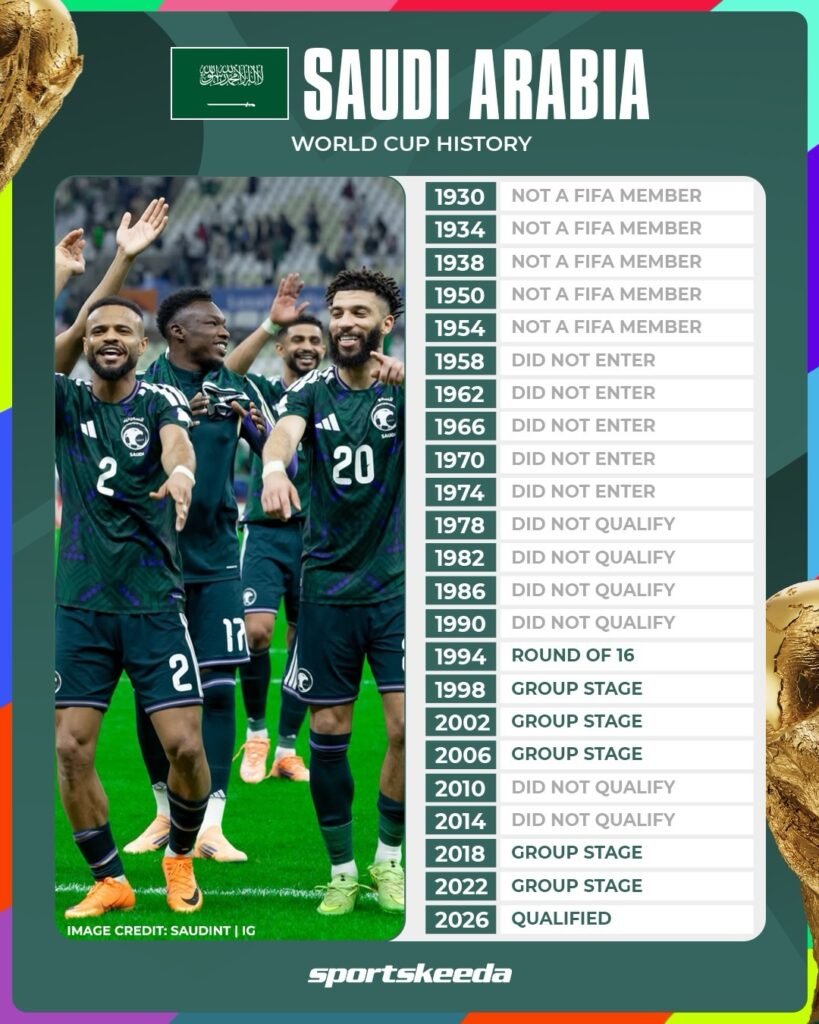
Here is the complete picture of Saudi Arabia’s FIFA World Cup 2026 performance — every match, every goal, every turning point — and the context that makes this campaign so much more than just a three-game group stage.
The Squad – Who Manager Georgios Donis Brought to the Tournament
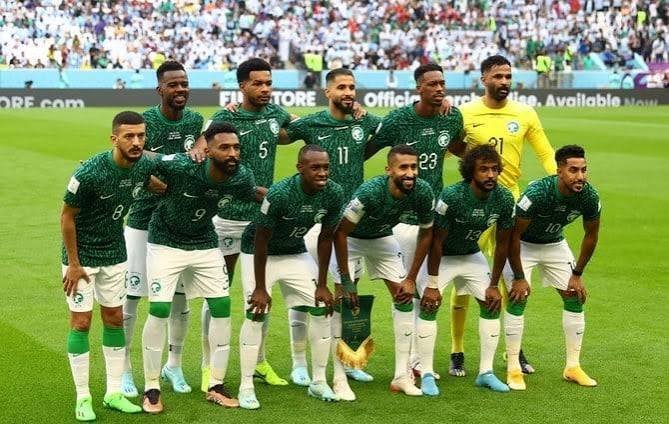
Georgios Donis, the Greek manager who replaced Hervé Renard in April 2026, arrived at the World Cup with a squad built around a core that had been together for most of the qualification campaign. The Green Falcons qualified in October 2025, finishing second in their AFC qualification group, and the 26-man squad named for the tournament reflected both the established names and a handful of young additions.
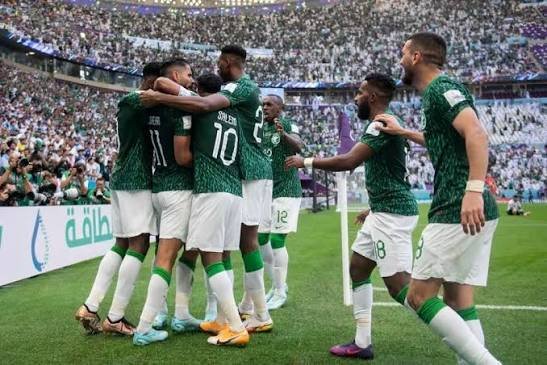
Goalkeeping: Mohammed Al-Owais remains the undisputed No.1 — one of the most reliable goalkeepers in the AFC and a key reason Saudi Arabia kept things competitive even in difficult matches. His positioning and shot-stopping have been central to the team’s identity.
Defence: Hassan Al-Tambakti, the imposing centre-back who plays his club football for Al-Hilal, provides leadership and aerial presence at the back. Ali Al-Bulayhi at left-back has significant international experience. The defensive unit is organised and disciplined, built around a compact low-to-mid block that Donis has maintained from Renard’s system.
Midfield: Mohammed Kanno and Abdulellah Al-Malki provide the engine. Kanno, who plays for Al-Hilal, has been the most consistent figure in Saudi Arabia’s midfield across the qualification campaign and into the tournament.
Attack: Salem Al-Dawsari — the scorer of that unforgettable curler against Argentina in 2022 — carries the creative responsibility. At 32, he is still the player Saudi Arabia look to when they need something to happen. Firas Al-Buraikan leads the line, bringing pace and direct running that causes defenders problems when Saudi Arabia can play on the counter.
One notable absence from the squad that hurt immediately: Saleh Al-Shehri, who scored the equaliser against Argentina in 2022 and was a key component of that team’s attacking structure, was ruled out of the 2026 tournament with a knee injury sustained in March 2026. His absence removed a significant goal threat and forced Donis to rely more heavily on Al-Buraikan as the sole frontline presence.
Game 1: Saudi Arabia 1-1 Uruguay — June 15, 2026 | Hard Rock Stadium, Miami
The opening game of Saudi Arabia’s 2026 World Cup campaign was, in many ways, exactly the kind of result the coaching staff would have taken before a ball was kicked.
Uruguay — with their experienced squad under Marcelo Bielsa’s successor, still carrying the attacking quality of Darwin Núñez and the organisational solidity that has defined Uruguayan football for decades — were expected to be Saudi Arabia’s toughest opponent in terms of physical and tactical intensity.
For 41 minutes, Saudi Arabia absorbed Uruguayan pressure, defended compactly, and looked to Al-Dawsari on the counter. Then came the moment that brought NRG Stadium — packed with Saudi and Arab supporters — to its feet.
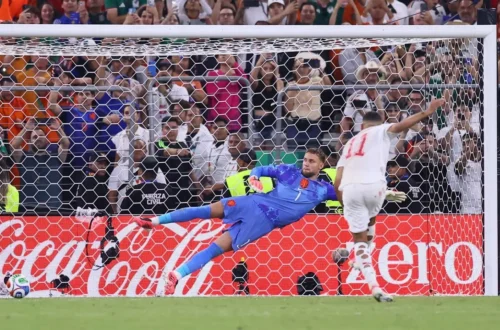
In the 41st minute, Saudi Arabia went in front when Hassan Al-Tambakti’s header from a corner on the right was parried out by Uruguay goalkeeper Fernando Muslera, and Abdulelah Al-Amri finished the rebound with his right foot to the net from close range. DeFi Rate
1-0 to Saudi Arabia. Al-Tambakti, the centre-back, had been a set-piece threat all through qualifying. His presence in the box from corners and free kicks had produced goals before. This time, Al-Amri — the midfielder who plays for Al-Ahli — was the beneficiary of the goalkeeper’s spill, and he buried the chance cleanly.
Saudi Arabia held the lead for nearly 50 minutes. Donis’s defensive structure held. Al-Owais made two important saves. And then, with ten minutes remaining, the lead slipped.
With ten minutes to go, Maximiliano Araújo scored for Uruguay with a shot from the left after Mohammed Al-Owais had initially made a save, making it 1–1, which also became the final result. DeFi Rate
The equaliser was cruel in its timing but earned through Uruguay’s persistence. The final score of 1-1 left all four teams in Group H level on one point — a genuinely extraordinary situation that gave every team in the group a real chance of advancing, depending on what happened next.
After Matchday 1 in Group H, all four teams — Spain, Cape Verde, Saudi Arabia, Uruguay — were level on one point. England Football
For Saudi Arabia, a draw against Uruguay was a legitimate result. The kind of result that keeps you in a tournament. The kind of result that, depending on how the remaining games played out, could have been the foundation for advancement.
Game 2: Spain 4-0 Saudi Arabia — June 21, 2026 | Atlanta Stadium (Mercedes-Benz Stadium)
If the Uruguay draw represented Saudi Arabia at their resilient best, the Spain game represented the brutal reality of what it means to face a top-four team in the world when they are motivated, organised, and playing with genuine hunger.
Spain 4-0 Saudi Arabia. Lamine Yamal scored in the 10th minute. Mikel Oyarzabal added the second in the 21st minute and a third in the 24th minute. Hassan Al-Tambakti added an own goal in the 49th minute. Substack
Three goals in the first 25 minutes. Game over before Saudi Arabia had genuinely settled.
Spain dominated possession with 63% to Saudi Arabia’s 29%, and their shot count told the full story: 22 total attempts to Saudi Arabia’s 3, with 8 on target compared to Saudi Arabia’s 2. Substack
The statistics are stark and do not require much interpretation. Spain had 22 attempts on goal. Saudi Arabia had three. Saudi Arabia’s three shots all came from outside the penalty area — they could not get the ball into dangerous areas in the central zone with any consistency because Spain’s press denied them time on the ball.
Lamine Yamal, the teenage Barcelona winger playing in his hometown of Atlanta — he was born in Barcelona but his family roots gave the game extra emotional resonance — was the standout figure. His 10th-minute opener set the tone. His movement, his directness, his ability to shift inside and outside in the same movement, gave Ali Al-Bulayhi one of the most difficult 90 minutes of his international career.
The fixture was Saudi Arabia’s worst defeat at the World Cup since their 5-0 loss to hosts Russia in 2018, and their third-largest defeat in tournament history, tied with their 4-0 losses against France in 1998 and Ukraine in 2006. DeFi Rate
There is no way to dress up a 4-0 defeat in a World Cup group stage. Donis knew it. The players knew it. The Saudi supporters who had made the journey to Atlanta knew it. But what matters now is not what happened against Spain. What matters is what happens tonight in Houston.
Game 3: Saudi Arabia vs Cape Verde — June 26, 2026 | NRG Stadium, Houston
Tonight is everything.
Saudi Arabia go into the Cape Verde game knowing exactly what they need: a win. A draw will likely not be enough given that Uruguay and Spain are expected to produce a high-scoring game simultaneously in Guadalajara, which will almost certainly produce a goal difference that pushes both teams clear of Saudi Arabia regardless of their result.
Three points against Cape Verde would give Saudi Arabia 4 points in Group H. Whether that is enough to advance as one of the eight best third-place teams across all 12 groups depends on what is happening simultaneously across the other groups — the mathematics of the 48-team format are complex and some of those third-place scenarios are not yet decided.
But the starting point is simple: win, and you give yourself a chance. Don’t win, and you go home.
What Cape Verde bring: Do not let the Cinderella story fool you. Cape Verde’s debut World Cup appearance has produced genuine results — they drew 0-0 with Spain and 2-2 with Uruguay. They are not a team that will simply lie down in a must-win situation for their opponent. Their low defensive block, their physical presence, their pace on the counter — these are the exact tools that have frustrated both European and South American sides in this group. Saudi Arabia have to break them down. That is not as straightforward as it sounds. DeFi Rate
What Saudi Arabia need to do: Press earlier than they did against Spain. Use Al-Dawsari’s creativity and intelligence to find pockets between Cape Verde’s defensive lines. Get Al-Buraikan involved centrally and use set pieces — which produced the goal against Uruguay — as a primary weapon. Donis needs his defensive midfield to protect the back four while his wide players get forward and create crossing opportunities.
The outcome of this game will define how the 2026 World Cup is remembered by an entire nation.
Key Player Analysis – The Men Who Matter Most
Salem Al-Dawsari — The 32-Year-Old Who Keeps Delivering
He scored one of the most famous goals in World Cup history four years ago. He carried Saudi Arabia through qualification with leadership and creative production. And in 2026, he remains — despite the physical demands of a long career and the expectations that come with being the face of Saudi football — the most important attacking player in this squad.
Against Uruguay, his movement and link play were good without producing the decisive moment. Against Spain, he was largely suppressed by the intensity of Spain’s press. Against Cape Verde tonight, Saudi Arabia need the Al-Dawsari of 2022 — direct, fearless, willing to take on players in one-on-one situations.
At 32, this is almost certainly his last World Cup. The motivation for a performance tonight should not be in short supply.
Mohammed Al-Owais — The Last Line Who Has Kept Saudi Arabia In It
The goalkeeper’s performance across the two matches so far deserves more attention than it has received. Against Uruguay, he made two important saves that kept Saudi Arabia’s lead intact deep into the second half before the equaliser came. Against Spain, he faced 22 shots and — though beaten four times — made several stops that prevented the scoreline from becoming genuinely historic in the wrong direction.
His experience and shot-stopping have been central to Saudi Arabia’s defensive identity in 2026. Tonight against Cape Verde, he is unlikely to face heavy pressure given the nature of the Cape Verdean game. But his distribution and his communication with the back four will be important in a tense, high-stakes match. youtube
Hassan Al-Tambakti — The Set-Piece Weapon That Backfired
Al-Tambakti’s headed delivery led directly to Saudi Arabia’s goal against Uruguay. His own goal against Spain — a 49th-minute deflection that made it 4-0 — was a piece of cruel football fortune. He touched a Spanish cross into his own net under pressure, and the game was already gone by that point.
His aerials from corners remain Saudi Arabia’s most reliable route to goal. If Donis sets pieces with Al-Tambakti attacking the near post tonight, Cape Verde’s goalkeeper will be under genuine pressure.
Firas Al-Buraikan — The Striker Who Needs to Deliver
Five goals in Saudi Arabia’s World Cup qualification campaign. Zero in two group stage matches at the tournament itself. The 25-year-old striker who plays for Al-Ahli has been the focal point of Saudi Arabia’s attack but has not yet produced the clinical moment this squad needs from him.
Tonight is the match that defines whether he arrives at a World Cup or leaves one still searching for his best level on this stage.
The 2022 Legacy and What It Means for 2026
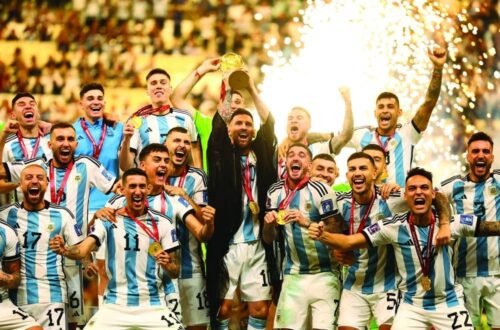
It is impossible to talk about Saudi Arabia’s 2026 performance without contextualising it against what happened at the previous World Cup. The 2-1 win against Argentina on November 22, 2022, was one of the genuine shock results of modern tournament football. After defeating Argentina in the Group Stage at the 2022 World Cup, the following day was declared a public holiday in Saudi Arabia. youtube
That result created an expectation — fair or not — that Saudi Arabia had arrived at a new level. That the 2022 win against the eventual world champions was a data point about what this team is capable of, not a one-time miracle.
The 2026 group stage has complicated that narrative. The Uruguay draw was respectable. The Spain defeat was heavy. And tonight’s game against Cape Verde — a team from a country with a population under 600,000 — is not the stage Saudi Arabia imagined when they thought about carrying the momentum of 2022 into 2026.
But that is football. That is the World Cup. The bracket is not always generous, the opponents do not always cooperate with your narrative, and the team that beats Argentina one tournament can find itself struggling against a debutant nation the next. The only thing that matters now is the 90 minutes in Houston.
The Bigger Picture – Saudi Arabia Looking at 2034
Whatever happens tonight in Houston, Saudi Arabia’s football story has a chapter beyond 2026 that gives this entire campaign a different kind of significance.
Saudi Arabia are confirmed as the hosts of the 2034 FIFA World Cup. It is the most significant commitment any nation has made to football development in recent memory. The investment that is already underway — in youth academies, in coaching infrastructure, in domestic league quality through the Saudi Pro League — is designed to produce a national team capable of competing on the world stage when 80,000 people pack into the King Salman International Stadium in Riyadh eight years from now.
The 2026 squad is, in part, a bridge generation. Some of tonight’s players will still be around in 2034. Most will not. But what they do, how they perform, and the standards they set on the biggest stage in world football inform every young Saudi footballer watching at home.
A win tonight against Cape Verde would send this squad home having drawn with a South American power, lost to the European champions, and beaten a debutant nation — a record that tells a complex, honest story about where Saudi Arabian football sits in 2026. That is not failure. That is competitive reality. And if a third-place spot comes with it, it becomes something more: a Round of 32 berth at a World Cup for the first time since 1994.
That would be worth a great deal.
Group H Final Standings (Before June 26 Games)
Spain: 2 played | 1W 1D 0L | 4 points | +4 goal difference
Uruguay: 2 played | 0W 2D 0L | 2 points | +0 goal difference
Cape Verde: 2 played | 0W 2D 0L | 2 points | +0 goal difference
Saudi Arabia: 2 played | 0W 1D 1L | 1 point | -3 goal difference
Saudi Arabia’s path tonight: Win against Cape Verde, and with sufficient goal difference, they could potentially reach 4 points — the minimum typically required for a best third-place spot. Everything depends on the simultaneous results across all twelve groups.
Official FIFA Link – Full Saudi Arabia Schedule and Results
For Saudi Arabia’s official squad page, live Group H standings, all match reports, stats, and tonight’s Cape Verde vs Saudi Arabia result as it happens:
FIFA World Cup 2026 Official Schedule and Match Centre:
https://www.fifa.com/en/tournaments/mens/worldcup/canadamexicousa2026/articles/match-schedule-fixtures-results-teams-stadiums
FAQ
How has Saudi Arabia performed at FIFA World Cup 2026?
Saudi Arabia drew 1-1 with Uruguay in their opener on June 15, thanks to a goal from Abdulelah Al-Amri, then lost 4-0 to Spain on June 21. They face Cape Verde in their final group game on June 26 in Houston with elimination possible.
What group is Saudi Arabia in at World Cup 2026?
Group H, alongside Spain, Uruguay, and Cape Verde. Group H of the 2026 FIFA World Cup is taking place from June 15 to 26, 2026. DeFi Rate
Who scored for Saudi Arabia at World Cup 2026?
Abdulelah Al-Amri scored Saudi Arabia’s only goal so far — a close-range finish after Hassan Al-Tambakti’s header was parried by the Uruguay goalkeeper in the 41st minute of the opening match.
Who is Saudi Arabia’s manager at World Cup 2026?
Georgios Donis, who replaced Hervé Renard in April 2026 ahead of the tournament.
What was Saudi Arabia’s worst result at World Cup 2026?
The 4-0 defeat to Spain was Saudi Arabia’s worst World Cup loss since their 5-0 loss to hosts Russia in 2018, and their third-largest tournament defeat in history. DeFi Rate
Can Saudi Arabia still qualify from the 2026 World Cup group stage?
They need to win their final game against Cape Verde on June 26 to have any realistic chance of advancing as one of the eight best third-place teams. A draw or loss will see them eliminated.
When is Saudi Arabia’s next World Cup 2026 match?
Tonight — June 26, 2026, at 8 p.m. ET at NRG Stadium in Houston, Texas, against Cape Verde. The match is broadcast on FS1.



2 Comments on “Saudi Arabia FIFA World Cup 2026 Performance – The Full Story of the Green Falcons in Group H”