

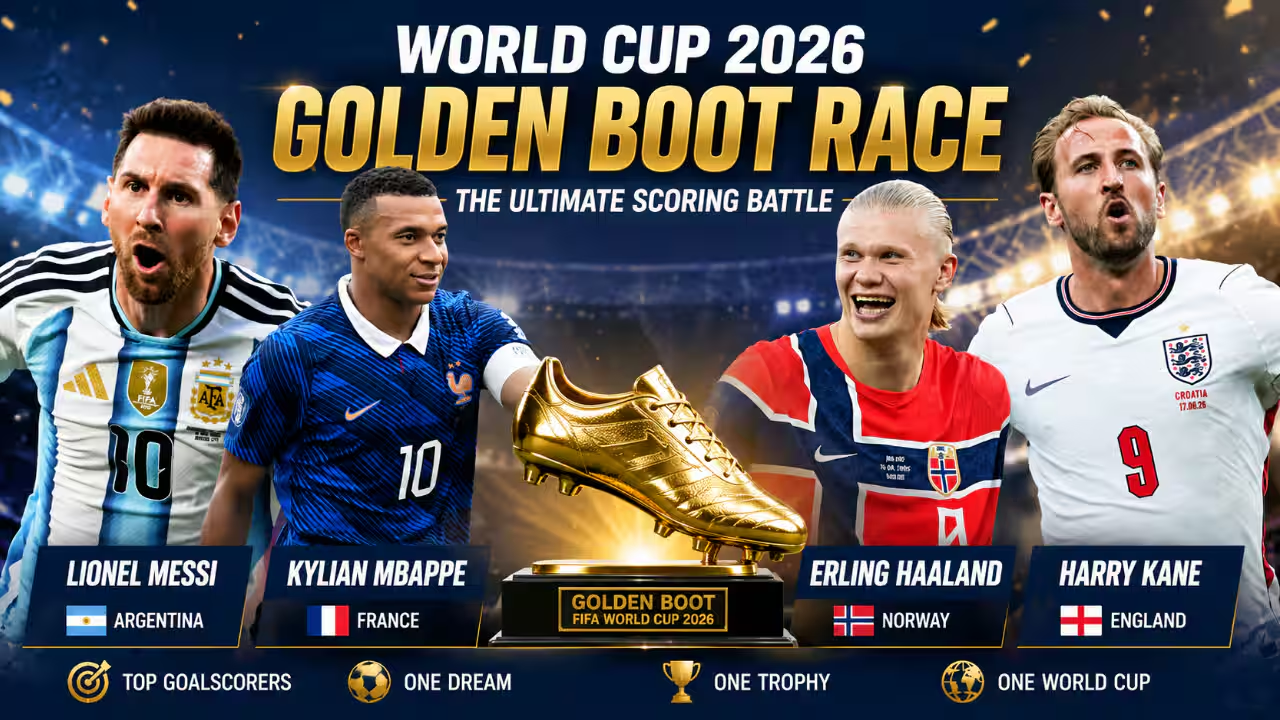





Defenders do not get nearly enough credit. That has always been the case in football, and it is still the case in 2026. The Golden Boot goes to the striker. The Ballon d’Or has historically gone to attackers. The pre-tournament debate centers on Mbappé, Messi, Haaland, and Kane. And then the tournament begins, and you realize that the teams who go furthest — the ones who reach semi-finals and finals and lift the trophy — almost always build from the back with a defensive foundation that is anything other than an afterthought.
France are the favorites to win the 2026 FIFA World Cup. They have William Saliba. Argentina are defending champions and the second favorites. They have Cristian Romero and a defensive unit that conceded some of the fewest goals in qualifying. Spain’s entire tournament challenge is built on a structural foundation that includes one of the youngest and most technically gifted central defensive partnerships ever assembled for a major tournament.
The defenders at this World Cup are operating at a level that the best analysts in football are describing as the most technically refined generation of defensive players in tournament history. The current era has produced something genuinely new: defenders who are not just excellent at stopping forwards but who initiate attacks, carry the ball from the back, win aerial duels with freakish consistency, and press with an intelligence that makes the entire team’s game work. This is what modern defending looks like at its best.
Here is the complete ranking of the strongest defenders at the 2026 FIFA World Cup — the players making the difference when it matters most.
What Makes a World Cup Defender Elite in 2026?
Before the names, a framework. The criteria that separate the best defenders at a tournament from the merely good ones are not the same in 2026 as they were in 2006 or even 2014.
Reading of the game has always mattered — the ability to anticipate danger before it develops, to position correctly without the need for frantic last-minute challenges. Aerial dominance remains crucial, particularly in a tournament where set-pieces account for a significant percentage of goals at the highest level. Physical presence and one-on-one defending under pressure are table stakes for any top-ten defender.
But what the modern game has added is a set of requirements that previous generations rarely had to meet: press resistance, meaning the ability to receive the ball under intense pressure and play out effectively; transition defending, meaning the ability to recover shape and position rapidly when possession is lost high up the pitch; and attacking contribution, whether from set-pieces, through carries from deep, or by maintaining the high defensive line that creates the offside traps that disrupt opposing attacks before they develop.
FIFA itself has introduced Power Rankings powered by Aramco at this World Cup — a new individual player ranking system that scores all outfield players between 0-10 across attacking, creativity, and defending categories, updated after every match. It is the most sophisticated official attempt at measuring what players actually contribute that the tournament has ever seen. The defenders who score highly on that system are the ones doing all of this, not just the traditional measures.
10. Achraf Hakimi (Morocco) — The Attacking Force in Defensive Clothing
There is an argument that Achraf Hakimi is not primarily a defender at all. His goal contributions for PSG across the Champions League seasons, his willingness to make overlapping runs that leave Morocco’s right side temporarily exposed, and his electric pace on the counter suggest a player whose greatest strength is the damage he does going forward.
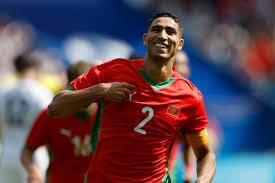
But that argument misses what makes Hakimi genuinely special as a defensive player: his recovery speed. The ability to be 50 meters from his defensive position and still make the covering tackle is rarer than any attacking attribute, and Hakimi does it consistently, at pace, without the panicked commitment to the challenge that characterises less confident defenders in the same situation.
At this World Cup, Morocco have been solid defensively — as they were in Qatar in 2022, when they became the first African nation to reach the semi-finals. Hakimi’s role in that defensive structure is not just positional. His presence on the right side stretches opposition teams, creating space for Morocco’s central defenders to operate more comfortably because attackers cannot commit fully to central channels with Hakimi’s recovery pace looming behind.
Tips.gg identifies Hakimi as one of the top defenders to watch for award recognition at this tournament, alongside Saliba and Pau Cubarsí. The combination of his attacking impact and defensive reliability makes him the most complete wide defender in this World Cup.
9. Nuno Mendes (Portugal) — The Best Left-Back in the World, Arguendo
Nuno Mendes arrived at this World Cup with a specific reputation that most serious football analysts acknowledge directly: he might be the best left-back in the world right now. The PSG full-back, 23 years old, is operating at a level that most players at his position take years longer to reach, if they reach it at all.
He is a strong defender in the traditional sense — disciplined positioning, physical presence, the ability to handle direct wingers one-on-one without flinching. But his attacking contribution is what elevates him into a different category. In Portugal’s setup under Roberto Martinez, Mendes attacks the left channel with a freedom and frequency that gives the team an extra dimension from wide areas. He has contributed eight goal contributions for Portugal since the last World Cup — a remarkable return for a full-back.
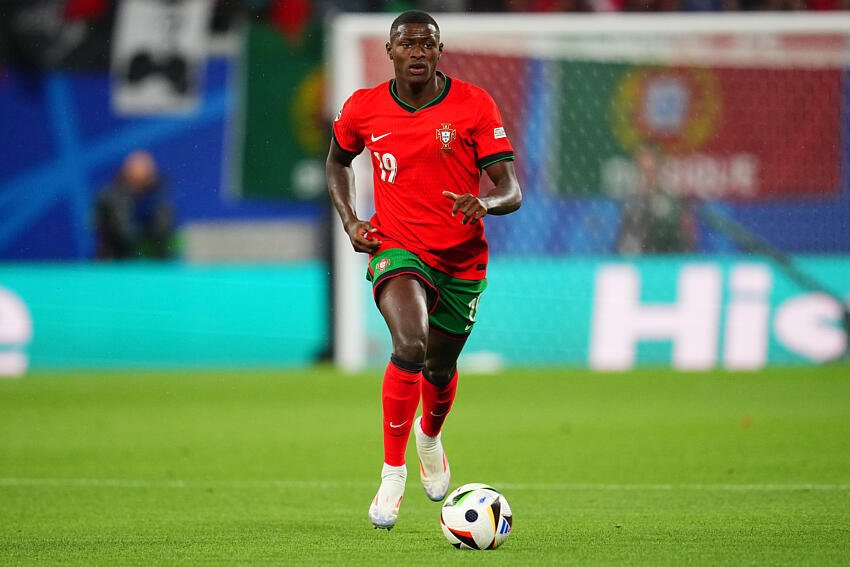
For Portugal’s title challenge, which rests significantly on the brilliance of Bruno Fernandes, Vitinha, and Lamine Yamal’s-level creativity in the wide areas, Mendes is the player who gives the left side of the pitch its attacking identity. He has made 43 appearances for Portugal at just 23, debutting at 19 — a trajectory that makes him one of the most established young defenders in international football.
Multiple pre-tournament rankings, including one from major betting and analysis platforms, have Mendes as the third-best defender heading into 2026 overall. In terms of pure left-back quality, there is nobody at this tournament operating at his level.
8. Antonio Rüdiger (Germany) — The Veteran Presence, Still Formidable
There is something specific that Antonio Rüdiger brings to a team that cannot be measured in pure defensive statistics: a physical and mental presence that changes the way opponents approach the matches they play against him. At Real Madrid, across multiple Champions League campaigns, defenders have described him as the most intimidating central defender in European football on his best days.
Rüdiger is 33 years old. He is at his third World Cup. He knows every trick that every striker in this tournament will try, because he has defended against the best forwards in the world consistently across five seasons at the highest level. That accumulated experience — the specific knowledge of how to handle a direct forward, how to manage a set-piece situation, how to organize a defensive line under pressure — is the quality that explains why he is still in this squad.
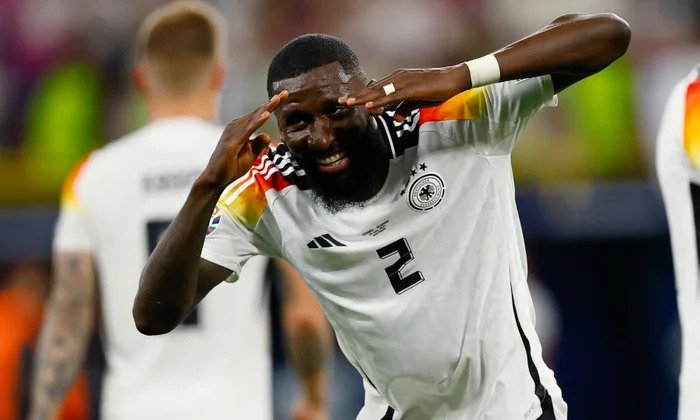
Germany need Rüdiger’s experience because their other central defensive options are younger, technically impressive but potentially inexperienced under the specific pressures of a World Cup knockout game. He gives Julian Nagelsmann a defensive anchor who will not be rattled when Germany face a top-eight team in the later rounds.
The one concern going into this tournament was his involvement in just two qualifying games — a reflection of careful squad management from Real Madrid rather than diminished quality. When Rüdiger is fit and focused, he remains one of the top-ten central defenders in world football.
7. Pau Cubarsí (Spain) — Teenage Brilliance That Defies His Age
Pau Cubarsí turned 19 in January. He has already played 125 times for Barcelona — an extraordinary statistic for a teenager in a squad of that quality. He has made 11 appearances for the Spanish national team. And heading into this World Cup, he is considered by Tips.gg as one of the top three defenders most likely to win the best defender award at the tournament, alongside William Saliba and Achraf Hakimi.
The reason is simple: Cubarsí plays like he has been defending in Champions League knockout games for a decade, despite the fact that his career began only three years ago. His positional intelligence is what separates him from other young central defenders — he reads attacks before they develop with a composure that makes the most experienced forwards he faces look as if they are playing against someone much older and wiser.
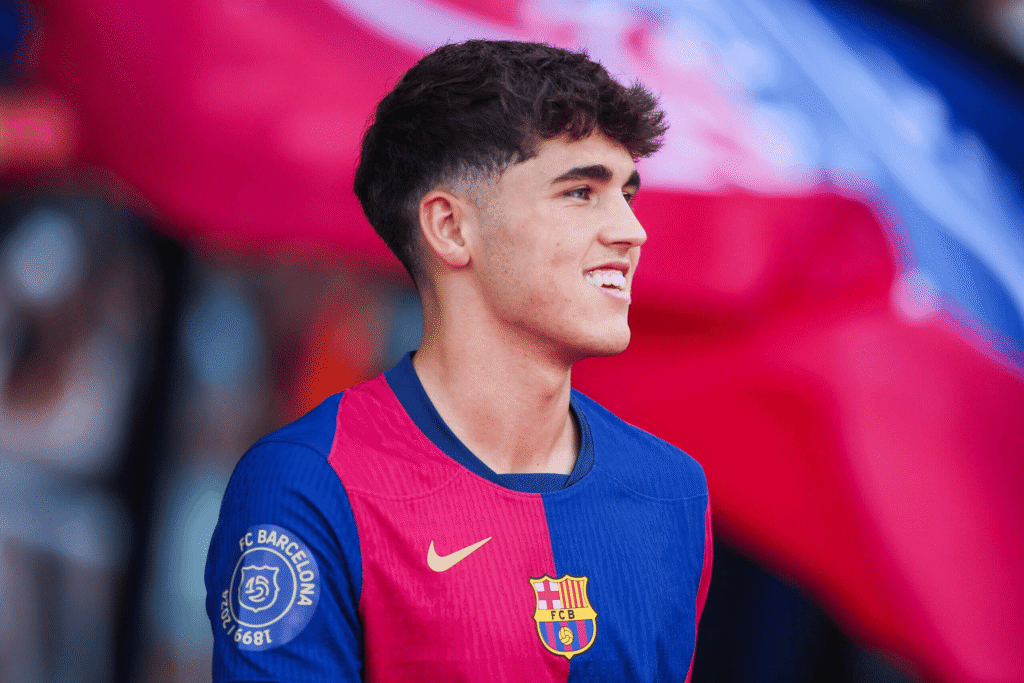
He is the kind of defender that Spain’s system specifically requires. Built around high pressing, a high defensive line, and rapid transitions from defense to attack, Guardiola’s Barcelona and De la Fuente’s Spain both demand central defenders who can pass accurately under pressure, carry the ball forward when necessary, and recover position with pace when the press is beaten. Cubarsí does all of these things as naturally as breathing.
Fox Sports had him in their top 100 players list before the tournament with a specific note: “Cubarsí turned 19 in January and has already played 125 times for Barcelona.” The numbers alongside the age tell you everything about the trajectory of this career.
6. Marquinhos (Brazil) — A Decade of Dominance, Still Going
There are players who carry a club on their shoulders for so long that they become inseparable from its identity. Marquinhos is that player for PSG. More than 500 games for the club since arriving in 2013. Champions League titles. Ligue 1 titles. And through all of it, a standard of consistent excellence in the central defensive role that has made him one of the most respected defenders in world football for nearly a decade.
At 31 years old, with 104 appearances for Brazil, he arrives at this World Cup wearing the captain’s armband for the Seleção — a responsibility he has carried with the same composure he brings to every defensive challenge. Fox Sports’ pre-tournament analysis put it clearly: “Marquinhos has been widely considered one of the best defenders in the world for the past decade, and he’s still playing at a high level.”
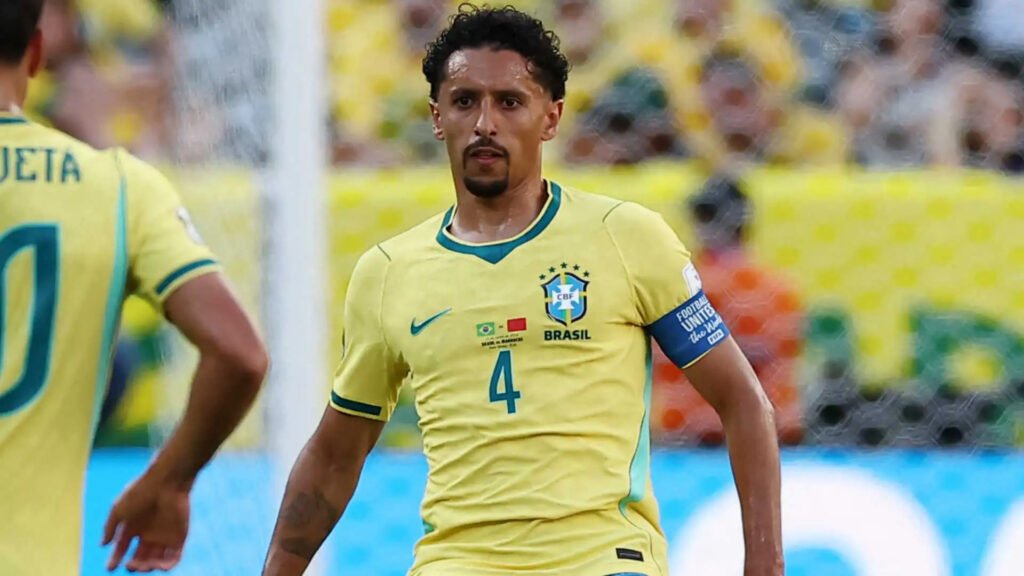
The specific concern for Brazil heading into this World Cup was the injury to Eder Militão, which means Marquinhos takes on even greater importance as the defensive anchor and organizer. Gabriel Magalhães alongside him provides the physical presence, but Marquinhos is the intelligence — the player who positions the line, reads the attacking shape, and coordinates the defensive block’s movement throughout matches.
In the group stage, Brazil conceded just one goal across three matches. Much of that defensive solidity runs through Marquinhos.
5. Gabriel Magalhães (Brazil) — Arsenal’s Giant Arrives on the World Stage
If Marquinhos provides the intelligence at the back for Brazil, Gabriel Magalhães provides the physical authority. At 6 feet 3 inches, the Arsenal centre-back is one of the most imposing aerial presences in world football, winning defensive headers with a consistency that forwards find exhausting to compete against over 90 minutes.
The numbers from his club season are staggering: across all competitions at Arsenal in 2025-26, Gabriel played 51 matches as part of one of the best defenses in Premier League history, keeping clean sheets in 24 of them. He won 2.3 aerial duels per game on average during qualifying — a rate that no other central defender at this tournament matches — and has never been dribbled past in a qualifying match throughout the entire CONMEBOL qualifying campaign.
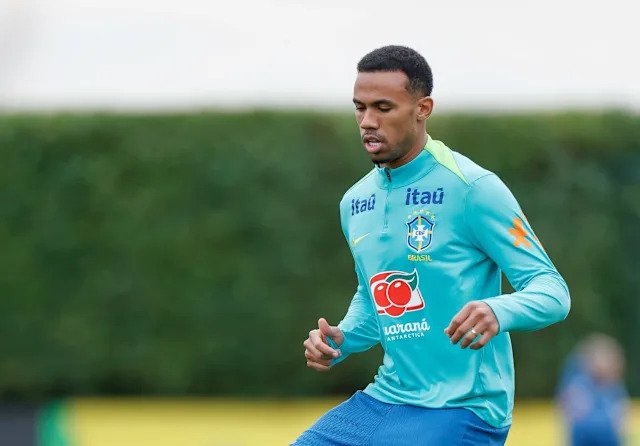
For Gabriel, this is his first World Cup at 28, having made just 17 international appearances — a relatively low cap total that reflects both the competition for Brazil places and the specific management of his international career. But he arrives at the tournament in the best form of his life and with a defensive partnership alongside Marquinhos that gives Brazil one of the two best central defensive pairings in this entire competition.
Lineups.com’s pre-tournament analysis had Gabriel as the number one overall defender heading into 2026 — a genuine case given the combination of physical dominance, technical quality, and the track record of Arsenal’s championship-winning defense built significantly around his presence.
4. Joško Gvardiol (Croatia) — The Most Complete Defender of the New Generation
Joško Gvardiol is 23 years old and already has two Champions League final appearances on his CV — one with RB Leipzig, one with Manchester City. He has been described by Pep Guardiola as one of the best defenders in the world, which given that Guardiola has managed Puyol, Piqué, Kompany, and Laporte, is perhaps the highest possible endorsement available in the modern game.
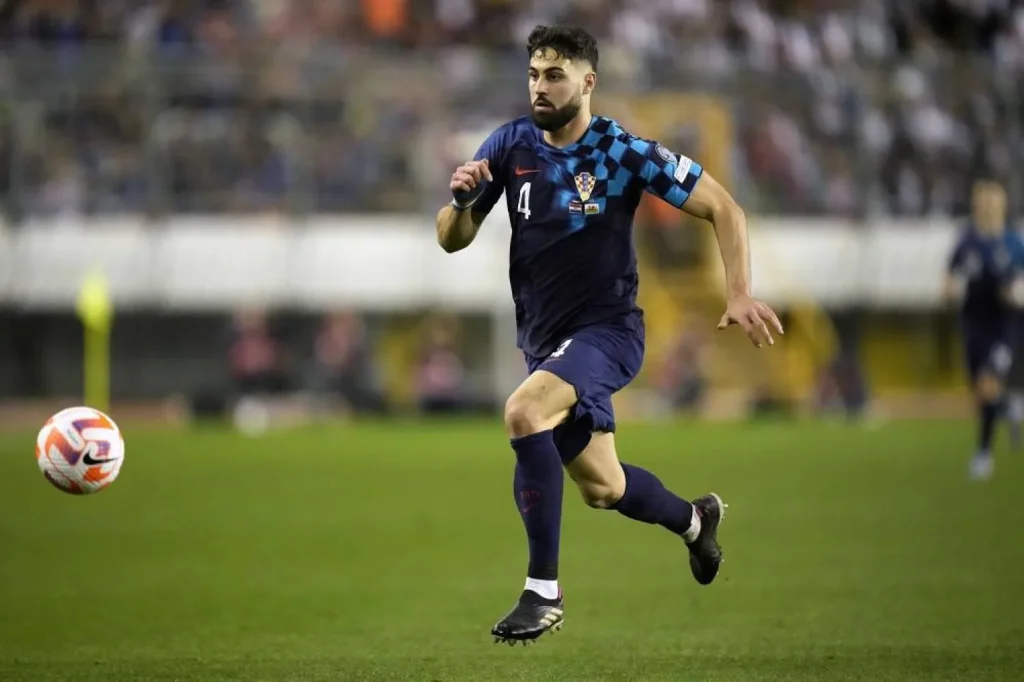
What makes Gvardiol exceptional is his combination of physical and technical qualities in proportions that no other defender of his generation quite matches. He is 6 feet tall, he wins aerial duels, he is physical in the tackle — all the traditional central defender attributes. But he is also one of the fastest defenders in this tournament, capable of tracking runs behind the defensive line that most central defenders cannot reach. His composure in possession, his ability to switch play with long diagonal passes, and his reading of the game in transition situations mark him as a player who operates at a higher tactical level than almost any other defender his age.
Croatia are not considered among the tournament’s title favorites, but with Gvardiol, Luka Modrić still dictating the tempo in midfield at 40 years old, and a squad that has punch above its weight in multiple World Cups — quarter-final in 2018, third place in 2022 — they are a team that nobody wants to face in the knockout rounds. Gvardiol is the specific reason their defensive structure is trusted.
3. Rúben Dias (Portugal) — The Organizer, The Leader, The Wall
Rúben Dias arrived at this World Cup carrying a minor injury concern that had kept him out of the final weeks of the club season at Manchester City. The concern for Portugal was real — without Dias, their defensive structure loses the specific organizing intelligence that holds everything together when attackers put them under sustained pressure.
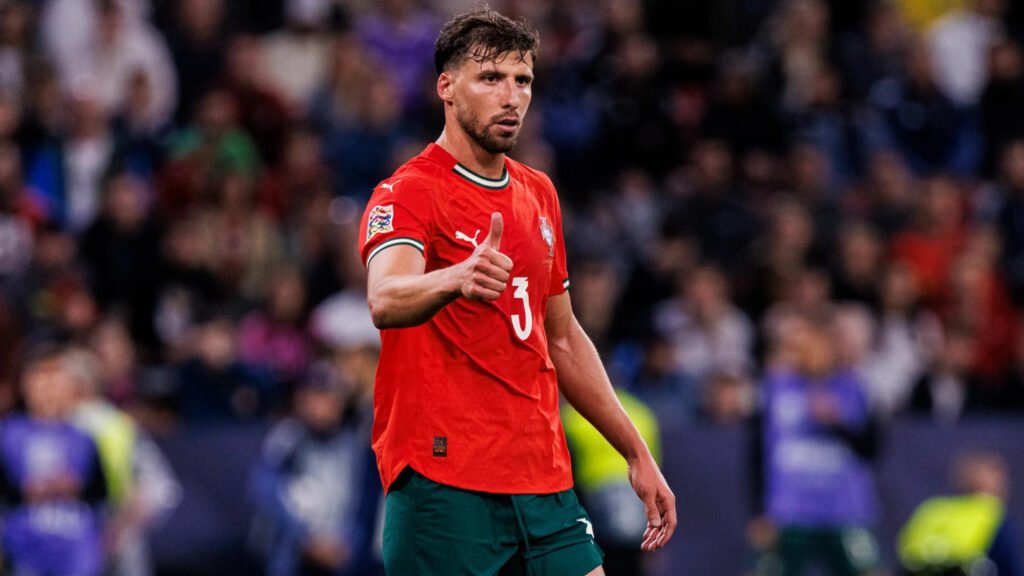
With him, Portugal’s defense is transformed. At 29, Dias is operating at the peak of his powers — a player who does not defend reactively but eliminates threats before they require a response. ESPN’s pre-tournament coverage noted his “impeccable understanding of his position” and described him as “an immovable force when operating at his peak standard.” That standard involves perfectly timed challenges, the ability to marshal opponents who are stronger or faster than him through positioning rather than physical dominance, and a leadership quality that gives every player around him specific confidence.
His partnership with Nuno Mendes on the left side and his communication with the Portuguese midfield make Portugal’s defensive block one of the most cohesive at this tournament. When Dias is fit, Portugal concedes very little. When he has been absent, the difference is visible and immediate. That is the test of a truly elite defender.
2. Virgil van Dijk (Netherlands) — Thirty-Five and Still the Standard
There is a version of this ranking where Virgil van Dijk belongs at number one, and people who have watched him across the last decade of world football would understand why. The Netherlands captain has been the defining central defender of the past ten years — the player who changed the standard for what a centre-back could be, who made defending look simultaneously physical and elegant, and who gave Liverpool the defensive foundation for one of the great Premier League title wins and a Champions League triumph.
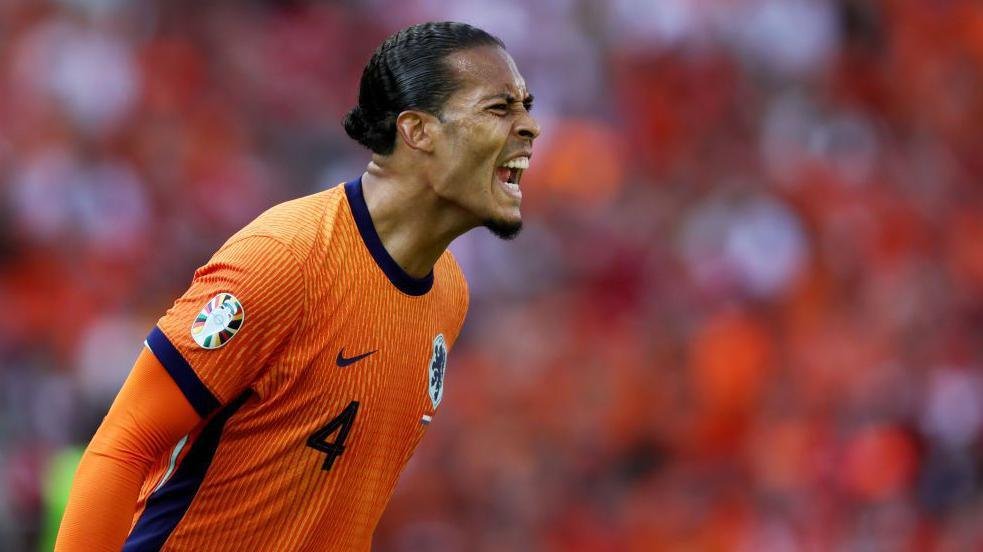
At 34 — approaching 35 during this tournament — he is no longer the invincible presence of 2018 and 2019. He has lost a fraction of the pace and finesse that made him so aesthetically complete in his prime. Sports Illustrated’s pre-tournament analysis acknowledges this directly while still including him in the top ten: he is “far from the impenetrable force that once single-handedly rebuffed all forwards in Liverpool’s path, but retains a glowing aura that effuses confidence.”
What Van Dijk still does better than almost anyone at this tournament is make the game simpler than it is. He wins the aerial duel. He reads the pass into the channel. He organises the back four so efficiently that the task of defending for the players around him becomes less complicated. And at set-pieces — having scored eight goals for Liverpool in 2025-26 — he remains one of the most dangerous aerial threats from dead-ball situations in world football.
He is the leader of a Netherlands side that has the defensive foundations to go deep in this tournament. His presence alone makes them harder to beat.
1. William Saliba (France) — The Best Defender in World Football, Period
This is not a close call. Multiple major football media outlets, tactical analysis platforms, and expert ranking systems agree on the conclusion: William Saliba is the best defender at the 2026 FIFA World Cup, and it is not particularly close.
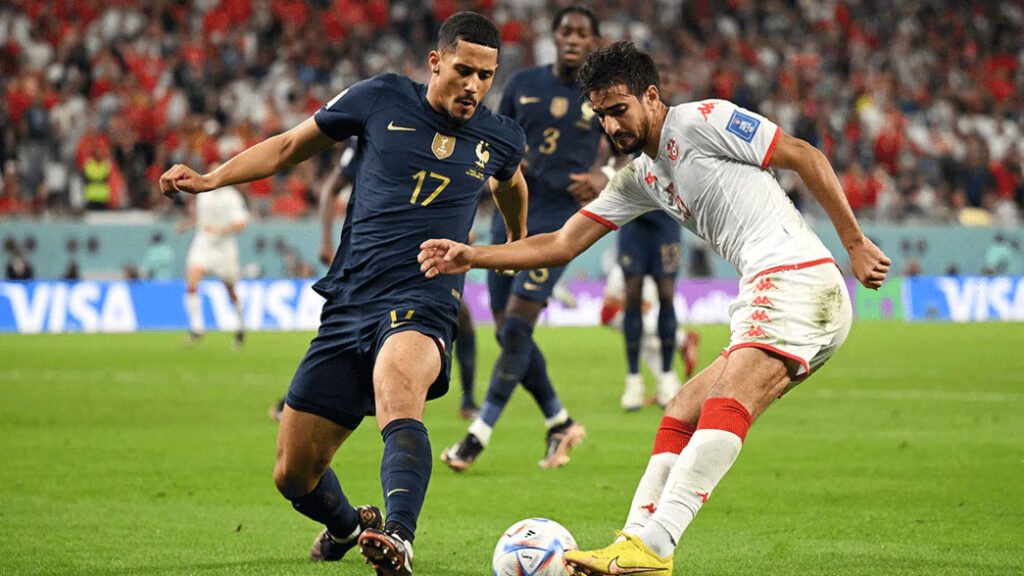
The Arsenal centre-back, 25 years old, has been described by Tips.gg as “the best defender heading into the 2026 World Cup — and it is not particularly close.” Lineups.com has him as their second overall defender. Every major pre-tournament analysis across ESPN, Sports Illustrated, FOX Sports, and dedicated analytics platforms places him at or near the top of the defensive rankings.
The specific case for Saliba is built on qualities that are difficult to find simultaneously in any other defender in world football right now. He does not defend reactively — he eliminates threats before they become dangerous through a positional intelligence that anticipates attacking patterns before they develop. At 6 feet 4 inches, he wins aerial duels with a frequency that makes set-piece defense almost automatic for France. He passes from the back with an accuracy — 94.3% pass completion during qualifying — that is elite even by the standards of technical midfielders, let alone a central defender. And in high-pressure, high-stakes football, he gets better rather than worse. The bigger the stage, the more measured his performances.
He won 2.3 aerial duels per game in qualifying. He was never dribbled past. France’s defensive record during qualifying was among the best in European competition. And in the group stage at this World Cup — three matches, 3-1, 3-0, and 4-1 — France conceded only two goals while scoring ten, and Saliba’s defensive presence was the foundation that allowed the attacking players to operate without defensive anxiety.
France are the tournament favorites at +340. Their path to the final runs through some of the best attacking players at this World Cup — potentially Mbappé mirrors, Haaland’s power, and Messi’s creativity if the bracket produces the semi-final it projects. Against all of them, Saliba will be the last line of organized defensive intelligence between their attacks and France’s goal.
If France win the 2026 FIFA World Cup, the trophy-lift moment belongs to Mbappé and Deschamps. But the defensive foundation that makes it possible begins and ends with William Saliba.
Honourable Mentions — Defenders Who Almost Made the List
Several players just outside this top ten deserve recognition for their contribution to the defensive quality of this tournament.
Marc Guéhi of England has been one of the tournament’s most composed defenders, providing the technical precision in the back line that allows England to play the high press Tuchel demands. Willian Pacho of Ecuador — described by Sports Illustrated as “a physical titan with the scorching pace required to track runners” — brings a defensive quality that has made Ecuador’s back line one of the tournament’s most organized. Pau Torres of Spain and Aymeric Laporte add depth to one of the most complete defensive squads in this competition. And João Cancelo, at 31, brings an attacking dimension from full-back alongside his defensive quality that makes Portugal’s wide positions consistently dangerous.
Final Thought — Defense Is Not Boring. It Is the Foundation.
The old football cliché says that attack wins games and defense wins championships. At this World Cup, the evidence for that argument is compelling. France, the team with the best defender in Saliba, is the tournament favorite. Argentina, with their experienced defensive unit and Emiliano Martínez in goal, are the defending champions. Spain’s Cubarsí and the defensive foundation around him is what allows Yamal and Pedri to play with the freedom that makes them so devastating in attack.
Defenders do not get the attention. They do not get the Golden Boot. They do not get the individual awards with the same frequency. But every team that goes all the way in this tournament will look back on the goals they did not concede as the reason they won.
For the official FIFA Power Rankings powered by Aramco — updated after every match of the 2026 World Cup — visit the FIFA official website: https://www.fifa.com/en/tournaments/mens/worldcup/canadamexicousa2026/power-rankings



One comment on “Strongest Defenders in FIFA World Football 2026 — The Complete Ranking”