

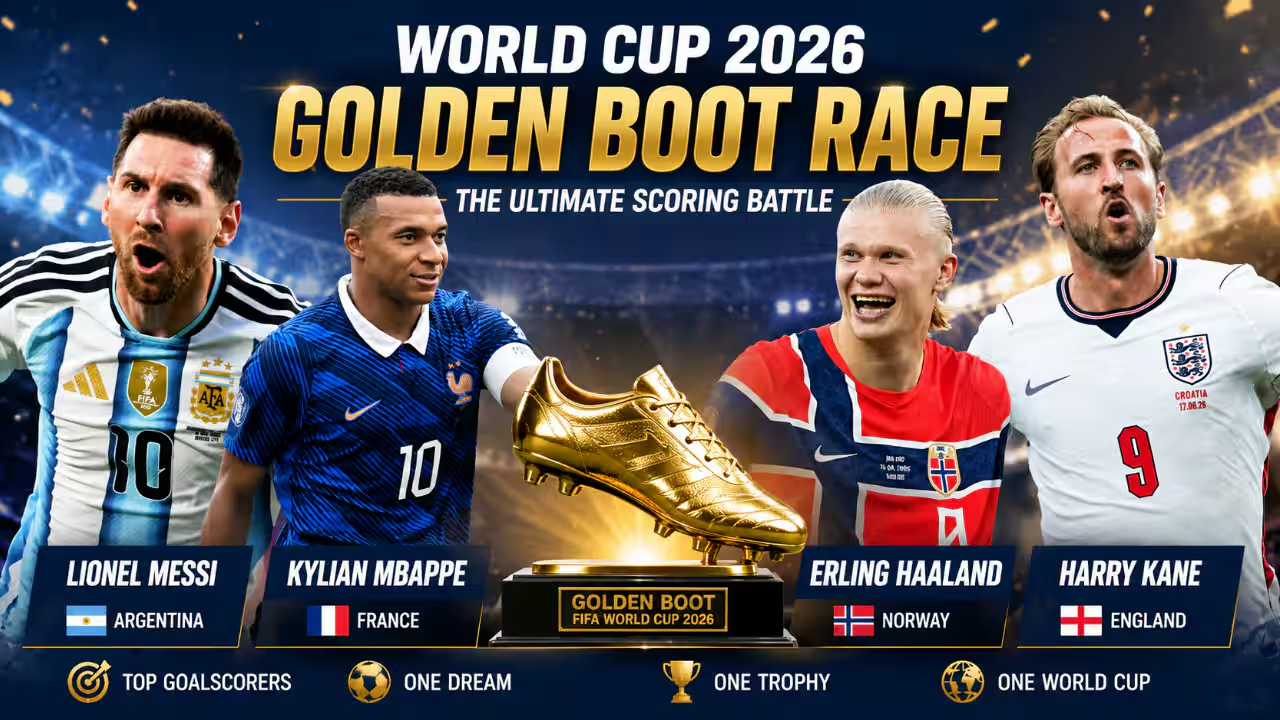





Who are the best midfielders at FIFA World Cup 2026? Full ranking of Bellingham, Rodri, Pedri, Vitinha, Bruno Fernandes & more — with stats, analysis & verdict.
Every generation of football produces a handful of midfielders who redefine what the position can be. In the 1970s it was Cruyff and Platini reshaping the number ten into something approaching art. In the 2000s it was Xavi and Iniesta showing the world that composure under pressure was the most dangerous weapon in football. In 2026, the midfield talent assembled at this World Cup is so deep and so varied that making a definitive list requires drawing on everything — goals, assists, defensive output, tactical intelligence, leadership, and the one quality that matters more in tournaments than anywhere else: what you do when it actually counts.

This World Cup has already confirmed something many analysts suspected before the first ball was kicked: this is the greatest collection of central midfield talent ever gathered at a single major tournament. England, Spain, Portugal, Germany, France, and Uruguay have each arrived with midfield units of historic quality. The players in the middle of the park are not just winning games — they are defining what modern international football looks like.
Here is the full ranking of the best midfielders at the 2026 FIFA World Cup, with honest analysis of why each one belongs on the list.
How This Ranking Works
Before the names, a word on the method. Rankings of this type are often dominated by volume statistics — most touches, most passes, highest possession percentage. Those numbers matter, but they do not tell the complete story. A midfielder who dominates a mismatch in the group stage earns far less credit in this assessment than one who controls a quarterfinal against elite opposition.
The criteria used here combine direct goal contributions, positional control across full matches, defensive intervention quality, tactical versatility, pressure-performance — meaning: does this player get better or worse when the stakes are highest? — and overall impact on their nation’s tournament chances. These are the midfielders who are genuinely moving the needle at the 2026 FIFA World Cup.
10. João Neves (Portugal) — The 21-Year-Old Who Plays Like a Veteran
There is something almost unfair about how composed João Neves is under pressure. The PSG midfielder turned 21 in September, making him one of the youngest starting midfielders at this tournament, and yet the way he manages the game — his positioning between the lines, his ability to receive the ball in tight spaces and release it at exactly the right moment — suggests a player who has already been through ten World Cups rather than arriving at his first.
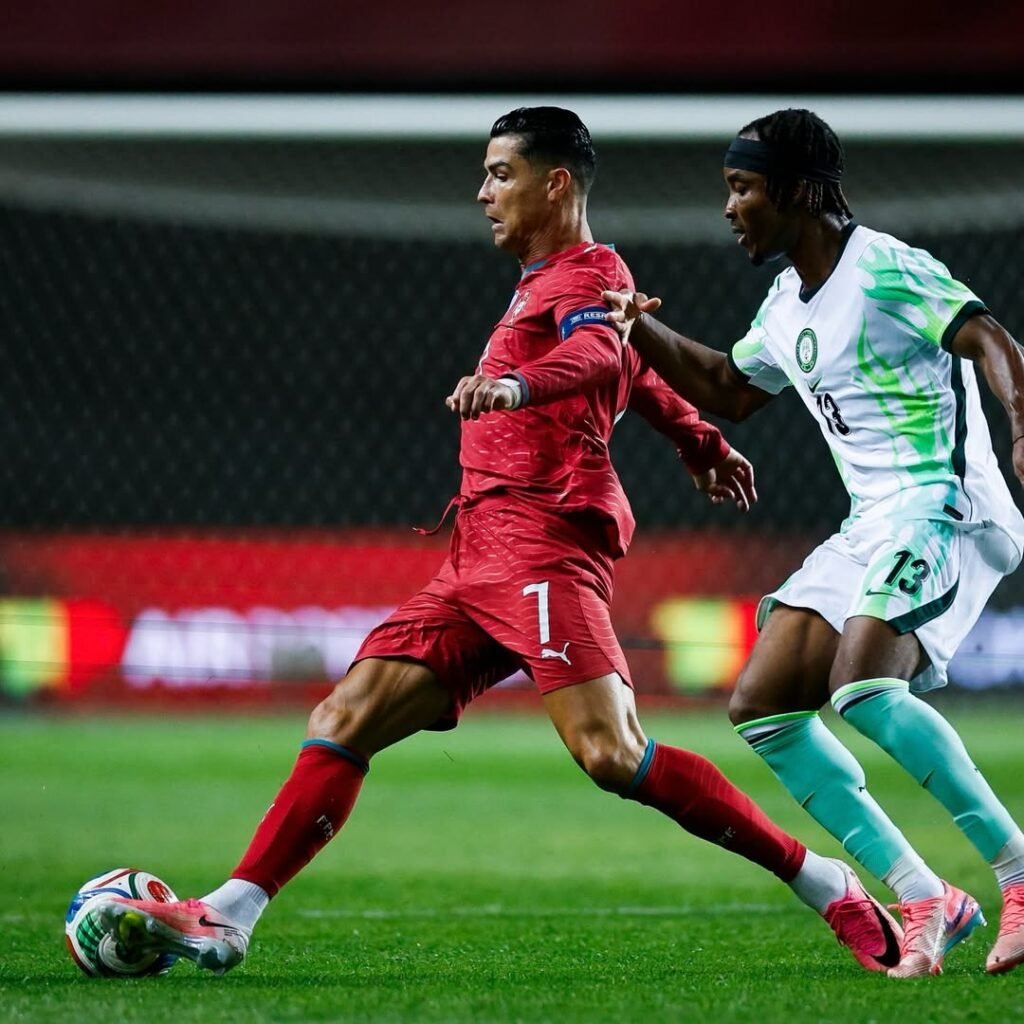
Neves became the third youngest Portuguese scorer at a World Cup when he found the net against Uzbekistan. His partnership with Vitinha in the center of Portugal’s midfield has been quietly one of the most effective midfield relationships at this tournament — both players moving with the intelligence of a chess partnership, constantly finding angles and spaces that opposition teams cannot account for.
The FOX Sports pre-tournament assessment put it well: Neves controls the game as well as any player in the world, a menace defensively who can also drive with the ball at his feet. He is at this tournament as a supporting cast member. He may leave it as one of the main attractions.
9. Declan Rice (England) — The Engine That Makes England Work
Declan Rice walked into England camp for this World Cup carrying a specific swagger that comes from a very specific source. He is a Premier League champion with Arsenal, and that experience — of winning, of doing it with a team that pressed and competed at the very highest level — has added a dimension to his play that makes him appreciably better than the version who appeared at Euro 2024.
Against Croatia, Rice was the player who kept England’s structure intact while Bellingham and Kane operated in more advanced positions. He made 14 defensive interventions in that match — more than any other England player — while simultaneously providing the forward passes that released Bellingham and Saka into dangerous areas. The NBC Sports World Cup rankings have him at 23rd across all positions, and among midfielders that puts him clearly in the top ten.
Rice does not score goals with frequency or produce the kind of highlight-reel moments that generate social media attention. What he does is harder to quantify and more important to a team’s success: he provides the structural bedrock that allows every other midfielder around him to take the risks that create chances and goals. Without Rice, England’s midfield does not work. With him, it operates with the fluidity of a team that actually trusts its defensive foundation.
8. Jamal Musiala (Germany) — The Most Technically Gifted Young Midfielder at This Tournament
Jamal Musiala arrived at this World Cup in the specific context of an athlete returning from adversity. He suffered a fractured fibula during the 2025 FIFA Club World Cup and missed the rest of that year, before slowly working his way back to the form that makes him one of the most technically gifted footballers of his generation. By the time the 2026 World Cup began, he was back — and the difference he makes to Germany’s attacking play is immediately visible.
Musiala is the kind of player who makes you stop whatever else you are doing to watch when he gets the ball in tight spaces. His dribbling is not about pace — it is about balance, timing, and a specific quality of close control that makes defenders look like they are moving in treacle. He is only 23 years old and already has the technical vocabulary of a player who should be winning Ballon d’Or awards within the next two or three years.
Germany has looked significantly more dangerous going forward when Musiala is fully involved in build-up play, and his partnership with Florian Wirtz in the attacking midfield areas gives Germany a creative dimension that few other teams at this tournament can match.
7. Federico Valverde (Uruguay) — The Machine Who Never Stops Running
Federico Valverde of Real Madrid and Uruguay is the specific kind of footballer that managers circle in their notebooks and annotate with words like “relentless” and “irreplaceable.” At 27 years old, he has arrived at his peak — the phase of a career where the physical engine that has always defined him is now matched by the tactical experience to use it intelligently rather than just constantly.
He has been described, fairly, as a manager’s dream. Everything he is asked to do, he performs to an elite standard. He is a box-to-box midfielder in the truest sense — contributing defensively with pressing and recovery runs, contributing offensively with late arrivals into the box and through-passes into dangerous areas. Multiple Real Madrid managers have exploited his versatility across different systems and tactical requirements.
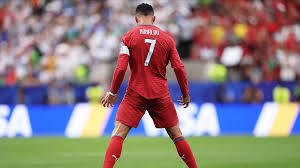
For Uruguay at this World Cup, Valverde functions as the team’s fulcrum. He covers for teammates, links defence and attack, and provides the kind of physical intensity that gives his team an extra dimension in transition football. Uruguay as a squad has genuine weaknesses elsewhere, but Valverde ensures they are never outworked in the middle of the pitch. The Sports Illustrated pre-tournament ranking called him a standout — and in a tournament where output matters as much as reputation, he has delivered on that assessment.
6. Bruno Fernandes (Portugal) — The Creative Force Behind Portugal’s Best Moments
Bruno Fernandes walked into this World Cup off the back of his most complete season as Manchester United captain — a version of his game that ESPN described as genuinely capable of working in multiple roles, operating effectively both as a deep-lying creator and as an advanced midfielder in the final third. That versatility has made him more effective for Portugal than at any previous tournament.
The NBC Sports rankings have Fernandes at 6th overall — above every midfielder in the tournament except those occupying the top five positions. His ability to create chances, to drive forward with the ball, and to connect the dots between Portugal’s exceptional midfield and the forward line makes him the fulcrum of everything Martinez’s team does in the final third.
In the Uzbekistan match, Fernandes delivered a performance that reminded the world why he is considered among the best attacking midfielders in international football. His assist for Ronaldo’s second goal — a precise, perfectly weighted pass that cut through the defensive structure — was exactly the kind of delivery that changes games at the highest level. Created one chance in the 92nd minute of the DR Congo draw, showing the persistence that defines his play even in frustrating games.
Portugal’s squad, by most measures, has the best midfield at this tournament. And Fernandes is the engine at the front of it.
5. Pedri (Spain) — The Passer Nobody Can Match
There is an ESPN analysis of the best players at this World Cup that contains one sentence about Pedri that is impossible to argue with: “Pedri is the best midfielder passer in the world. There’s no one else who combines ball security, a high volume of touches, buildup play and chance creation the way he does.”
That sentence covers the essentials, but it misses the specific quality that makes watching Pedri play such a distinctive experience. He makes the game look slower than it is. When the ball arrives at his feet — in tight spaces, under pressure, with opponents closing from multiple directions — he is already two touches ahead of where most players would be thinking. His first touch opens an angle. His second touch executes a pass that the defending team had no idea was coming. By the time they have adjusted, the sequence is over and Spain have moved on.
Pedri has played more than 250 matches and scored 30 goals for Barcelona, winning the La Liga title in 2025-26 and playing a prominent role in Spain’s Euro 2024 triumph. At 23, this is only his second World Cup, but he plays with the economy and confidence of a player who has already been through every high-pressure situation international football can produce.
He is also, crucially for Spain’s defensive structure, an incredibly active and aggressive presser without the ball. Pedri defends with his brain — cutting off passing lanes, anticipating where the ball is going, winning it back in areas that immediately create attacking opportunities. He is ranked 12th overall in the NBC Sports World Cup player rankings, and 6th in the ESPN 50-best-players list — the highest-ranked midfielder in that specific assessment after Messi (who is classified as an attacking midfielder).
4. Vitinha (Portugal) — The Architect Nobody Talks About Enough
Vitinha finished third in the 2025 Ballon d’Or voting — an achievement that reflects how high the football world now rates the PSG midfielder, but which has not fully translated into the global recognition he deserves among casual observers. At this World Cup, he is already one of the most important players across any position for any nation.
The way Tips.gg described his role captures it well: Vitinha’s genius is architectural. He constructs attacks through precise, purposeful movement and passing sequences that carve open compact defensive blocks. His positional fluidity allows Portugal to operate with greater variety between the lines. He is the player who makes Bruno Fernandes and João Neves possible — because Vitinha controls the tempo at the base of Portugal’s midfield with the kind of quiet authority that only the very best footballers possess.
He is 26 years old. He has multiple Ligue 1 titles and deep Champions League experience. He arrived at this World Cup as an established star who is still getting better, which is a genuinely frightening combination. Portugal’s midfield is considered the best at this tournament by multiple analysts — and Vitinha is the reason that assessment holds up even under careful scrutiny.
If Portugal progress deep into the knockout rounds, Vitinha’s performances will be central to everything they achieve. He is the player that opposition coaches will be studying hardest when they prepare to face Portugal.
3. Jude Bellingham (England) — The Record Breaker, The Complete Midfielder
The numbers around Jude Bellingham at this World Cup are already extraordinary, and the tournament has barely reached the halfway point of the group stage.
He became the third youngest player in history to score in two different World Cups — a list that begins with Pelé and Michael Owen. He became the youngest European player to play in four major tournaments, doing so at just 22 years and 353 days. He scored England’s first goal against Croatia with a devastating run from deep — receiving a long ball on the right side, carrying it into the box with a Croatian defender in front of him, and finishing with composure when the moment came. And he did all of this while also leading England’s pressing structure, winning defensive duels, and providing the linking play that connects England’s midfield to Kane and Saka in the attacking positions.
The pre-tournament debates about whether Bellingham would start, whether his hamstring injury earlier in 2026 had cost him the form and sharpness required at a World Cup, were answered definitively in the Croatia match. He is not just fit — he is playing at a level that puts him firmly among the two or three best players at this entire tournament, regardless of position.
ESPN ranked him 13th overall — their highest-ranked midfielder — and described him as “good at pretty much everything a person would ever need to do on a soccer field.” That is an assessment so close to literally true that arguing with it feels pedantic. Bellingham presses. He carries. He passes. He scores. He leads. He defends. At 22, he is already one of the most complete midfielders in the history of English football, and this World Cup might be where that claim is universally accepted rather than enthusiastically debated.
For England, he is not just the best midfielder — he is the player around whom the entire tournament ambition is organized.
2. Rodri (Spain) — The Ballon d’Or Standard, Confirmed Again
Rodrigo Hernández Cascante — universally known simply as Rodri — won the 2024 Ballon d’Or. He was the first Manchester City player and only the second Spanish male player in history to receive that award. He was the Player of the Tournament at Euro 2024. And at this World Cup, he is confirming, match by match, that the assessments that led to those awards were correct.
Rodri is the best defensive midfielder in the world. That is not a controversial statement in 2026 — it is close to a consensus view among analysts, coaches, and players who are routinely asked about it. His positioning sense is so precise that he appears to have read the pattern of a game before it has fully developed. His passing accuracy under pressure is elite. His ability to control the tempo of a match — to speed up or slow down Spain’s play based on what the tactical situation requires — is the quality that separates him from every other holding midfielder at this tournament.
Britannica’s World Cup preview made the point clearly: his passing accuracy and match control are among the best in the world, his partnership with Pedri is arguably the strongest midfield partnership in international football, and he was named Player of the Tournament at Euro 2024 because the performances that won him the award were simply too obvious to overlook.
At this World Cup, Rodri has led the competition for possession won and controlled matches at a level no other defensive midfielder can approach. Against Saudi Arabia, his distribution was the engine behind Spain’s devastating opening half-hour. Against Cape Verde, even in a performance where Spain struggled to create, Rodri was the one player who maintained his level throughout — the one the team could always find when everything else was breaking down.
He does not score goals with frequency. He does not produce the kind of individual moments that win highlight reel competitions. What he does instead is harder, rarer, and more valuable: he makes his team better for the entire 90 minutes of every single match he plays.
1. Jude Bellingham OR Rodri? The Debate at the Top
Here is the honest version of this ranking’s conclusion: Bellingham and Rodri are so close to each other in terms of overall World Cup performance that making a definitive call depends on what you are measuring.
If you are measuring control, positional intelligence, and the consistency of performance across every minute of every match, Rodri wins. Nobody at this tournament has been more consistently influential over the full 90 minutes of every game than Spain’s holding midfielder. He is the architectural foundation that the entire Spain tournament challenge is built on.
If you are measuring direct impact on results — goals, assists, decisive moments in the specific games that determine whether teams win or lose — Bellingham wins. His goal against Croatia, coming at the exact moment England needed a lift after a difficult spell of the match, was the kind of contribution that changes tournament narratives. His combination of defensive output and attacking production is genuinely without peer at this level.
Multiple rankings from the tournament’s leading analytical outlets resolve this differently. Tips.gg ranks Bellingham first among midfielders. NBC Sports has Rodri at 11th overall to Bellingham’s 13th, putting Rodri marginally ahead. ESPN places both in their second-highest tier.
The honest conclusion: they are the two best midfielders at the 2026 FIFA World Cup, and the gap between them is smaller than the gap between either of them and everyone else. Spain’s chance of winning the tournament and England’s chance of winning the tournament both rest significantly on how these two players perform across the knockout rounds. Watch them both. Neither will disappoint.
Honourable Mentions — The Names That Almost Made the List
This is not a tournament where ten names covers everything worth discussing in midfield. A few others deserve recognition:
Martin Ødegaard (Norway) arrives at +3000 odds to win the tournament but has been genuinely brilliant as the creative architect behind Norway’s impressive campaign, ranked 10th in the ESPN 50-best players list. Declan Rice’s combination with Bellingham gives England a midfield balance that is among the most effective at the tournament. Aurélien Tchouaméni’s defensive intelligence gives France the structural solidity that allows Mbappé and Dembélé to operate with the freedom that makes them so dangerous. And Florian Wirtz — if Germany can find a way to get him on the ball consistently in the knockout rounds — is a player capable of producing the kind of individual brilliance that decides major tournaments.
Final Thought — This Is the Golden Age of the Midfielder
What makes the midfield quality at this World Cup special is not just the presence of world-class players. It is the variety. Rodri represents one version of excellence — control, structure, positioning, the intelligence that makes a team work as a unit. Bellingham represents another — direct impact, goals, decisive moments, the kind of fearless performance under pressure that changes narrative in real time. Pedri is something else entirely — the passer’s passer, the player who makes football look like a conversation between teammates rather than a fight between opponents.
These three players alone represent three completely different answers to the question of what a great midfielder actually is. The fact that they are all present, all performing, and all genuinely competing to be the best player in their position at the biggest tournament in world football is a gift to anyone who loves the game.
For the official FIFA World Cup 2026 player statistics, including goals, assists, minutes played, and full tournament rankings, visit the official FIFA website: https://www.fifa.com/en/tournaments/mens/worldcup/canadamexicousa2026/statistics/player-statistics


4 Comments on “Best Midfielders in FIFA World Cup 2026 — The Complete Rankings & Analysis”