

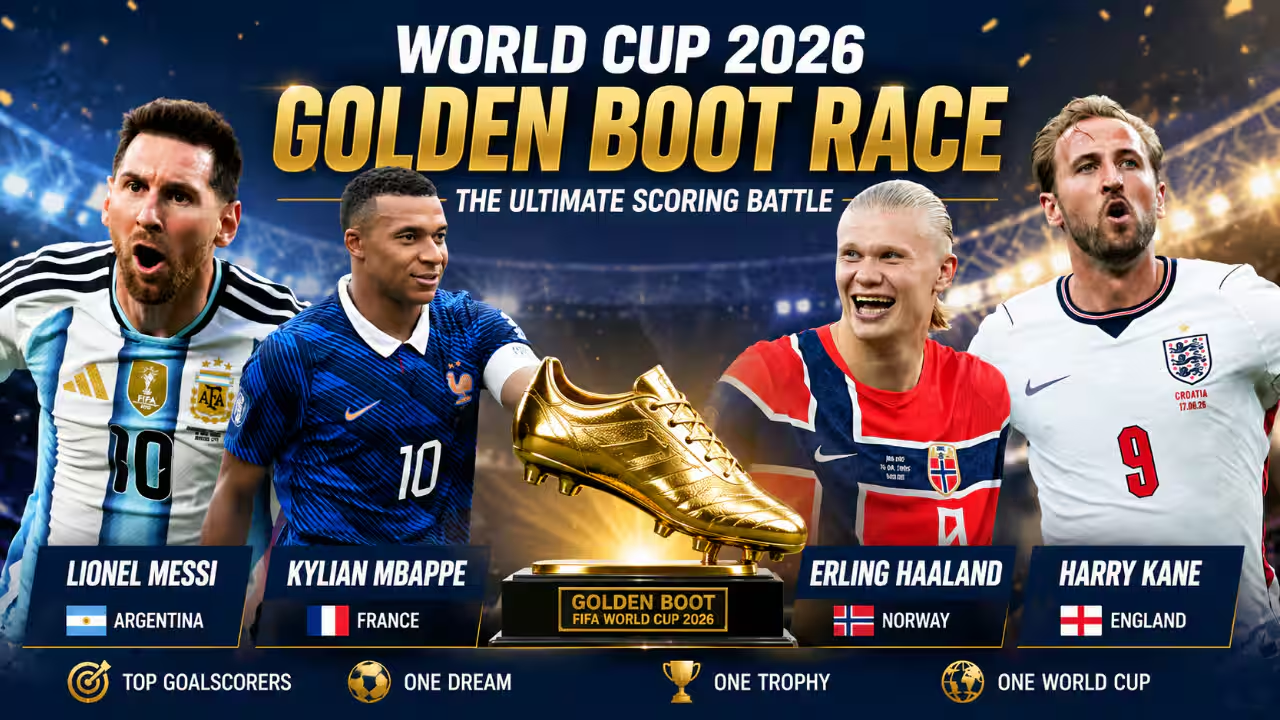





There are football rivalries. And then there is Brazil versus Argentina.
Every major sport in the world has its great rivalries — the ones that go beyond results and become something cultural, something generational, something that parents pass down to children like a language. Real Madrid vs Barcelona. England vs Germany. India vs Pakistan in cricket. But none of them carry the specific combination of ingredients that makes the South American Superclásico the most emotionally charged international football rivalry on earth: five combined World Cup titles between nations that have produced more football legends than anywhere else in history, a century of competition that spans Pelé and Maradona, Ronaldo and Messi, Neymar and Julián Álvarez — and a head-to-head record so close that after more than 110 encounters, neither side can claim genuine dominance.
FIFA itself has described this rivalry as the “essence of football rivalry.” That is not a marketing phrase. It is an accurate description of what happens when these two nations meet — the intensity, the quality, the drama, and the occasional controversy that have made every Brazil vs Argentina match a national event in both countries and a global spectacle for everyone watching from the outside.
This is the full story.
The Origins — A Century of Competition
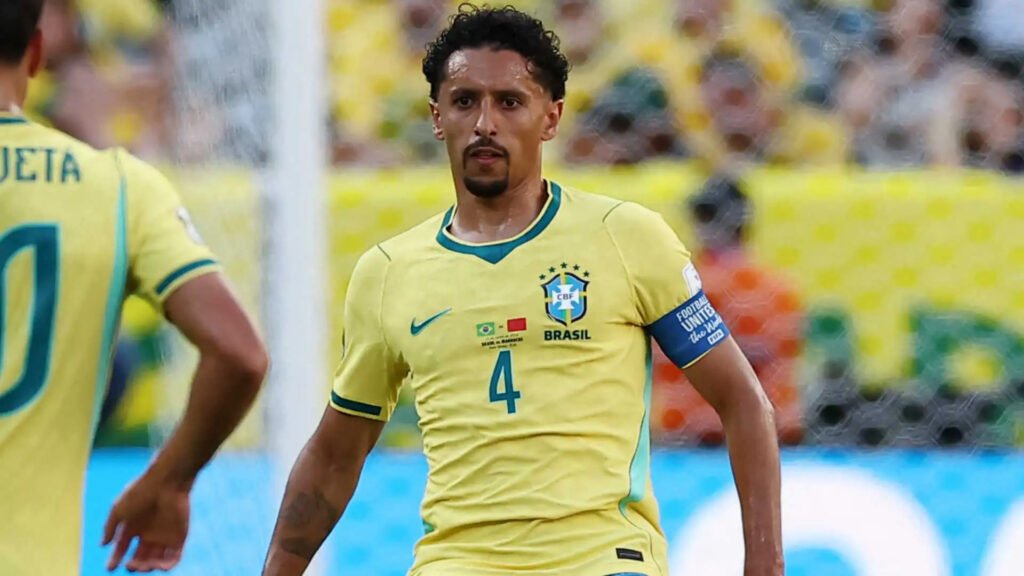
The rivalry did not begin at a World Cup. It began much earlier, in the specific context of South American football that predates the World Cup’s existence by decades. Brazil and Argentina first met in 1914, in the early years of organised international football on the continent, and by the 1930s the fixture had already taken on the character that defines it today — fierce, political, occasionally violent, and always deeply meaningful to both nations.
By the 1937 South American Championship — the tournament that would eventually become the Copa América — the rivalry had already become, in the words of football historians, a matter of national pride rather than merely sporting competition. The two nations had developed contrasting identities that went beyond their playing styles: Argentina, with its European immigrant culture and its cosmopolitan, technically precise football built around the streets of Buenos Aires. Brazil, with its Afro-Brazilian roots and its expressive, joyful football that would eventually be called jogo bonito — the beautiful game.
Those contrasting identities — the tactical precision of Argentina versus the expressive brilliance of Brazil — have defined the rivalry ever since, even as both nations have adopted elements of each other’s approach and produced players who transcend any simple style category.
The 1937 South American Championship final, played in Buenos Aires between the two teams, ended in extraordinary circumstances. Argentina won in extra time after the Brazilian players — disputing a goal’s validity and reportedly fearing for their safety in the hostile crowd — left the stadium before the match was officially finished. The Brazilian press called it “o jogo da vergonha” — the shameful game. It was 1937. The rivalry was barely 23 years old. And it had already produced the kind of drama that most sporting rivalries never achieve in a century.
The Numbers — What a Century of Matches Looks Like
Before the stories, the facts. Because in a rivalry this closely contested, the numbers matter.
Brazil and Argentina have met more than 110 times in official matches. According to FIFA’s official records, Brazil have won 43 matches to Argentina’s 41, with 26 ending in draws — a record of extraordinary closeness across more than a hundred years of competition. They are equally close on total goals scored, both approaching 200 in all-time head-to-head meetings.
In FIFA World Cup matches specifically, the two nations have met four times. Brazil have won twice. Argentina have won once. One match was drawn. The relative scarcity of World Cup meetings — just four encounters across the entire history of the tournament — is one of the reasons that each one carries such enormous emotional weight when it occurs.
Argentina lead on Copa América titles: 15 to Brazil’s 9. Brazil lead on World Cup titles: 5 to Argentina’s 3 — though the gap has narrowed since Messi’s team won in Qatar in 2022 and defended the title in 2026. Argentina lead on senior international titles overall, with 23 to Brazil’s 20.
The individual records within the fixture are equally remarkable. Pelé holds the record for most goals in the head-to-head, scoring eight in ten appearances against Argentina — a statistic that captures something essential about his dominance of the fixture in the era when he and Maradona were establishing themselves as the two defining players in the rivalry’s history. Javier Zanetti holds the record for most appearances in the fixture, playing 16 times against Brazil across his distinguished international career.
One number stands above all others in recent history: Argentina have won the last five meetings heading into 2026. The most recent, in March 2025 during World Cup qualifying, ended 4-1 to Argentina — their biggest victory over Brazil in the modern competitive era, with Messi orchestrating and the team playing with the specific confidence of reigning world champions who know exactly who they are.
Pelé vs Maradona — The Rivalry Within the Rivalry
The Brazil vs Argentina fixture has always had an individual dimension that mirrors the team one. Every era of the rivalry has produced a specific player-against-player narrative that captures the imagination in ways that purely team-level analysis cannot.
But no individual dimension of this rivalry has ever matched the Pelé vs Maradona comparison for sheer cultural reach and emotional intensity.
The two men did not actually face each other at a World Cup — Pelé’s final World Cup was 1970, when he won his third title with Brazil, and Maradona’s first was 1977 in youth football, with his senior World Cup debut coming in 1982. Their international careers overlapped only briefly, and they never met on the World Cup stage. What they produced was something different and perhaps more durable: a decades-long debate about who was the greatest footballer of all time that became inseparable from the Brazil vs Argentina rivalry itself.
Pelé represented Brazil’s World Cup golden age — three titles in 1958, 1962, and 1970, the last of which saw him produce what many still consider the greatest individual tournament performance in World Cup history. He was given the title “Athlete of the Century” by the International Olympic Committee, named one of Time magazine’s 100 Most Important People of the 20th Century, and voted Football Player of the Century by France’s Football Golden Ball Winners. He scored eight goals against Argentina in their head-to-head meetings — more than any other player in the rivalry’s history — and those goals came in the era when Brazil enjoyed their greatest sustained dominance of the fixture.
Maradona was given the title of Best Player of the 20th Century by the Globe Soccer Awards and Best Soccer Player in World Cup History by The Times. FourFourTwo named him the Best Football Player of All Time. His 1986 World Cup — six goals, five assists, Argentina’s second world title — remains the single most dominant individual tournament performance by any player in the history of the competition. Against Brazil specifically, his greatest contribution came in the 1990 World Cup match that is still referenced in both countries as one of the most controversial encounters in the rivalry’s history.
The debate between Pelé and Maradona was never just about football statistics. It was about Brazil and Argentina themselves — which country had produced the greater genius, which style of football was superior, which nation could claim football as its own in a way the other could not. That debate has never been fully resolved, because it cannot be. And that is part of what makes it so compelling.
The 1990 World Cup — The Match That Generated a Myth
If you asked both sets of supporters to identify the single most significant World Cup match between these two teams, a significant number on both sides would point to the 1990 Round of 16 clash in Turin, Italy.
Argentina and Brazil had both advanced from the group stage, and the match was played against the backdrop of a World Cup that was already one of the most defensively cautious in the tournament’s history. Brazil were considered favourites — they had a stronger squad by most objective measures and had been more impressive in the group stage. Argentina were the defending champions but had looked unconvincing.
What happened in the 80th minute of that match became one of the most debated moments in the rivalry’s history. Diego Maradona, deep in his own half, received the ball and drove forward, threading a defence-splitting pass to Claudio Caniggia, who ran onto the delivery and finished with composure to give Argentina a 1-0 lead they would protect until the final whistle.
The goal was brilliant. The pass from Maradona was the kind that only he could produce — seeing a run that was not yet there, threading a ball through defensive angles that did not yet exist, trusting a teammate to make the movement that would create the opportunity. Argentina had beaten Brazil at a World Cup for the first time in history, and they went on to reach the final in Rome — where they lost to West Germany.
The controversy that has never entirely gone away from that match relates to allegations that Brazilian players were given contaminated water during the game — a claim that was never proven, that Brazilian officials raised strongly in the aftermath, and that Argentina denied. Whether the contamination claim has any basis in fact has become almost irrelevant — what matters is that it exists, that it has been repeated in both countries for three decades, and that it adds the layer of mythology and disputed history that all great rivalries eventually accumulate.
The Maracanã Final — Argentina’s 28-Year Wait Ends in Sao Paulo
For a rivalry defined by closely contested matches, the most unexpected result in its modern history came not at a World Cup but in the 2021 Copa América final — and the location made it even more remarkable: the Maracanã Stadium in Rio de Janeiro, the spiritual home of Brazilian football.
Argentina had not won a major international tournament in 28 years. Their Copa América drought extended back to 1993, through multiple near-misses and final defeats that had come to define Messi’s international career in the most painful way possible. Then came the 2021 Copa América, hosted by Brazil, played in front of no fans due to COVID-19 restrictions, but carrying every ounce of emotional weight that the rivalry generates.
Ángel Di María scored the only goal of the match in the 22nd minute — a delicate chip over Brazil goalkeeper Ederson after a Rodrigo De Paul through-ball split the defence. Argentina held on for the remaining 68 minutes and won 1-0. Their first Copa América in 28 years. Messi’s first major international trophy. Celebrated in an empty stadium in the middle of Brazil.
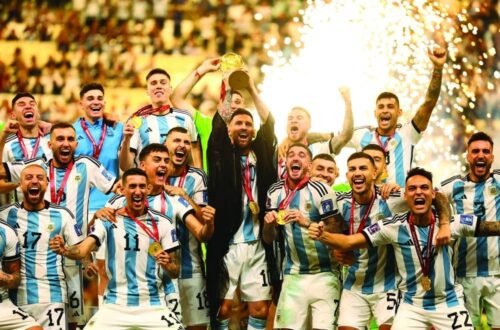
The scenes in Buenos Aires that night were extraordinary. The scenes in the Argentine dressing room, with Messi finally holding the trophy he had been denied for so long, were the images of a generation. And in Brazil, where the loss was felt as a specifically sharp wound given that it happened in their own country, the reaction confirmed that this rivalry carries a specific emotional weight that goes beyond any other international football fixture.
Messi and Neymar — The Rivalry Personified in the Modern Era
Every generation of the Brazil vs Argentina rivalry produces a pair of players who become the faces of the contest. In the current era, that pair is unmistakeable: Lionel Messi for Argentina and Neymar Jr. for Brazil.
The comparison carries interesting complications. Messi and Neymar are not just international rivals — they were club teammates at Barcelona for four seasons, from 2013 to 2017, during which they were considered the two most naturally gifted attacking players in the world. Their friendship off the pitch is genuine and publicly acknowledged. Their rivalry on it, when wearing the colours of Argentina and Brazil, has produced some of the most technically brilliant international matches of the past decade.
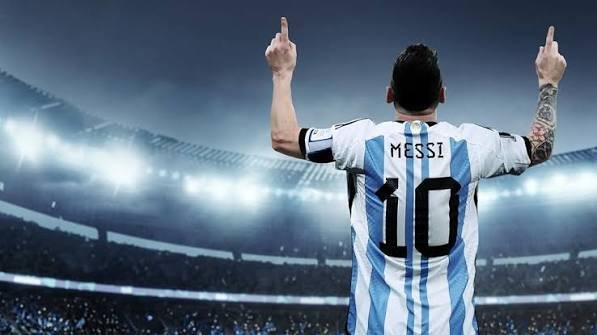
Messi’s record in the rivalry, as always with Messi, is extraordinary. He has made 13 appearances against Brazil across various competitions, with multiple goals and assists in a head-to-head record that shows Argentina winning four of the last five encounters. The March 2025 qualifier — a 4-1 Argentina victory in which Messi was instrumental — was the most emphatic recent statement of where the balance of power currently sits between these nations.
Neymar has been hampered by injuries across the past several years and arrived at the 2026 World Cup in a squad role rather than as Brazil’s talisman. Carlo Ancelotti has built the current Brazil team around Vinícius Júnior rather than Neymar, which represents a significant shift in the rivalry’s individual narrative. The future face-off is no longer Messi vs Neymar — it is something more unpredictable, with Vinícius and Julián Álvarez potentially carrying the rivalry into its next chapter.
The 2026 Context — Could They Meet at the World Cup?
Both Brazil and Argentina entered the 2026 FIFA World Cup with specific narratives. Argentina came in as defending champions — the first team since Brazil in 1958 and 1962 to win consecutive World Cups — and with Messi scoring a hat-trick in the opening match against Algeria that made him the all-time leading scorer in men’s World Cup history.
Brazil had a rocky group stage opener — a 1-1 draw with Morocco — before recovering with 3-0 wins over Haiti and Scotland that confirmed their place as Group C winners. Under Carlo Ancelotti, they look like a team building momentum rather than one that has peaked too early.
The bracket structure of the 2026 World Cup, with its new Round of 32 format, makes a Brazil vs Argentina meeting possible as early as the quarter-finals — though the most likely scenario based on current projections places a potential meeting in the semi-finals if both teams advance as expected through the earlier knockout rounds. Argentina face Cape Verde in the Round of 32, while Brazil face Japan in the same round, with both sides expected to advance.
If Argentina and Brazil were to meet at this World Cup, it would be only the fifth time in history that these two nations have faced each other in the FIFA World Cup. The previous four — in 1974, 1978, 1982, and 1990 — have each produced their own defining narrative. A 2026 meeting, with Messi chasing history and Vinícius representing Brazil’s new identity under Ancelotti, would add another chapter to a story that is already more than a century old.
Why This Rivalry Is Different From All Others
A legitimate question deserves an honest answer: what makes Brazil vs Argentina different from every other football rivalry? Why does it occupy its own separate category in football’s emotional landscape?
The answer runs through several layers.
First, the sustained excellence on both sides across multiple generations. There has not been an era of international football since the 1930s in which at least one of these two nations was not considered among the two or three best teams in the world. That sustained excellence means the rivalry has never been between an elite team and a lesser one — it has always been between two nations that genuinely believe they are better than the other, and have the evidence to support that belief.
Second, the individual genius. Pelé. Maradona. Ronaldo (Brazil’s version). Zidane was French. Messi. Neymar. Vinícius. No other bilateral rivalry in football history has produced this volume of players who are individually capable of deciding the most important matches in the sport’s history. When Brazil and Argentina meet, there is always the possibility that you are watching the greatest player in the world have the most important match of his career.
Third, the stakes. The head-to-head record is so close — 43 wins to Brazil, 41 to Argentina, 26 draws — that after 110 encounters the outcome of any given match genuinely remains uncertain. The two nations are so evenly matched across history that every new result carries the potential to swing momentum in either direction.
And fourth — perhaps most importantly — the emotional investment. In both countries, football is not a sport that people follow. It is something closer to a religion, a shared language, a way of understanding who you are and where you come from. When Brazil and Argentina meet, the result is felt not just by fans in stadiums or watching on television, but by an entire society that has organised part of its identity around these colours, these players, this rivalry.
The Trophy Count — The Scoreboard of History
In the overall contest of major international trophies, here is where both nations stand:
Brazil: Five FIFA World Cups (1958, 1962, 1970, 1994, 2002) and nine Copa América titles. Argentina: Three FIFA World Cups (1978, 1986, 2022, and as defending champions in 2026) and 15 Copa América titles.
Argentina lead on Copa América — the continental championship that Brazil and Argentina have contested more than any other nation. Brazil lead on World Cups, which are globally the more prestigious achievement. The debate about which record matters more has been running since the 1970s and shows no signs of resolution.
One number above all tells the story of how alive this rivalry remains in 2026: Argentina won the last qualifier head-to-head 4-1 in March 2025. Brazil won the World Cup group stage opener against Argentina’s continental rival Morocco in the same tournament. Both nations are in the knockout rounds, both are genuine title contenders, and both are playing with the specific hunger of teams that know what winning the World Cup feels like and want to feel it again.
Final Thought — The Rivalry That Football Built
There is a reason FIFA described Brazil vs Argentina as the “essence of football rivalry.” Not the most intense. Not the most historic. The essence — meaning the distilled version, the one that captures in its purest form what all football rivalries aspire to be.
It has everything: the history, the genius, the drama, the controversy, the individual superstars, the competing styles, the national pride that transforms a game of football into something that matters beyond the sport. Pelé and Maradona debating from their respective countries across decades of interviews and public statements. Messi finally winning the Copa América in the Maracanã. The 1990 World Cup and all the mythology it produced. Argentina’s most recent 4-1 qualifier victory and everything it said about the current balance of power.
The 2026 FIFA World Cup is, at this moment, two of football’s greatest nations performing at their highest levels on the sport’s biggest stage. If they meet in the knockout rounds — and the bracket makes that possible, perhaps probable — it will be the continuation of a story that started in 1914 and shows no sign of ever truly ending.
For official Brazil and Argentina match schedules, squad information, and live World Cup 2026 updates, visit the FIFA official website: https://www.fifa.com/en/tournaments/mens/worldcup/canadamexicousa2026


One comment on “Brazil vs Argentina FIFA World Cup Rivalry — The Full Story of Football’s Greatest Grudge Match”