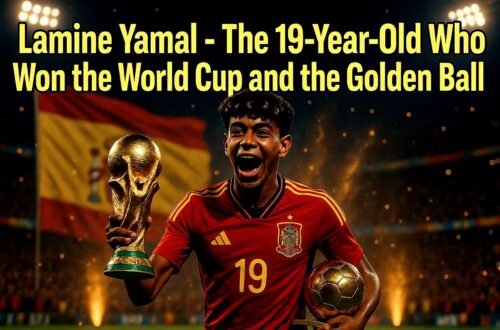








There are football matches and then there are football events. Spain versus Portugal at the FIFA World Cup 2026 Round of 16 is not just a knockout match between two neighboring nations who happen to share a peninsula. It is the convergence of two completely different stories about what this tournament has meant so far — one about dominance and certainty, one about survival and the stubborn refusal to die.
Spain have been the most convincing team in this World Cup. Unbeaten across four matches. A clean sheet kept in every single game — the only team in this tournament that has not conceded a single goal. A 4-0 demolition of Saudi Arabia, a 1-0 win over Uruguay, and then their most complete performance of the tournament against Austria in the Round of 32, winning 3-0 in a display so assured that Mikel Oyarzabal scored twice and Pedro Porro headed in a third from a Marc Cucurella cross that cut through the Austrian defence as if it were not there.
Portugal, by contrast, have survived rather than thrived. A 1-1 draw with DR Congo that included Ronaldo’s quietest performance in recent memory. A 5-0 rout of Uzbekistan in which the system finally clicked and Ronaldo scored twice. A 1-1 draw with Colombia that confirmed they would progress as group runners-up. And then, in the Round of 32, one of the most dramatic games of the entire tournament — a 2-1 win over Croatia that went to the 94th minute, where Gonçalo Ramos’ header from a Bruno Fernandes cross squeezed past a Croatian goalkeeper who had been magnificent all night, with VAR subsequently ruling out a Croatia equalizer that had sent the Portuguese bench into temporary despair.
Two entirely different paths to this moment. Two entirely different moods going into it. And at AT&T Stadium in Arlington, Texas on Monday July 6, in front of 94,000 people in the home of the Dallas Cowboys, they meet for one of the most historically loaded Round of 16 matches the World Cup has ever staged.
The Head-to-Head — A Rivalry Spanning Over a Century
Across their 40 total head-to-head meetings in all competitions, Spain hold the historical advantage with 18 wins to Portugal’s 7, alongside 15 draws. That numerical edge is significant but less important than a different statistic: in recent years, and particularly in high-stakes European football, the matches have become dramatically closer.
Their most memorable World Cup encounter came at the 2018 group stage in Sochi, Russia, where they played to a 3-3 draw that is widely considered one of the greatest single group-stage matches in World Cup history. Cristiano Ronaldo scored all three of Portugal’s goals — a penalty, a clinical finish, and a stunning free-kick in the 88th minute that cancelled out Nacho’s spectacular volley. Ronaldo was 33 years old in that match. He walked off the pitch having delivered a performance that reminded the world, at a moment when many were questioning whether his peak had passed, that he remained capable of deciding major international matches on his own.
At Euro 2024, Spain beat Portugal — who did not qualify for the tournament — in the semi-finals. More relevant to the current context, the two sides met in the UEFA Nations League final in June 2025, with Spain winning on penalties to extend their recent dominance over their Iberian neighbours.
The head-to-head context points clearly in Spain’s direction. But head-to-head records, as Morocco’s elimination of the Netherlands this week has demonstrated with vivid clarity, do not decide individual knockout matches. What happens on the pitch on July 6 is all that matters.
Spain’s Campaign — The Most Complete Team Left in the Draw
Spain’s World Cup 2026 record entering this match is as close to perfect as a team can get without actually winning the tournament.
The statistics are extraordinary. Spain have arrived without a blemish and without conceding a single goal, four games deep into this World Cup 2026. No goals conceded in four matches — against Saudi Arabia, Uruguay, Cape Verde in the group stage, and then Austria in a Round of 32 performance that was their most fluent and dominant of the tournament.
A 4-0 win over Saudi Arabia followed, then a 1-0 edging of Uruguay and a 3-0 dismissal of Austria in the Round of 32.The Austria result was the one that most impressed the analysts — not because of the scoreline, but because of how it was achieved. Spain pressed relentlessly from the first whistle, won the ball repeatedly in dangerous positions, and converted their chances with a clinical efficiency that the group stage performances had occasionally suggested they were not yet operating at.
Mikel Oyarzabal has been the tournament’s joint-top scorer with four goals from an xG of 3.19 across eight shots on target. The Real Sociedad forward — who came into this tournament with questions about whether he was the right profile of striker for Spain’s high-tempo, wide-oriented attack — has answered every single one of them with a directness that has been one of the tournament’s most satisfying storylines.
Lamine Yamal has scored a goal from an xG of 2.26 with six shots on target, the teenager carrying Spain’s biggest threat from the right.More importantly, he is fully fit — the hamstring concern that kept him from the opening group game against Cape Verde has fully resolved — and at 18 years old, in the biggest match of his international career so far, he is operating with the kind of fearless confidence that only a player who has not yet learned to be afraid of the stage can produce.
The one significant injury concern for Spain is Nico Williams, whose adductor injury has ended his tournament.The loss of explosive forward Nico Williams to a tournament-ending adductor injury has left a massive creative void on the wings for La Roja.But Spain’s squad depth is such that Alex Baena or Dani Olmo can fill that role, and the system is resilient enough not to be broken by a single absence, however important the individual player.
Spain are the favourites. Our own model agrees, giving Spain a 64% edge, and it reflects a side that has looked the more complete of the two so far. Everything about this team — the defensive solidity, the midfield control, the attacking quality across multiple positions — points to a team that has found its level and is performing at it consistently.
Portugal’s Campaign — Survival, Ronaldo, and the Drama of the 94th Minute
If Spain’s path to this match has been a controlled, methodical march, Portugal’s has been anything but.
While Portugal have scraped their way into the last 16, edging Croatia in a thriller 2-1, Spain had their best game of the tournament when they comprehensively defeated a lackluster Austria 3-0 in the last 32.That contrast defines the mood around both camps heading into Monday.
But within Portugal’s turbulent group stage lies something important that the scorelines do not fully communicate: the moments when this team has looked genuinely dangerous. The Uzbekistan rout was not just a scoreline — it was a performance in which Bruno Fernandes, Vitinha, and Ronaldo combined with the fluid intelligence that Roberto Martinez has been trying to unlock throughout his tenure. The Croatia match showed something different: the resilience of a squad that refused to go out despite going a goal down and despite the pressure of knowing that elimination would have ended Ronaldo’s World Cup career on the most deflating possible note.
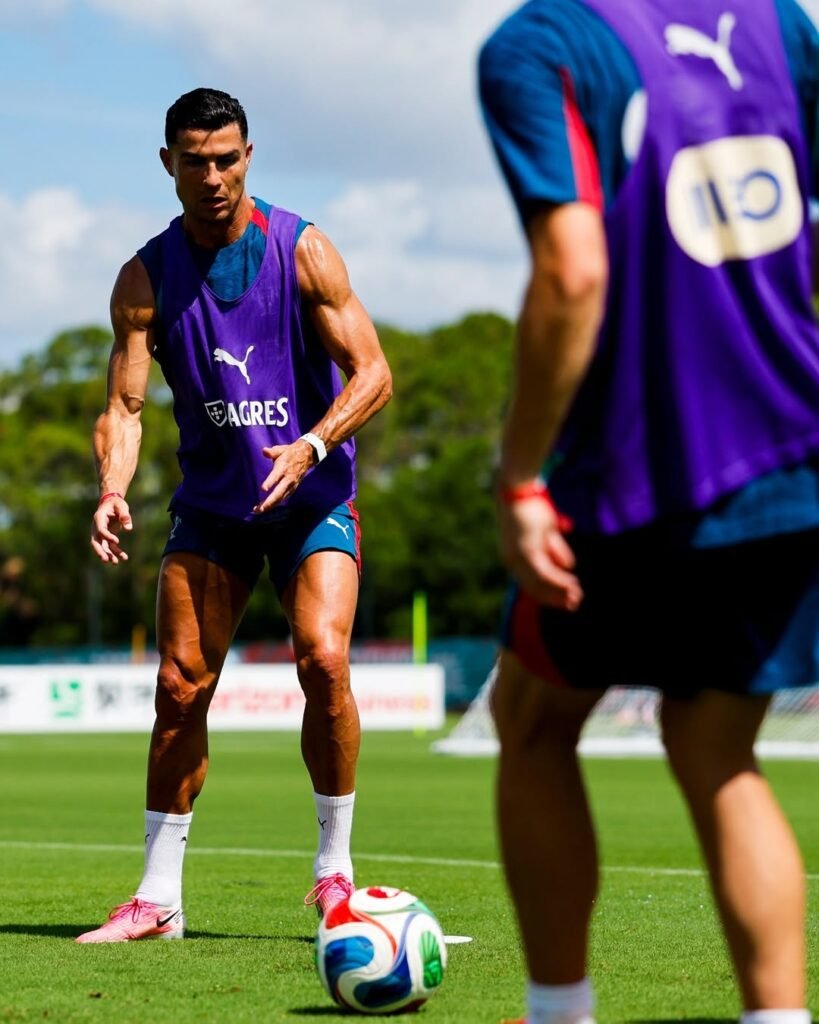
In a thrilling 2-1 victory over Croatia, Cristiano Ronaldo slotted home a penalty before Gonçalo Ramos sealed the win with a header in the 94th minute, narrowly escaping a last-gasp Croatia equalizer that VAR ruled out for offside.The significance of Ronaldo’s penalty against Croatia goes beyond the match result. Cristiano Ronaldo has now scored a remarkable 25 goals at major international tournaments, which is five more than any other European man. And that penalty, scored in the first knockout match of this World Cup, was his first ever goal in a World Cup knockout stage game across his entire career — a detail that his critics have pointed to for years and that he has now, at 41, finally answered.
Concerns about Roberto Martinez’s Portugal continue to center around Ronaldo, who was finally substituted late against Croatia for Goncalo Ramos. With Ramos, Portugal had improved balance, while Diogo Costa continues to be their player of the tournament in goal. Diogo Costa’s performances between the posts have been one of the few unambiguous positives of Portugal’s tournament so far — sharp, commanding, and making the saves when they have been required.
The Roberto Martinez selection dilemma — start Ronaldo and sacrifice some attacking fluidity, or bring Gonçalo Ramos in from the start and risk the political fallout — is the same one that has dominated debate around this team since the 2022 World Cup. Against Spain, the most technically complete team in this tournament, the decision carries enormous consequences.
The Tactical Duel — Two Contrasting Identities
The tactical contrast between these two teams is as pronounced as any two neighbouring nations in international football.
Spain press from the front and control the tempo through their midfield. Rodri at the base, recycling possession with a patience and precision that no other defensive midfielder in this tournament can match, gives Pedri and Dani Olmo the freedom to advance into positions where they can create. Lamine Yamal and Mikel Oyarzabal stretch opposition defences with their direct running and exchange of positions that leaves marking assignments in confusion. And Unai Simón, whose distribution from the back is so clean that Spain are comfortable starting attacks from the goalkeeper, anchors the whole system with a composure that has not been tested yet — because nobody has scored against this Spain side in four matches.
Portugal’s system under Martinez is built around the specific qualities of their exceptional midfield. João Neves, Vitinha and Bruno Fernandes form the midfield trio that gives Portugal their most dangerous dimension — the combination of Fernandes’s creativity, Vitinha’s tempo control, and Neves’s defensive intelligence and late-arriving goal threat is as talented a central midfield as any team at this tournament has assembled.
The specific tactical problem Portugal face against Spain is the high press. Spain’s front line — Yamal, Oyarzabal, and whoever plays the left wing role in Williams’s absence — press Portugal’s defensive line and goalkeeper with an intensity that has forced every team they have faced into errors. Portugal’s defenders, led by Rúben Dias, are technically comfortable in possession, but Spain’s press is not about technical quality — it is about organisation, timing, and the willingness to commit at the exact moment the opposition are receiving a back pass. If Portugal cannot play through Spain’s press, the ball will be won back in dangerous areas and Spain will create.
The counter-argument for Portugal is that their pace on the wings — Rafael Leão and Pedro Neto — is capable of hurting Spain’s high defensive line in the transition moments that every pressing team creates when they lose the ball high up the pitch. If Portugal can survive the first twenty minutes of intense Spanish pressure and land an early counter-attacking goal, the tactical picture changes completely.
The Big Individual Matchup — Ronaldo vs Yamal: Generations Collide
Football gives you very few moments where two players separated by more than two decades exist simultaneously at the peak of their abilities, facing each other in a World Cup knockout match. This is one of those moments.
Cristiano Ronaldo is 41 years old, making his sixth World Cup appearance, in what is almost certainly his last international tournament. He has 25 goals in major international tournaments — more than any other European man in history. He has won Champions Leagues, Premier Leagues, La Liga titles, Serie A titles, the European Championship, the Nations League. He has been chasing the World Cup for two decades and has never won it. This match, against the country that knocked Portugal out of the 2010 World Cup round of 16 and eliminated them from Euro 2024, carries every conceivable layer of meaning for a player whose career has been defined by the pursuit of legacy-building moments.
Lamine Yamal is 18 years old, playing in his first World Cup, and is already considered by serious analytical observers to be one of the two or three best players at this tournament regardless of position. He scored his first ever World Cup goal against Saudi Arabia, delivered one of the more technically complete performances of the tournament against Austria in the Round of 32, and approaches this match with the specific fearlessness of a teenager who has grown up watching Ronaldo on television and now faces him on the same pitch in a World Cup knockout game.
The narrative of this matchup is not just about who scores or who creates more. It is about what happens when football’s past and football’s future share the same 94,000-capacity stadium, with the entire sport watching.
The Predicted Lineups
Portugal (4-3-3): Diogo Costa; João Cancelo, Rúben Dias, Renato Veiga, Nuno Mendes; João Neves, Vitinha; Pedro Neto, Bruno Fernandes, Rafael Leão; Cristiano Ronaldo.
Spain (4-3-3): Unai Simón; Pedro Porro, Pau Cubarsí, Aymeric Laporte, Marc Cucurella; Rodri, Pedri, Dani Olmo; Lamine Yamal, Mikel Oyarzabal, Alex Baena.
Gonçalo Ramos is the key selection question for Martinez — whether to start Ramos instead of Ronaldo, given that Portugal showed greater attacking balance in the closing stages of the Croatia match with Ramos leading the line and Fernandes operating with more freedom in the ten position. The diplomatic and political pressures around dropping Ronaldo for the biggest match of his final World Cup are enormous. But the tactical argument for doing so is genuine.
For Spain, the key selection question is the left-wing position vacated by Williams. Alex Baena’s direct running and low centre of gravity make him a difficult individual defender to deal with in wide areas. Dani Olmo provides a different type of threat — more creative, more comfortable coming inside to combine with Yamal and Oyarzabal. De la Fuente’s choice between them will say something about how Spain plan to approach the match tactically.
The Live Odds — What the Market Says Right Now
bet365 make Spain favorites at -111, with Portugal out at +300 and the draw at +250.
The impressive victory moved Spain back in front of England in the odds to win the World Cup at 12.9¢ at Kalshi (equal to +675 odds).
The market consensus is clear: Kalshi traders price Portugal at 23%, the draw at 27%, and Spain at 51%. A 51% win probability for Spain in 90 minutes, with both extra time and penalties still available as insurance for whichever team cannot be separated in regulation. The Under 2.5 goals market is heavily favoured given Spain’s defensive record and the anticipated tight, tactical nature of a derby between two teams who know each other deeply.
The winner of this match faces the winner of USA vs Belgium in the quarterfinal in Inglewood on July 10 — a result that, if Spain progress as expected, gives them a realistic path to a semi-final that could feature France or Argentina.
The Verdict — Prediction and Final Analysis
Here is the honest assessment based on everything this tournament has shown us about both teams.
Spain are the better team. They have been the better team for four consecutive matches, and the specific qualities that make them dangerous — the press, the defensive organisation, Oyarzabal’s clinical finishing, Yamal’s creative unpredictability — are precisely the qualities most likely to cause Portugal problems given the way their campaign has unfolded.
Portugal’s path to an upset runs through one specific scenario: Ronaldo or Ramos finds an early goal on the counter-attack, Portugal’s disciplined defensive block absorbs Spain’s pressure, and the match becomes a siege that Spain cannot break. In that scenario, Diogo Costa’s goalkeeping excellence — which has been Portugal’s most consistent quality throughout this tournament — becomes the decisive factor. A Ronaldo moment, a Fernandes free-kick, a Ramos header at a set-piece — any of these could change the match in an instant.
But Spain’s clean sheet record across four matches is not a statistical accident. They have kept it against good teams. Against a Portugal attack that has been creating opportunities but not consistently scoring from them, it is realistic to expect Spain to keep it for a fifth consecutive match.
Prediction: Spain win 1-0. Mikel Oyarzabal scores the decisive goal from a Lamine Yamal assist in the second half. Portugal press for an equalizer in the final twenty minutes, Ronaldo comes off the bench if he has started or creates one final moment from the position he has occupied throughout his World Cup career, and Spain’s defensive discipline holds until the final whistle.
If Ronaldo starts and finds a goal — his second knockout stage World Cup goal in consecutive matches — the match becomes open and genuinely unpredictable. Spain’s quality should still tell. But this is the Iberian Derby, at a World Cup, at AT&T Stadium, with Ronaldo’s final chapter still being written.
Do not expect it to be simple.
For official match details, confirmed lineups, live scores, and the complete FIFA World Cup 2026 Round of 16 schedule, visit the FIFA official website: https://www.fifa.com/en/tournaments/mens/worldcup/canadamexicousa2026