







There is something about Brazil and the World Cup that feels different from every other football story in the world. Five trophies. Pelé. Ronaldo. Ronaldinho. A style of football that somehow turned a sport into an art form. And yet, for over two decades now, the Seleção has chased a sixth star without ever quite getting their hands on it.
FIFA World Cup 2026 is different, though. Hosted across the United States, Canada, and Mexico, this is the first World Cup ever to feature 48 teams. More matches, more pressure, more drama. And for Brazil, more opportunity.
I have been watching Brazilian football closely over the past few years, and honestly, this current generation deserves a serious look. Not just as perennial favorites on paper, but as a squad that has quietly rebuilt itself into something genuinely formidable. Let me break it all down for you.
Where Brazil Stands Going Into World Cup 2026
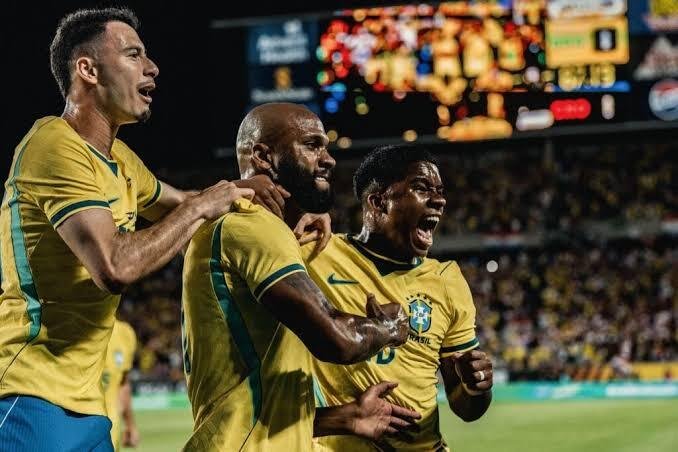
Brazil enters the 2026 World Cup as one of the tournament favorites — which, if you follow football, is not exactly a surprise. But what is interesting this time around is that the hype feels grounded in something real rather than just reputation.
The last few years under the Brazilian Football Confederation (CBF) have seen significant restructuring. The squad is younger, more dynamic, and better organized defensively than it was in Qatar 2022, where they were eliminated in heartbreaking fashion on penalties by Croatia in the quarterfinals. That loss stung. But if you follow the team closely, it became a turning point rather than a dead end.
South American qualification was completed with Brazil finishing near the top of CONMEBOL standings, showing consistency that had been missing in previous cycles. They were not perfect — no team ever is through 18 qualifying matches — but the direction is clearly upward.
Key Players to Watch in Brazil’s 2026 Squad
Every World Cup conversation about Brazil begins and ends with individual talent, and 2026 is no different. But the depth of this particular squad is what sets it apart.
Vinicius Junior — The Man With Everything to Prove
At Real Madrid, Vinicius Junior has become one of the two or three most dangerous attackers on the planet. His pace is terrifying, his dribbling in tight spaces is elite, and his finishing has dramatically improved over the last two seasons. For Brazil, he is the player that every opposing defense plans around.
The World Cup stage will be massive for him. In Qatar, he showed flashes but was not always the decisive figure Brazil needed. In 2026, at 25 years old and with more experience at the highest level, expect him to shoulder the attacking burden with real authority.
Rodrygo — The Quiet Matchwinner
People outside of Spain tend to underrate Rodrygo. That is a mistake. He is the kind of player who does not always grab headlines but consistently delivers in the moments that matter most. His Champions League record speaks for itself, and for Brazil, he provides options — he can play wide, through the middle, or as a second striker.
Endrick — The Next Generation Arrives Early
Signed by Real Madrid before he was even 18, Endrick Felipe has been talked about with extraordinary reverence in Brazilian football circles for years. By the time the 2026 World Cup comes around, he will have had time to settle in at club level and build match sharpness. The expectations are enormous — but early signs suggest he can handle them.
Casemiro and the Midfield Engine
Casemiro is the kind of player who does not show up on highlight reels but whose absence is felt immediately. His ability to break up opposition attacks and distribute simply but effectively is what allows Brazil’s more creative players to express themselves. At 34, he will need to be managed carefully through a long tournament, which is exactly why the depth in midfield matters.
Tactical Setup — How Brazil Will Play
One of the ongoing debates in Brazilian football is whether the national team should embrace a more European-style pragmatism or stick with the attacking freedom that has historically defined the Seleção. In 2026, expect a middle ground.
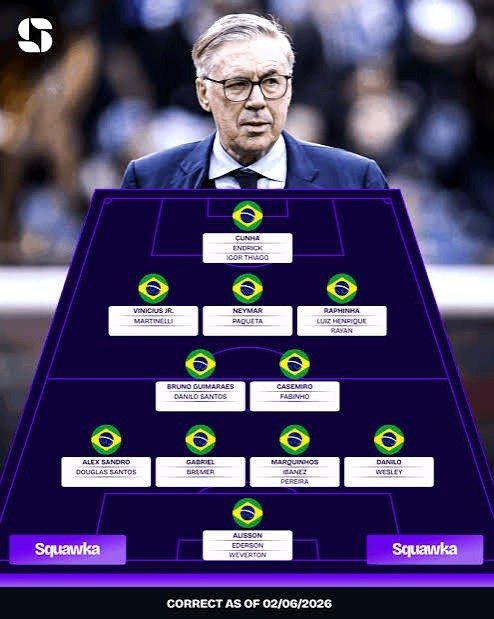
The likely base formation is a 4-2-3-1 or a flexible 4-3-3 depending on the opponent. Two holding midfielders protect a defense that is far more organized than it was a few years ago. The full-backs push high and create width. And three attacking players — usually Vinicius on the left, a creative number ten in the center, and Rodrygo or another wide forward on the right — are given license to improvise.
What is different from previous Brazil teams is the defensive discipline. After years of being caught out on the counter — most painfully in the 7-1 loss to Germany at the 2014 World Cup on home soil — Brazilian coaching setups have genuinely addressed the structural problems. The team presses higher, recovers shape faster, and is less vulnerable at the back.
Brazil’s Defensive Core — Overlooked but Crucial
The attacking stars always get the attention when Brazil is discussed, but the truth is that World Cups are often won in the back four and the goalkeeping position.
In goal, Alisson Becker remains one of the very best in the world. His distribution, reflexes, and composure in big moments are exceptional. At Liverpool, he has performed at the highest level season after season. For Brazil, he is a genuine match-winner on his own.
In central defense, the partnership needs to be settled and consistent by the time the knockout stages arrive. Brazil has options — Marquinhos remains a leader despite his age, and younger defenders like Gabriel Magalhaes have pushed for starting roles. Getting this combination right is arguably the most important task for the coaching staff before the tournament begins.
The 48-Team Format — Does It Help or Hurt Brazil?
FIFA World Cup 2026 will be the first edition with an expanded 48-team field, which changes the tournament structure significantly. Teams now play in groups of three, with the top two and some best third-place finishers advancing. This means fewer group-stage matches and a longer knockout phase.
For Brazil, this is largely positive. With a smaller group stage, the risk of a shock exit in the opening rounds is somewhat reduced. And Brazil’s squad depth — which is genuinely impressive across all positions — makes them better equipped than most teams to handle the physical demands of a longer knockout tournament.
The format also means weaker teams have slightly more room to spring upsets, which adds a layer of unpredictability. But historically, the genuine contenders find ways through regardless, and Brazil belongs firmly in that category.
The Competition — Who Can Stop Brazil?
It would be dishonest to talk about Brazil’s World Cup chances without acknowledging who else is in the conversation. This is not a tournament Brazil walks into and automatically wins.
France, with Kylian Mbappé at his peak, remain the team most widely expected to challenge for the trophy. Their squad depth across every line is extraordinary, and Mbappé’s ability to single-handedly decide matches at the highest level is well established.
England are another serious contender. Under a settled tactical system and with genuine quality in midfield and attack, they will feel this is their generation’s best opportunity. Spain, the reigning European champions, play a style of football that is hard to break down and even harder to live with over 90 minutes.
Argentina, as reigning world champions, will also be there fighting for another trophy, though their dependence on Lionel Messi — now past 37 — remains a question mark going into a physically demanding tournament.
Germany will have rebuilt significantly after their disappointing exit from Qatar 2022. And Portugal, particularly if they can find consistency without making every moment about one player, are always dangerous.
Brazil sits comfortably among this elite group. Whether they can turn that potential into the actual trophy depends, as it always does, on the small margins — a penalty kick here, an injury to a key player there, a goalkeeper in the form of his life on the other side.
The 24-Year Itch — What Ending the Drought Would Mean
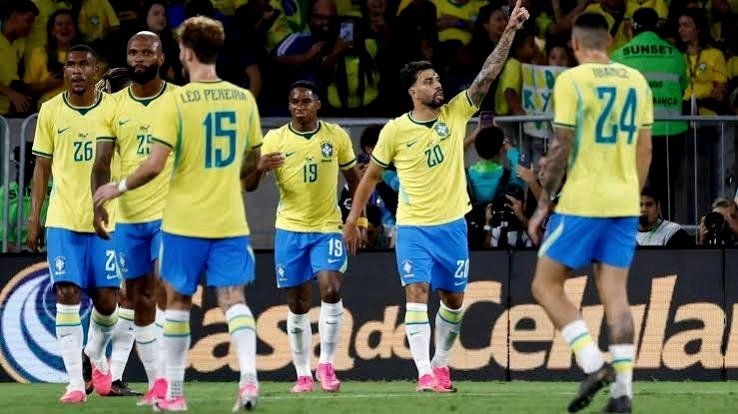
Brazil last won the World Cup in 2002. That is a fact that is genuinely staggering when you think about it. A nation with more football passion than perhaps any other on earth, a nation that has produced some of the greatest players who have ever lived, has not lifted the trophy in over two decades.
For the Brazilian public, this carries real emotional weight. Every World Cup cycle begins with hope and ends, at some point, in disappointment. The exit in South Africa in 2010, the humiliation at home in 2014, the penalty heartbreak in Qatar in 2022 — each one has left a mark.
The 2026 squad knows this history. Some of them grew up watching those tournament exits. And that awareness — that understanding of what it means to the country — is not a burden so much as a fuel. You can see it in the way Vinicius speaks about the national team. It means something beyond club football.
Youth vs Experience — Getting the Balance Right
One of the most interesting challenges for Brazil’s coaching staff is balancing the energy and fearlessness of their younger players with the experience and composure of veterans who have been through the tournament pressure before.
Players like Alisson, Marquinhos, and Casemiro bring irreplaceable experience. They have played in Champions League finals, top league title races, and multiple World Cup campaigns. In the knockout rounds, when every moment matters, that calmness under pressure is worth more than most statistics can capture.
But the younger players — Vinicius, Rodrygo, Endrick, and others — bring the unpredictability and dynamism that can unlock tight defensive structures. In a knockout tournament, you need both: the experience to manage difficult moments and the raw quality to create something out of nothing when the game is in the balance.
Brazil appears to have found a reasonable equilibrium here, which has not always been the case. Getting those relationships working smoothly on the pitch is something that builds over the months of preparation leading into July 2026.
North American Venues — An Unusual Advantage?
The 2026 World Cup is hosted across 16 cities in the United States, Canada, and Mexico. For most European teams, the travel distances between venues are considerable. For South American teams like Brazil, the time zones and general environment feel more familiar.
More importantly, Brazilian fans travel. The Seleção will effectively have home support in several stadiums, particularly in cities with large Brazilian and Latin American communities. In New York, Miami, Los Angeles, and Toronto, the yellow shirts will be everywhere. That kind of atmosphere can subtly but meaningfully affect how players perform.
This is not a decisive factor — football is played on the pitch, not in the stands — but it is a real consideration, and Brazil’s experience playing in front of passionate crowds gives them an edge in using that energy constructively.
Realistic Expectations — Final Assessment
So where does all of this leave us? Brazil in 2026 is a genuine title contender. Not just by reputation, but on the merits of the squad, the tactical setup, the quality in key positions, and the tournament experience in the group.
Their most likely pathway to the final runs through strong group stage performances, then managing the Round of 32 and Round of 16 before the real tests in the quarterfinals and semifinals. That is where the tournament is usually decided, and that is where Brazil has historically struggled in recent editions.
If Vinicius Junior stays fit and in form, if Alisson continues to perform at his elite level, and if the midfield can control possession against the best teams in the world, then a deep run — and potentially a sixth star — is absolutely achievable.
Football, of course, never follows the script we write for it. But if you ask me to point to a team that has the talent, the depth, the motivation, and the historical understanding of what it takes to win a World Cup — Brazil is right there at the very top of that conversation heading into 2026.
Official FIFA World Cup 2026 Information
For the latest official updates on squads, fixtures, venues, and results from FIFA World Cup 2026, visit the official FIFA website. All tournament information — from group stage draws to knockout bracket results — is published directly by FIFA at:
Final Thoughts
Brazil’s story at the FIFA World Cup is one of the great ongoing narratives in sport. A nation defined by football, built on a legacy of greatness, perpetually chasing the next chapter. The 2026 edition feels different in the right ways.
The squad is modern, balanced, and hungry. The attacking talent at the top of the lineup is as good as anything Brazil has had in years. The defensive foundation is more reliable than it has been. And the motivation — 24 years without a title, a generation that grew up dreaming of being the ones to end that wait — is very real.
Whether Brazil lifts the trophy in July 2026 or not, they will be one of the teams that defines this tournament. They always are. That is the nature of who they are and what they represent. And going into this edition, for the first time in quite a while, that feels like it could translate into something real.



2 Comments on “Brazil World Cup Team Analysis — FIFA World Cup 2026”