







Top 10 greatest players, offside rule, Champions League format, richest clubs, highest paid footballers, best stadiums, history of football and more — the only football guide you will ever need, fully updated for 2026.
One Sport, One Planet, One Guide
There is a moment in every football fan’s life when they realise they want to know more. Maybe it happens the first time they watch a goal and do not understand why the referee disallowed it. Maybe it happens when someone asks them the difference between football and soccer and they cannot give a clean answer. Maybe it happens when the Champions League draw is made and they look at the format and realise they are not entirely sure how the groups lead to the final. Maybe it happens when someone casually mentions that Cristiano Ronaldo earns more in a year than most countries spend on education and they want to know whether that is actually true.
This guide is for every one of those moments. It covers the history of the game, the rules that confuse everyone, the players that defined different eras, the managers who changed how football is thought about, the stadiums that give the sport its most unforgettable settings, the clubs with the most money, the players with the biggest salaries, and the simple but apparently confusing question of whether football and soccer are actually the same thing.
By the end of it, you will know more about football than most people who have been watching it their entire lives. And if you already know all of it — welcome back. There is always something worth revisiting when it comes to the beautiful game.
Part 1 – The History of Football: How the Beautiful Game Was Born
Understanding football properly starts with understanding where it came from. And where it came from is considerably older and more interesting than most people assume.
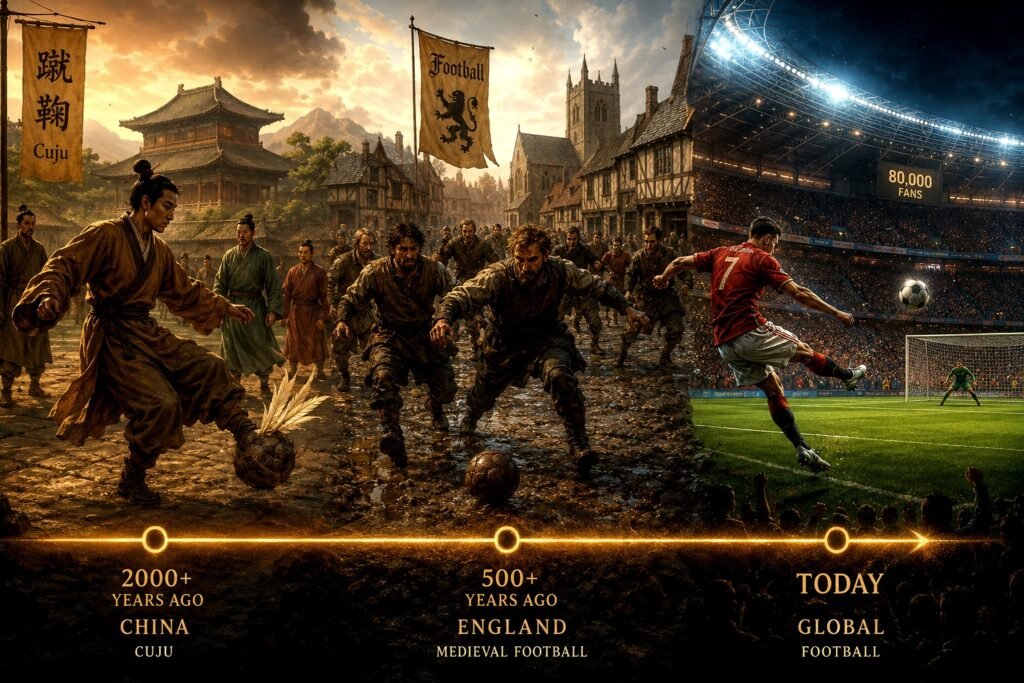
The history of football does not begin in England in 1863, which is where most histories start. It begins in ancient China, around 300 BCE, with a military training game called Cuju — which translates roughly as kick ball. Players competed to kick a leather ball through a small opening in a silk net hung between two bamboo poles. Teams competed. Officials watched. Rules governed play. By any reasonable definition, Cuju was a form of football, and it predates the English codification of the game by more than two thousand years.
The ancient Greeks played a game called Episkyros. The Romans adapted it into Harpastum and carried it across their empire — including to Britain. Medieval England produced the most direct ancestor of modern football in the form of street games played between entire villages on Shrove Tuesday, with hundreds of participants and goals at opposite ends of town. These games were violent, chaotic, and wildly popular — so popular that King Edward II banned football in London in 1314, followed by similar bans from Edward III, Richard II, Henry IV and Henry V. None of them worked.
The modern game of association football was officially born on October 26, 1863, at the Freemasons’ Tavern on Great Queen Street in London, when representatives of eleven London football clubs met to establish the Football Association and a unified set of rules. The critical decision made that evening — to prohibit handling the ball and tripping opponents — created the distinction between football and what would later become rugby. On December 8, 1863, the Football Association published its Laws of the Game. Modern football had arrived.
It spread with remarkable speed. British sailors, merchants and railway workers carried the game to every corner of the world throughout the late nineteenth century. Football associations were founded across Europe and South America within decades. FIFA — the Fédération Internationale de Football Association — was founded in Paris on May 21, 1904, by representatives of seven football associations. The first FIFA World Cup was held in Uruguay in 1930. Uruguay beat Argentina 4-2 in the final.
From those origins to the 2026 FIFA World Cup in the United States, Canada and Mexico — with 48 teams, 104 matches, 16 cities and 82,500 people watching the final at MetLife Stadium in New Jersey — is a journey of approximately 163 years. And the game played today, in all its tactical sophistication and global commercial scale, is recognisably, fundamentally the same game that the Football Association codified in that London pub in 1863.
Part 2 – Football vs Soccer: Why Are There Two Names for the Same Game?
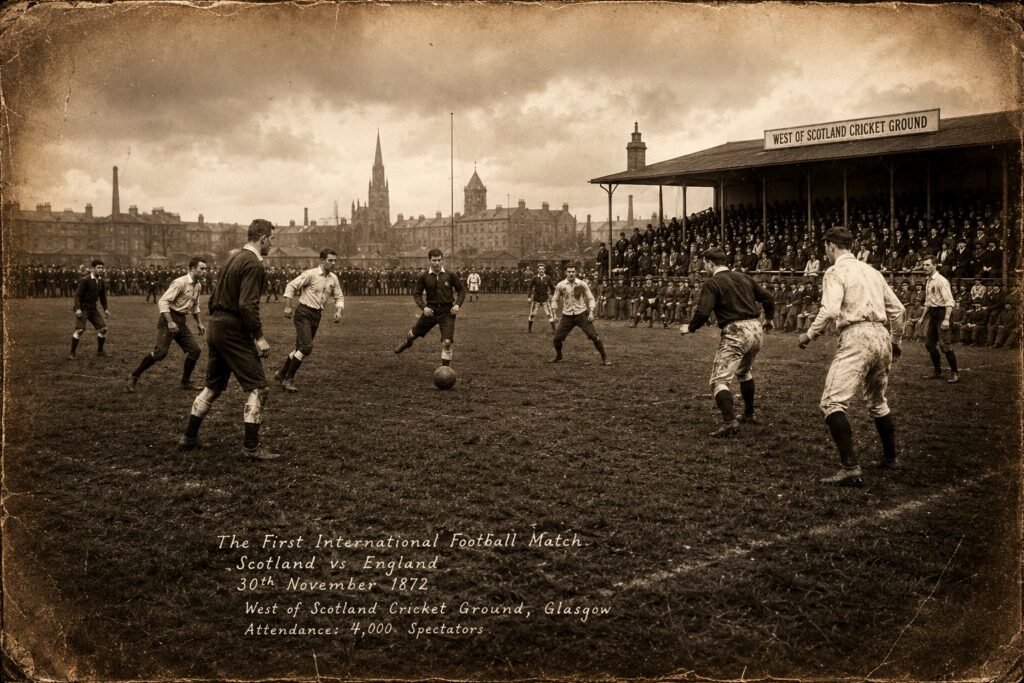
This question comes up in almost every conversation between American and non-American football fans, and the answer is both simpler and more interesting than most people expect.
Football and soccer are the same sport. The word soccer is not an American invention imposed on the rest of the world. It is actually a British invention from the nineteenth century that the rest of the world eventually abandoned while the Americans kept using it.
The word soccer comes from Association Football — the official name of the sport after the Football Association codified the rules in 1863. Association was shortened to assoc, which was then further shortened to soccer in the informal slang of the period. Soccer was widely used in Britain throughout the late nineteenth and early twentieth centuries alongside football — both terms referred to the same game.
The reason Americans kept soccer while Britain abandoned it is simple. When American football — the sport played with helmets and forward passes and touchdowns — became the dominant sport in the United States in the early twentieth century, Americans needed a way to distinguish between the two games. They kept soccer for association football and used football for their own game. Britain, where there was no equivalent confusion, gradually dropped soccer in favour of football as the dominant term.
So the next time someone tells you that soccer is wrong and football is right — or the reverse — you can confidently explain that both terms are historically correct, that soccer was invented in England, and that the two words refer to exactly the same sport.
Globally, the sport is called something different in almost every language. Fútbol in Spanish. Futebol in Portuguese. Calcio in Italian — from the Italian word for kick. Fussball in German. Voetbal in Dutch. All different words for the same game played with the same round ball on the same rectangular pitch with the same set of rules.
Part 3 – How Does the Offside Rule Work? The Complete Explanation
The offside rule is the rule that causes more confusion, more arguments and more heated touchline discussions than any other rule in football. It is also, once you understand it properly, a straightforward rule with a clear purpose. The confusion comes from the details of its application rather than its basic concept.
Here is the basic concept: a player is in an offside position if they are closer to the opponent’s goalline than both the ball and the second-to-last opponent when the ball is played to them.
The second-to-last opponent is almost always the last outfield defender — because the goalkeeper is counted as the last opponent. So in practical terms, a player is offside if they are beyond the last defender when the ball is played to them.
The purpose of the rule is to prevent players from simply standing near the opponent’s goal waiting for a long ball. Without an offside rule, a striker could stand directly in front of the goalkeeper and wait for teammates to chip the ball over the entire defence. The offside rule forces attacking teams to time their runs so they are level with or behind the last defender when the ball is played — which requires skill, timing and coordination.
There are important details that make the rule more complex in practice:
A player can only be offside in the opponent’s half of the pitch. You cannot be offside in your own half. A player is only offside if they are involved in active play — you can be in an offside position but not offside if the ball is not played to you or near you. Offside is judged at the moment the ball is played, not at the moment the player receives it. If a player is level with the last defender when the ball is played, they are onside — level is not offside.
The introduction of VAR — Video Assistant Referee technology — has made offside decisions more accurate but also more controversial. Because the rule is judged at the exact moment the ball is played, VAR can identify offside positions involving fractions of centimetres — a shoulder, a toe, an armpit. These microscopic decisions are technically correct by the letter of the law but feel deeply unsatisfying when a goal is disallowed because a player’s armpit was three centimetres beyond the defender’s shoulder.
FIFA and the International Football Association Board have discussed modifications to the offside rule that would require a player to be more clearly and obviously offside — by a defined margin — before a goal is disallowed. Those discussions continue as of 2026 without a formal rule change having been made.
Part 4 – How Does the Champions League Work? The Complete Format Guide
The UEFA Champions League is the most prestigious club football competition in the world. It brings together the top clubs from across European football’s domestic leagues and runs from September to June each year. Understanding how it works requires understanding its format, which changed significantly for the 2024-25 season.
The current Champions League format, introduced in 2024-25, replaced the traditional group stage with a league phase involving 36 clubs. Each of the 36 teams plays eight matches against eight different opponents — four at home and four away — chosen through a seeded draw that ensures varied competition. At the end of the league phase, the top eight clubs advance directly to the Round of 16. Teams finishing ninth through twenty-fourth enter a knockout round playoff to compete for the remaining eight spots in the Round of 16. Teams finishing twenty-fifth or lower are eliminated.
From the Round of 16 onwards, the competition follows a traditional two-legged knockout format — home and away matches, with aggregate scores deciding who advances. The quarterfinals and semifinals follow the same format. The final is a single match at a pre-selected neutral venue, which rotates across European cities.
The Champions League winner earns a place in the FIFA Club World Cup, which has been expanded to a 32-team tournament held every four years in the United States. The 2025 Club World Cup was the first edition of this expanded format.
In terms of prize money, the Champions League distributes approximately €2.5 billion in total to participating clubs across a season — making it by far the most lucrative club competition in world football. A club that wins the Champions League can expect to earn in the region of €100-120 million from UEFA distributions alone, before accounting for matchday revenue and commercial bonuses.
The Champions League is not a FIFA competition — it is run by UEFA, the Union of European Football Associations, which governs football across 55 European member associations. Real Madrid have won the most Champions League titles in history with 15. AC Milan are second with 7. Bayern Munich, Liverpool and Barcelona have each won 6.
Part 5 – FIFA World Rankings Explained: How Does FIFA Decide Who Is Number One?
The FIFA World Rankings are the official ranking system for international men’s national football teams. They are published monthly and determine seedings for World Cup draws, tournament seedings, and the general perception of which national team is performing best in international football at any given time.
The current FIFA ranking system uses a points-based formula called the SUM formula, introduced in 2018 to replace the previous system that had been widely criticized for its complexity and inconsistency. The current system is simpler, more transparent, and more directly tied to match results.
Every international match result earns or costs a team points based on three factors. The result itself — whether the team won, drew or lost — provides the base calculation. The importance of the match is then applied as a multiplier: friendly matches carry the lowest multiplier, World Cup matches carry the highest. The strength of the opponent is the third factor — beating a highly ranked team earns more points than beating a lower-ranked team, and losing to a highly ranked team costs fewer points than losing to a lower-ranked team.
Points from all matches played in the previous four years are added together, with more recent matches weighted more heavily than older ones. The team with the most total points is ranked first.
As of July 2026, Spain top the FIFA World Rankings following their FIFA World Cup 2026 victory — a result that will significantly boost their points total in the next published rankings. France, Argentina, England and Brazil complete the top five, with Brazil’s ranking likely to drop slightly following their quarterfinal elimination.
The FIFA Women’s World Rankings use a similar system and are published separately. The USA have historically dominated the women’s rankings and continue to be among the top-ranked nations, with Spain and England also ranking highly following their strong recent tournament performances.
One common criticism of the FIFA World Rankings is that they can sometimes feel counterintuitive — a team can be ranked higher than a team that has beaten them recently if the overall points calculation across four years favours the higher-ranked team. The system is a long-term measure of quality rather than a real-time snapshot of form.
Part 6 – Best Football Stadiums in the World: The Greatest Grounds on Earth
Football is one of the few sports where the venue is as much a part of the experience as the match itself. The greatest football stadiums in the world are not just buildings — they are places that carry decades of history, that have hosted moments that define entire generations, that produce an atmosphere that changes the outcome of the matches played inside them.
Here are the ten greatest football stadiums in the world, judged on a combination of capacity, atmosphere, history and architectural significance.
Camp Nou, Barcelona, Spain. Capacity 99,354 after recent renovation. The largest football stadium in Europe and one of the most recognisable sporting venues in the world. Home of FC Barcelona since 1957, Camp Nou has hosted Champions League finals, Spanish Cup finals, the 1982 World Cup and countless Clásico matches between Barcelona and Real Madrid. The renovation completed in 2024 makes it one of the most modern large stadiums in the world while retaining its historic identity.
Estadio Azteca, Mexico City, Mexico. Capacity 87,523. The only stadium to have hosted two World Cup finals — 1970 and 1986. The Azteca is where Pelé played his finest World Cup football and where Maradona scored both the Hand of God and the Goal of the Century against England in 1986. Sitting at 2,240 metres above sea level, it is one of the most physically challenging venues for visiting teams. Reopened in 2026 after major renovation, it hosted the opening match of the 2026 World Cup and the England vs Mexico Round of 16 match.
MetLife Stadium, East Rutherford, New Jersey, USA. Capacity 82,500. The largest venue at the 2026 FIFA World Cup and the stadium that hosted the final between Spain and Argentina on July 19. Located just outside New York City, MetLife is home to both the New York Giants and New York Jets NFL franchises and hosted its first major international football tournament in 2026.
Maracanã, Rio de Janeiro, Brazil. Capacity 78,838. One of the most famous sporting venues on the planet. The Maracanã hosted the 1950 World Cup final — the venue for the Maracanazo when Uruguay’s 2-1 win over Brazil in front of an estimated 200,000 people produced the most devastating defeat in Brazilian football history. It also hosted the 2014 World Cup final, the 2016 Olympic football final, and continues to be the home of Brazilian football’s biggest occasions.
Signal Iduna Park, Dortmund, Germany. Capacity 81,365, making it Germany’s largest stadium and one of the largest in Europe. The Yellow Wall — the Südtribüne standing terrace at one end — holds 24,454 people standing and is the largest standing terrace in the world. When fully occupied and in full voice, it creates an atmosphere that visiting players consistently describe as one of the most intimidating they have experienced.
Wembley Stadium, London, England. Capacity 90,000. The home of English football and the venue for every FA Cup final, England home international, and major domestic football showpiece. The original Wembley hosted the 1966 World Cup final — England’s finest moment. The current stadium, opened in 2007, is an architectural landmark with its distinctive arch visible from miles across London. It also hosts the Champions League final on a rotating basis.
Allianz Arena, Munich, Germany. Capacity 75,000. Home of Bayern Munich and notable for its unique exterior design — a façade of inflatable ETFE cushions that can be illuminated in white, red, or blue depending on which team is playing. From the outside, the Allianz Arena is one of the most recognisable football stadiums on the planet. On the inside, the acoustics and the atmosphere make it one of the most intimidating venues in European football.
Old Trafford, Manchester, England. Capacity 74,879. The Theatre of Dreams — one of the most globally recognisable club grounds in world football. Home of Manchester United since 1910, Old Trafford has hosted countless European nights, domestic title deciders, and major international matches. Currently undergoing discussions around significant redevelopment that could see its capacity expanded significantly in the coming years.
Santiago Bernabéu, Madrid, Spain. Capacity 81,044 following the recent renovation completed in 2023. Home of Real Madrid — the most successful club in the history of the Champions League. The Bernabéu’s renovated version features a retractable roof, a new exterior skin of moving metallic fins, and transformed interior facilities that have made it one of the most technologically advanced stadiums in the world.
Anfield, Liverpool, England. Capacity 61,015 following recent expansion. Home of Liverpool FC and specifically home of the Kop — the iconic standing section at one end of the ground where the atmosphere during European nights has become legendary. Anfield by volume is smaller than many stadiums on this list, but by atmosphere and by history it belongs among the very best venues in world football.
Part 7 – Top 10 Greatest Football Players of All Time
This is the debate that never ends. The one that starts over dinner and runs until two in the morning. The one where everyone is simultaneously right and wrong because greatness across different eras, different playing styles and different competitive contexts cannot be reduced to a single, universally agreed list.
With that caveat clearly stated, here is the honest ranking of the ten greatest football players the sport has ever produced.
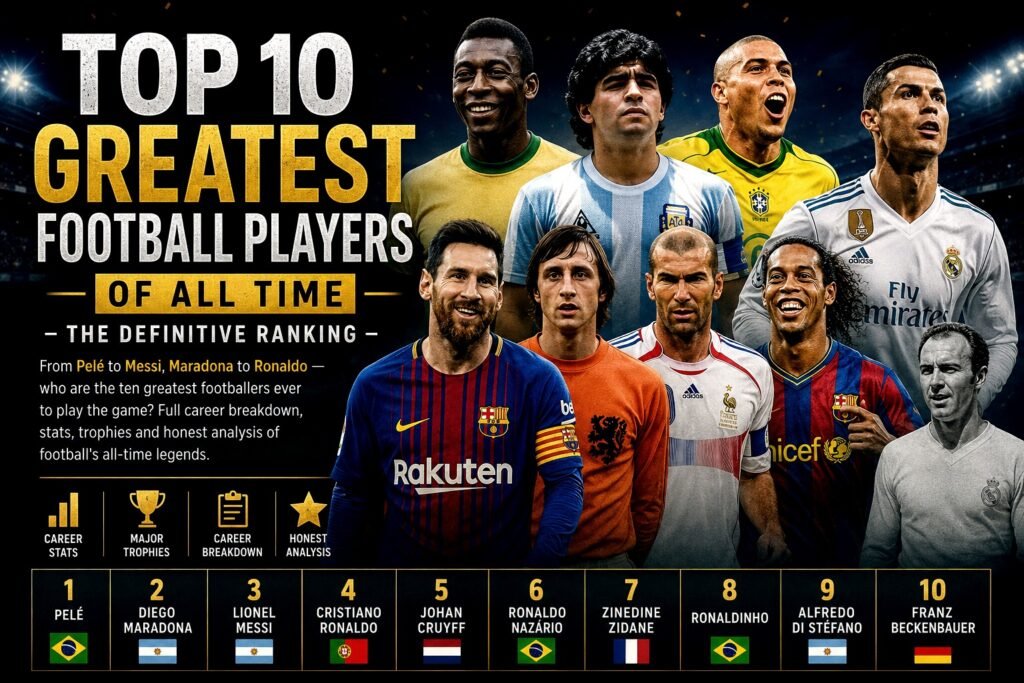
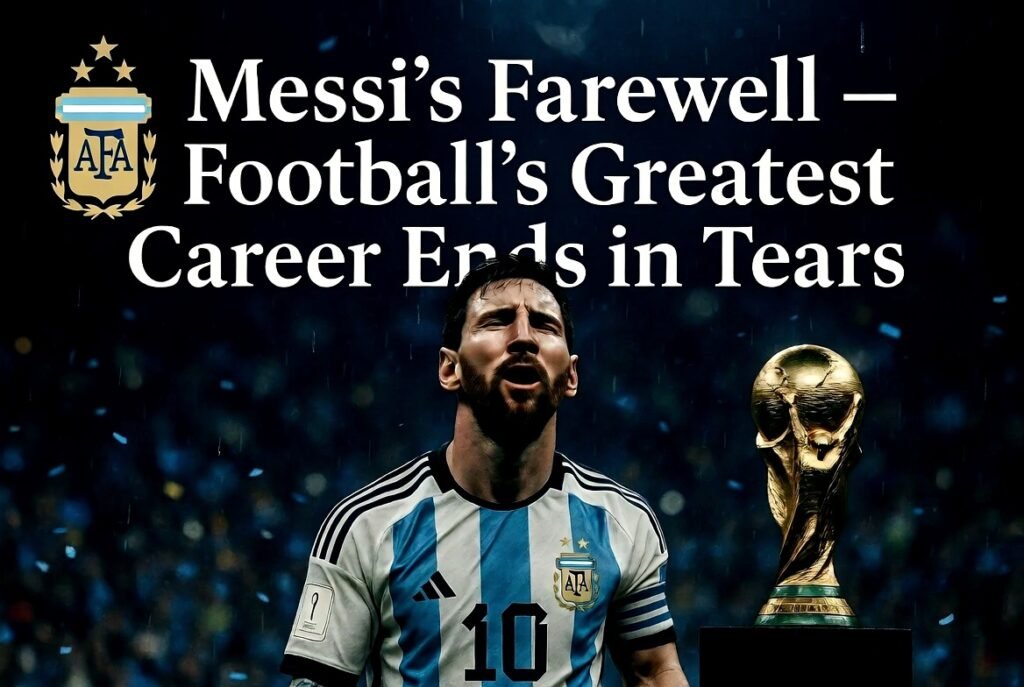
1. Lionel Messi (Argentina). Nine Ballon d’Or awards. One World Cup title (2022). 21 career World Cup goals — the all-time record until Mbappé overtook him at 22 in the third-place match of the 2026 tournament. Two Copa América titles. Four Champions League titles. Twelve La Liga titles. The most decorated individual in the history of football. At 39, playing in his sixth World Cup in 2026, scoring eight goals and providing four assists in seven matches before Argentina lost the final to Spain. The greatest football player who has ever lived by any comprehensive measure of the sport.
2. Pelé (Brazil). Three World Cup titles — 1958, 1962, 1970. Twelve World Cup goals. The first global football superstar. Scored two goals in the 1958 World Cup final at seventeen years old — the youngest scorer in a World Cup final in history until records were broken in subsequent tournaments. The defining player of football’s first truly global era.
3. Diego Maradona (Argentina). One World Cup title (1986). One Golden Ball (1986). The most naturally gifted footballer who ever lived. His 1986 World Cup campaign — five goals and five assists in six matches, single-handedly carrying Argentina to the title — is the greatest individual tournament performance in the history of the competition. The Hand of God goal and the Goal of the Century, scored four minutes apart against England in the quarterfinal, remain the two most discussed goals in football history.
4. Johan Cruyff (Netherlands). Three Ballon d’Or awards. Three consecutive European Cups with Ajax (1971, 1972, 1973). World Cup runner-up (1974). The inventor of Total Football — the tactical philosophy that transformed how the game was understood and played. As a manager at Barcelona, he created the La Masia philosophy that produced Pep Guardiola and eventually Lionel Messi. Without Cruyff, there is arguably no Messi. The most influential footballer in the history of the sport.
5. Zinedine Zidane (France). One World Cup title (1998). One European Championship (2000). Three FIFA World Player of the Year awards. The most elegant player the game has ever produced — his Marseille roulette turn is the most replicated skill in the history of football coaching. Three Champions League titles as manager (2016, 2017, 2018) — the only manager to win three consecutive European Cups.
6. Ronaldo Nazário (Brazil). Two World Cup titles (1994 as squad member, 2002 as leading scorer). Fifteen World Cup goals — a record that stood until Messi broke it. Two FIFA World Player of the Year awards. The greatest striker of his generation, whose career was interrupted by serious injury before he came back to win the 2002 World Cup with eight goals in seven matches. One of sport’s great comeback stories.
7. Cristiano Ronaldo (Portugal). Five Ballon d’Or awards. Five Champions League titles. 137 international goals for Portugal — the men’s international football scoring record. 22 career World Cup goals following the 2026 tournament — the all-time record. Six World Cup appearances. One European Championship (2016). The most statistically prolific international footballer in the history of the sport.
8. Franz Beckenbauer (West Germany). Won the World Cup as both player (1974) and manager (1990) — the only person in history to achieve this feat. Two European Championship titles. Three consecutive European Cups with Bayern Munich. The inventor of the modern libero position — the first defender to systematically initiate attacks from deep positions.
9. Gerd Müller (West Germany). One World Cup title (1974). Fourteen World Cup goals — including ten in the 1970 tournament, the most by any player in a single World Cup edition. The most ruthlessly efficient finisher in the history of the game — his goals-per-game ratio at the World Cup is unmatched by any other player in the competition’s history.
10. Kylian Mbappé (France). One World Cup title (2018). Golden Boot winner at the 2022 and 2026 World Cups. 22 career World Cup goals — the all-time men’s record following his two goals in the 2026 third-place match. At 27, he is the most certain future occupant of the number one position on this list once Messi formally retires from the game.
Part 8 – Best Football Managers of All Time
If the greatest players debate never ends, the greatest managers debate never even fully starts — because the criteria for managerial greatness are harder to define than for players. Is it trophies? Is it the style of football they produced? Is it transformation — taking a club or a team nobody expected anything from and making them into champions?
All of those criteria matter. Here are the ten greatest football managers in the history of the sport.
Sir Alex Ferguson (Scotland). Thirteen Premier League titles. Two Champions League titles. Five FA Cups. One Club World Cup. Thirty-eight trophies in total across his career, including his time at Aberdeen before joining Manchester United in 1986. His longevity at the top of the game — Manchester United were in contention for major trophies for twenty-seven consecutive years under his management — is without precedent in the history of football management. He is the benchmark against which every other manager is measured.
Pep Guardiola (Spain). Two Champions League titles with Barcelona. Three Bundesliga titles with Bayern Munich. Six Premier League titles with Manchester City. More than thirty trophies across his managerial career. His influence on how football is played and taught — positional play, high pressing, goalkeeper-initiated build-up — has transformed the tactical landscape of the sport more comprehensively than any other manager of his era.
José Mourinho (Portugal). Two Champions League titles — with Porto (2004) and Inter Milan (2010). Eight different domestic league titles across four countries (Portugal, England, Italy, Spain). The only manager to win the Champions League with two different clubs outside the traditional European elite. His management of defensive organisation, of tactical discipline, and of the psychology of big-game football is the most studied in the history of the profession.
Johan Cruyff (Netherlands). One Champions League title with Barcelona (1992). Four Spanish league titles. His Catalan side — the Barcelona Dream Team of the late 1980s and early 1990s — redefined how attacking football could be played at the highest level and established the Barcelona philosophy that continues to this day.
Carlo Ancelotti (Italy). The only manager to win the Champions League with three different clubs — AC Milan (2003, 2007), Real Madrid (2014, 2022, 2024). Five Champions League titles in total as a manager. One of the great tacticians of the modern era and the most successful manager in the history of Real Madrid.
Didier Deschamps (France). Won the World Cup as a player (1998) and as a manager (2018). Runner-up as manager in 2022. Three consecutive World Cup final appearances as manager with France — a feat matched only by the great Brazil managers of the 1950s and 1960s.
Arrigo Sacchi (Italy). No professional playing career above amateur level — a fact that makes his management of AC Milan in the late 1980s even more extraordinary. Two consecutive European Cups (1989, 1990). His 4-4-2 pressing system, built on collective pressing, zonal marking and high defensive lines, was the most influential tactical development in football between Cruyff’s Total Football and Guardiola’s positional play.
Bob Paisley (England). Three European Cups with Liverpool (1977, 1978, 1981). Six First Division titles. The most decorated manager in Liverpool’s history and one of the most trophy-laden managers Britain has ever produced. His nine years in charge at Anfield produced an extraordinary period of sustained success.
Helenio Herrera (Argentina/Spain). Two European Cups with Inter Milan (1964, 1965). The pioneer of modern tactical football in Italy — his Grande Inter side of the mid-1960s was built on physical conditioning, collective pressing and tactical discipline that was years ahead of its time.
Luis de la Fuente (Spain). Won Euro 2024 and the FIFA World Cup 2026 with Spain in consecutive major tournaments. His Spain side at the 2026 World Cup went through the entire competition without ever conceding from open play and without ever trailing — the most complete tournament performance by any team at a World Cup in the modern era.
Part 9 – Richest Football Clubs in the World 2026
Football is not just the world’s most popular sport — it is also one of the world’s most valuable industries. The financial landscape of top-level football is dominated by a small number of European clubs whose revenues, brand values and global commercial operations have grown to a scale that was unimaginable even twenty years ago.
Based on the Deloitte Football Money League 2026 report, which covers financial data from the 2024-25 season, the top twenty clubs generated a collective record of €12.4 billion — an eleven percent increase from the previous year.
Real Madrid are currently the highest-earning football club in the world, having surpassed the €1.16 billion revenue mark in a single season according to the 2026 Deloitte Money League. Their revenue comes from three primary streams: commercial income from their global sponsorship portfolio, broadcasting revenue from their La Liga and Champions League participations, and matchday revenue from the renovated Santiago Bernabéu. Their Champions League success — fifteen titles in total, with Carlo Ancelotti having won his fifth in 2024 — makes them the most commercially valuable football club on the planet.
Manchester City sit second in the revenue rankings, with their sustained Premier League success, Champions League participation and Abu Dhabi-backed commercial partnerships producing revenues that approach Real Madrid’s total. Their recent Premier League dominance — six titles in eight years — has significantly expanded their global fanbase.
FC Barcelona remain in the top three despite the financial difficulties they faced in the early 2020s, which forced significant restructuring. The Camp Nou renovation, completed in 2024, has increased their matchday revenue capacity substantially. Their commercial brand — built around the Messi era that has now formally concluded — remains one of the most recognised in global sport.
Manchester United, Liverpool, Bayern Munich, Paris Saint-Germain, Chelsea, Arsenal and Tottenham Hotspur complete the top ten. The English Premier League’s dominance in this list reflects the extraordinary value of its domestic and international broadcasting rights — distributed across twenty clubs, these rights give every Premier League club a significant financial advantage over clubs in most other European leagues.
Part 10 – Highest Paid Footballers in 2026
Beyond clubs, individual footballer earnings have reached a level in 2026 that would have seemed impossible even a decade ago. The combination of club salaries, image rights, endorsement deals and business interests has made the very top of world football one of the most financially lucrative environments in professional sport.
Cristiano Ronaldo remains the highest-paid footballer on the planet. The Al-Nassr superstar earns €207 million per year, far surpassing every other active player. His total compensation includes his club salary, a reported equity stake in the club, and his CR7 brand operations — fragrances, gyms, hotels, real estate, and a social media presence of over 660 million Instagram followers that functions as its own commercial engine. Even at 41, Ronaldo remains the highest-paid athlete in the world by most measures.
Lionel Messi continues to rank among the world’s wealthiest footballers despite playing in Major League Soccer with Inter Miami. His fortune comes from his Inter Miami contract, his lifetime Adidas partnership, revenue-sharing agreements, endorsements and investments in hospitality and real estate. His 2026 World Cup campaign — eight goals in seven matches, the all-time scoring record, the Golden Boot — has only strengthened the commercial value of his personal brand in what is almost certainly the final stage of his playing career.
Kylian Mbappé earns approximately €80-100 million per year at Real Madrid, with additional income from his Nike deal, Hublot, EA Sports, Dior and other premium brands. Experts predict he will become football’s first billionaire player within the next decade based on his current commercial trajectory.
Erling Haaland (Manchester City), Mohamed Salah (Liverpool), Harry Kane (Bayern Munich), Jude Bellingham (Real Madrid), Vinicius Jr (Real Madrid) and Kevin De Bruyne (Manchester City) round out the highest earners in European club football, each earning between €20-40 million annually in salary alone before accounting for commercial income.
The Saudi Pro League’s impact on footballer wages deserves specific mention. The arrival of Ronaldo at Al-Nassr in January 2023 began a period of significant Saudi investment in world-class playing talent. Riyad Mahrez earns €55 million annually at Al-Ahli. Karim Benzema earns €53 million at Al-Hilal. The Saudi Pro League has normalised €50 million-plus annual salaries at a level below the very top tier and has forced European clubs to increase wages to retain their best players — raising the overall salary floor across elite football significantly.
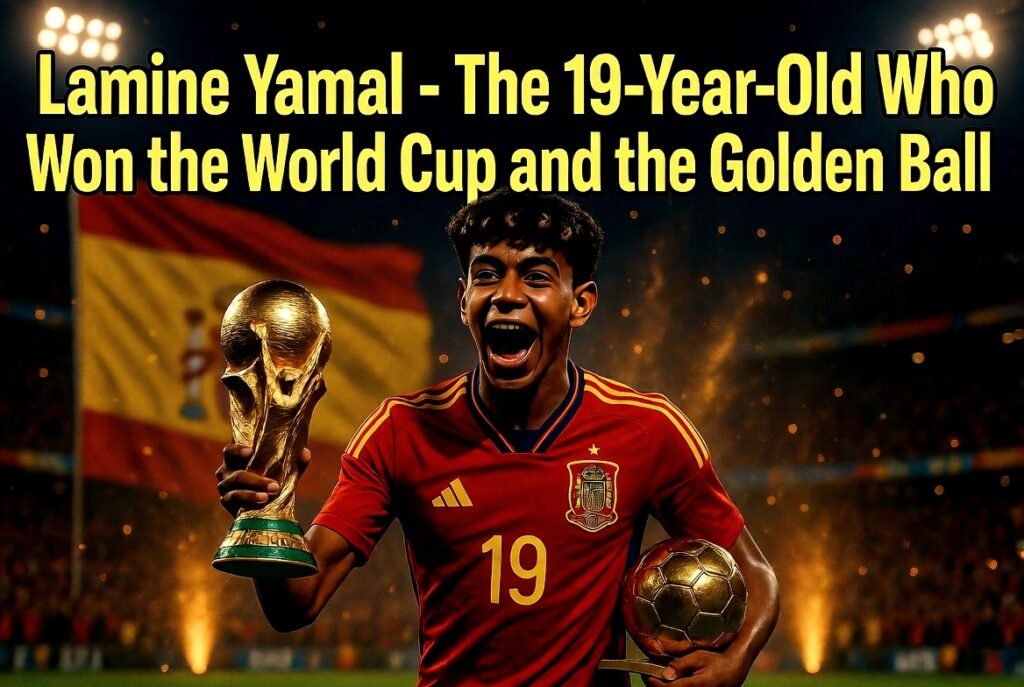
The next generation of players is already building wealth at an extraordinary pace. Lamine Yamal’s commercial value has risen dramatically following the 2026 World Cup — his Nike deal, his social media presence and his Golden Ball have made him one of the most commercially sought-after athletes in the world at nineteen years old. Analysts predict his commercial earnings could reach €30-40 million annually by his mid-twenties if he continues to perform at the level he demonstrated at this World Cup.
Conclusion – Why Football Will Never Stop Mattering
After everything in this guide — the history, the rules, the players, the managers, the stadiums, the clubs, the money — there is one question that sits underneath all of it: why does football matter so much?
The answer is not the money. The money is a consequence, not a cause. Real Madrid earning over a billion euros in revenue is a result of football mattering enormously to an enormous number of people — it does not explain why.
The answer is not the rules. Understanding how the offside rule works does not make you care about football. You understand the offside rule because you already care.
The answer is something much simpler and much harder to quantify. Football is the most accessible form of organised competition in human history. A ball, a flat surface and two people willing to play — that is all it has ever required. And from that simplest possible starting point, it scales all the way up to 82,500 people at MetLife Stadium watching Spain beat Argentina in a World Cup final, to Messi crying on the pitch in what is almost certainly his last competitive match, to a nineteen-year-old from Barcelona named Lamine Yamal lifting the World Cup trophy six days after his birthday.
The same game. The same basic rules that the Football Association wrote in a London pub in 1863. The same round ball. The same goals at each end. Whether it is played on a beach in Morocco or at the Estadio Azteca or in the street outside a school in Rosario, Argentina — it is recognisably, fundamentally, beautifully the same game.
That continuity — across 163 years of organised history and thousands more years of humans kicking balls around — is what makes football the sport it is. Not the biggest salaries or the most expensive clubs or the greatest players or the most iconic stadiums. All of those things are real and worth celebrating. But underneath all of them is the simple, universal fact that football is the one language the entire world speaks fluently.
And in 2026, at MetLife Stadium in New Jersey, the world spoke it one more time in the way that only a World Cup final can make it speak — all at once, all together, in the most emotional and irreplaceable way that sport produces.
Official FIFA Link
For the official FIFA World Cup 2026 records, full match history, player statistics and everything from the tournament that just concluded:
FIFA World Cup 2026 Official Website: https://www.fifa.com/en/tournaments/mens/worldcup/canadamexicousa2026/articles/match-schedule-fixtures-results-teams-stadiums
FAQ
Who are the top 10 greatest football players of all time? The top 10 greatest football players of all time are: Lionel Messi, Pelé, Diego Maradona, Johan Cruyff, Zinedine Zidane, Ronaldo Nazário, Cristiano Ronaldo, Franz Beckenbauer, Gerd Müller and Kylian Mbappé.
What is the history of football? Football’s modern form was codified by the Football Association in London on October 26, 1863. However, ball games involving the feet date back to ancient China around 300 BCE. The first FIFA World Cup was held in Uruguay in 1930.
How does the offside rule work in football? A player is offside if they are closer to the opponent’s goalline than both the ball and the second-to-last opponent when the ball is played to them. Being level with the last defender is onside, not offside.
How does the Champions League work? The Champions League uses a league phase where 36 clubs each play eight matches. The top eight advance directly to the Round of 16. Teams finishing ninth to twenty-fourth enter a playoff round. From the Round of 16 onwards it is a two-legged knockout tournament until the single-match final.
What are the richest football clubs in the world in 2026? Real Madrid are the richest football club in the world in 2026 with revenues exceeding €1.16 billion according to the Deloitte Football Money League 2026. Manchester City, FC Barcelona, Manchester United and Liverpool complete the top five.
Who are the highest paid footballers in 2026? Cristiano Ronaldo is the highest-paid footballer in 2026 earning approximately €207 million per year at Al-Nassr. Lionel Messi, Kylian Mbappé, Erling Haaland and Mohamed Salah are among the other highest earners.
What is the difference between football and soccer? Football and soccer are exactly the same sport. Soccer is a British word derived from Association Football that was widely used in the nineteenth century. Americans kept the word soccer to distinguish the sport from American football, while Britain eventually dropped it in favour of football.
What are the best football stadiums in the world? The best football stadiums in the world include Camp Nou (Barcelona), Estadio Azteca (Mexico City), MetLife Stadium (New Jersey), Maracanã (Rio de Janeiro), Signal Iduna Park (Dortmund), Wembley Stadium (London), Allianz Arena (Munich), Old Trafford (Manchester), Santiago Bernabéu (Madrid) and Anfield (Liverpool).
Who is the best football manager of all time? Sir Alex Ferguson is widely considered the greatest football manager of all time — thirteen Premier League titles, two Champions League titles and thirty-eight trophies in total across his career at Manchester United.
How does the FIFA World Rankings system work? FIFA World Rankings are calculated using a points-based system where every international match result earns or costs points based on the result, the importance of the match and the ranking of the opponent. Points from the previous four years are totalled with recent matches weighted more heavily.