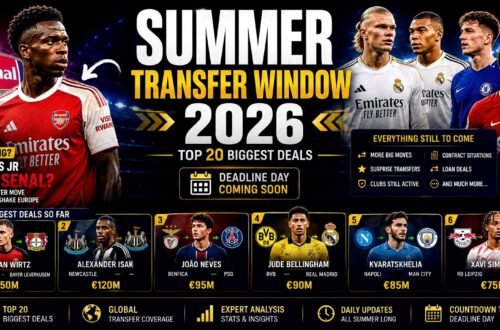
Morgan Rogers joins Chelsea for £117m as the most expensive British player ever. Xabi Alonso building something special at Stamford Bridge. Michael Carrick targeting every trophy at Man United. Tottenham spending £267m. PSG won the Champions League. Everything happening in football right now — July 2026.
The Transfer Window That Never Sleeps
The FIFA World Cup 2026 final was played ten days ago. Spain beat Argentina. Ferran Torres scored in extra time. Messi cried. The world collectively exhaled after six weeks of the most emotionally charged football tournament in history.
And then, almost immediately, something else took over.
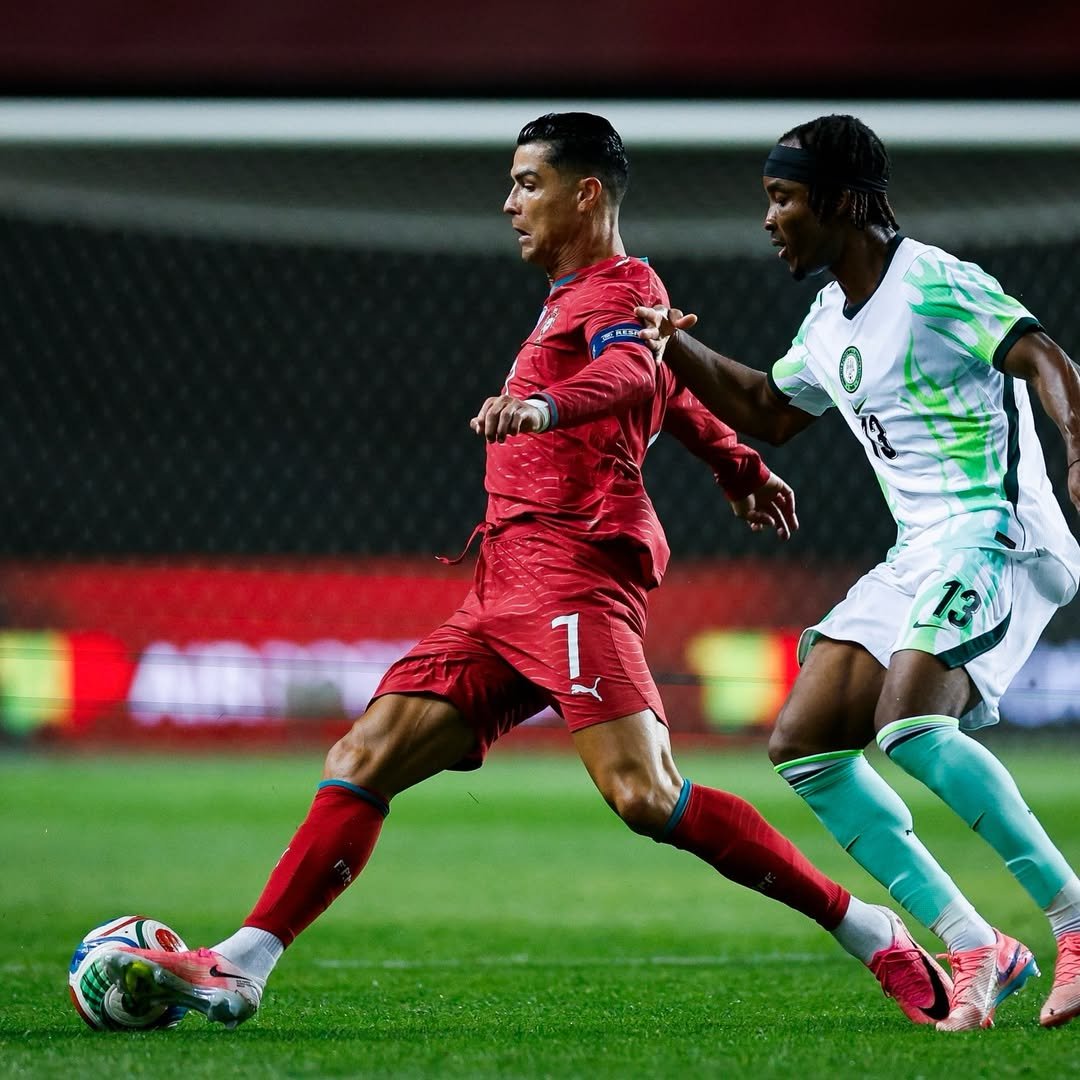
The transfer window does not wait for sentimentality. It does not pause while the football world processes what it just watched. The morning after the final, agents were on calls. Clubs were completing paperwork. Deals that had been agreed in principle weeks earlier — but held back until World Cup players returned from North America — were suddenly moving through their final stages at speed.
What has happened in the ten days since the final is the kind of transfer activity that would normally fill an entire August. Morgan Rogers has become the most expensive British player in football history at £117 million. Xabi Alonso is building something that Chelsea supporters had not dared dream about since Roman Abramovich left the club. Manchester United are back in the Champions League under Michael Carrick and spending aggressively to make their return matter. Tottenham have already committed £267 million to Roberto De Zerbi’s summer revolution. And the Champions League 2026-27 season — with PSG as the reigning European champions and the final already confirmed for Madrid’s Metropolitano Stadium — is beginning to take shape in the background.
This is everything happening in football right now. The stories you need to know. The transfers that matter. The managerial ambitions that will define the 2026-27 season before it has even started.
Chelsea 2026 – Xabi Alonso, Morgan Rogers and the Project That Could Change Everything
The Manager Who Changed the Conversation
When Chelsea appointed Xabi Alonso as their head coach in May 2026, the announcement produced a different reaction from anything the club’s BlueCo ownership era had generated before. Not scepticism. Not the weary resignation of a fanbase that had watched nineteen managers in fifteen years. Something closer to genuine excitement — the kind that comes when a club signs someone who feels categorically different from the options that had come before.
Alonso had won the Bundesliga with Bayer Leverkusen without losing a match. He had then joined Real Madrid’s coaching staff, learning from Carlo Ancelotti at the highest level. At 44 years old, he arrived at Stamford Bridge with a tactical philosophy built around high pressing, positional play and the kind of athletic, intelligent midfield structures he had inhabited as a player at Liverpool, Real Madrid and Bayern Munich.
Chelsea will be without European football in the 2026-27 season — a consequence of their Premier League finish — which means every domestic game and League Cup match carries extra weight. Alonso has been clear about his view of that situation: it is not a disadvantage, it is a focus. A full week between Premier League games, no Thursday Europa League commitments, no squad rotation driven by continental exhaustion. Just Premier League football, every week, with the full preparation time he needs to implement what he is building.
Morgan Rogers — £117 Million, Most Expensive British Player Ever
Chelsea have completed the signing of Morgan Rogers from Aston Villa in a record-breaking £117m deal. Rogers has signed a seven-year deal at Stamford Bridge and becomes the most expensive British player of all time, breaking the record set earlier this summer when Elliot Anderson joined Manchester City for £116m.
The Morgan Rogers transfer is the story of this summer’s window in England. Not just because of the fee — £117 million is an extraordinary number for a 23-year-old who was playing in League One on loan five years ago — but because of what it says about where Chelsea are pointing.
Rogers is not a cautious signing. He is not a safe bet, a reliable squad player, a structural addition that makes the team marginally better in one specific area. He is the kind of player a manager signs when he wants his team to be exciting — creative, direct, capable of producing something from nothing in the moments when tight matches need someone to unlock them.
The 23-year-old forward has signed a contract at Stamford Bridge until 2033 and will join Xabi Alonso’s squad ahead of the 2026/27 season. Rogers arrives at Chelsea having established himself as one of the Premier League’s leading young attacking talents.
The Rogers deal carries a specific backstory that makes it even more interesting. Xabi Alonso’s side managed to complete the blockbuster signing despite interest from Arsenal, who were not prepared to meet Villa’s asking price for the England international. Arsenal wanted him. Chelsea paid what it took to get him. That dynamic — the most expensive British player in history going to the club that was willing to pay while the defending champions blinked — tells you a great deal about where Chelsea’s ambition sits right now.
Rogers completed all his formalities after returning from the World Cup with England, who claimed bronze in the United States after their win over France, having suffered a narrow defeat to Argentina in the semi-finals. Chelsea waited for the tournament to conclude before accelerating their interest in the attacker, who underwent his medical on Monday to finalise his switch to the capital.
His World Cup campaign with England — seven matches, three goals including the brace against Mexico at the Azteca that helped England win their first ever competitive away match at that stadium — elevated his profile beyond anything his Villa form had managed. He arrived at Chelsea as a proven international performer, not just a Premier League talent with potential. The distinction matters when you are spending £117 million.
The Complete Chelsea Summer

Rogers is the headline, but Chelsea’s summer transfer activity under Alonso extends considerably further.
Chelsea have also moved quickly to support Xabi Alonso, signing Morgan Rogers from Aston Villa for €138m and Marco Palestra from Atalanta for €57m, while Geovany Quenda (€50m), Emmanuel Emegha (€25.3m), Denner (€10m) have also arrived.
Marco Palestra from Atalanta at £57 million brings a different profile — a defensive midfielder with the technical quality and positional intelligence that Alonso’s system demands in the middle of the pitch. At Atalanta under Gasperini, Palestra developed into one of Serie A’s most complete box-to-box operators. His arrival gives Alonso the midfield engine that transforms the system from theoretical to functional.
Geovany Quenda is the signing that the football analytics community has been talking about since his name first appeared in Chelsea’s shortlists. The Portuguese teenager — already playing first-team football at Sporting CP at seventeen — is the kind of raw, explosive wide talent that Premier League teams have started targeting at younger and younger ages. He will not be a first-team regular immediately. But in two or three years, if his development continues, he could be the next great Chelsea wide player.
Chelsea raised around £130m from selling players like Marc Cucurella, Andrey Santos and Tyrique George and the sizeable compensation from Man City for poaching Maresca certainly helped too.
The Maresca compensation point is worth noting. Pep Guardiola’s successor at Manchester City — Man City for poaching Maresca from Chelsea without triggering his release clause produced a compensation payment that effectively funded a significant portion of the Rogers signing. Chelsea turned a managerial departure into a transfer budget windfall. The financial structuring of this Chelsea window has been more sophisticated than anything the BlueCo era has previously managed.
Manchester United 2026-27 – Michael Carrick and the Champions League Return
The Manager Who Saved the Club
The 2026-27 season is the 140th season in the history of Manchester United, their 35th season in the Premier League and their 52nd consecutive and 102nd overall season in the top flight of English football. The club will be competing in the Premier League, the FA Cup, the EFL Cup and the UEFA Champions League, making their first appearance in the Champions League since 2023-24. Prior to the season starting, Michael Carrick was appointed as permanent head coach on a two-year contract.
The Carrick story at Manchester United is one of the more unusual managerial narratives in recent Premier League history. He arrived in January 2026 as an interim replacement for Ruben Amorim — who had been dismissed after a difficult first full season that ended with United in mid-table with an incoherent squad and a set of results that had lost the fanbase completely.
Carrick is refusing to temper expectations at Old Trafford, boldly claiming that his United side are ready to compete for “every trophy available” in the 2026-27 season. Having successfully stabilised the ship following the departure of Ruben Amorim, the former England midfielder has been tasked with restoring the Red Devils to the pinnacle of world football.
They moved from seventh in the Premier League table to third in 16 games. That meant United secured UEFA Champions League qualification for the first time since 2023. They moved swiftly to hand Carrick a permanent contract.
From seventh to third in sixteen games. No Premier League manager in the previous three seasons had achieved a table-position reversal of that scale in that number of matches. The club’s resurgence was so impressive that no Premier League team won more games than United’s 12 during his 17-game tenure at the end of last term.
Twelve wins in seventeen games. Those are not statistics that suggest a manager getting lucky with a run of easy fixtures. Those are the numbers of a team that has rediscovered its identity and its intensity under new leadership.
What Carrick Has Said About 2026-27
Carrick targets Premier League and Champions League glory for Manchester United in 2026-27 after signing a permanent two-year contract.
“We know we’ve got what it takes to beat the best teams in this league,” Carrick wrote in a message to fans in the club’s official yearbook. “Now it’s about doing that over a full Premier League campaign, while also fighting for every trophy available to us.”
The language is significant. Carrick is not managing expectations in the way that new managers at Old Trafford have sometimes done — talking about processes, about building blocks, about long-term journeys. He is saying United can win things. Not eventually. Now.
“We have a huge responsibility here to win and play exciting football. That never changes, and we should always be striving to compete for the biggest trophies. There are steps to take, but we are in a good place to take them.”
The counterpoint to that confidence comes from within the game itself. Title-winning former Red Devils defender Pallister told GOAL: “I think a couple of signings can make a huge difference. Do I think they’re in line for a title challenge? My honest opinion at the moment would be no, I don’t think so.”
Both things can be true simultaneously. Carrick sets the aspiration. Pallister provides the historical context. United are better than they were twelve months ago. They are not yet as good as Arsenal or Manchester City. The gap can close. It requires sustained investment and sustained performance across a full season — which is what this summer is designed to begin.
The Transfer Priorities
After a troubling 2024-25 season, 2025-26 restored a semblance of optimism at Manchester United, especially after January saw Michael Carrick replace the much-maligned Ruben Amorim in the dugout. Carrick led United to a third-place finish in the Premier League. But that can’t be the end game. United aspire to return to the glory days of Ferguson’s reign, and to reach the level of the teams actually winning titles, they must keep improving. Recruitment played a considerable role in taking steps forward after 2024-25, and smart decisions in the transfer market will continue to be of fundamental importance.
The story of the day on July 28 for United was a significant pricing obstacle in the search for a Marcus Rashford replacement, with Carrick said to have been informed that the club’s primary winger target in the Premier League — Everton’s Iliman Ndiaye — is valued at around £70m by his current club. The fee is consistent with the market rate being demanded for several high-quality attacking options United have been linked with throughout this window, and United must also fend off Saudi Pro League competition to land the Toffees man.
Iliman Ndiaye at £70 million is the specific transfer story driving United’s window right now. The Senegalese forward — who was one of Everton’s best players at the 2026 World Cup in the group stage before Senegal’s exit — brings pace, directness and the ability to play across the front line that Carrick’s system demands. Whether United can beat Saudi competition for his signature before the window closes on September 1 is the pressing question of the next four weeks.
The Champions League Return
Champions League opposition awaits in pre-season, as August lines the side up against Atletico Madrid and PSG in Sweden, both of which were in the final four of the top European competition this season.
United’s first Champions League campaign since 2023-24 will be confirmed when the league phase draw is made on August 27. Their fixtures will be announced after the league phase draw on 27 August 2026. United will play eight games in the league phase — four at home and four away — against eight different teams.
The draw will determine whether United’s first return to European elite competition under Carrick begins with a manageable set of opponents or lands them immediately against clubs of Real Madrid or PSG’s calibre. Given United’s track record in recent European campaigns, the manner of their return matters as much as the fact of it.
Tottenham Hotspur 2026 – Roberto De Zerbi and £267 Million of Ambition
The Manager, the System, the Vision
Roberto De Zerbi arrived at Tottenham in the summer of 2025 after leaving Brighton, where he had built one of the most admired tactical setups in European football despite operating on a fraction of the budget available to his rivals. His football is distinctive — high pressing, goalkeeper-initiated build-up play, narrow midfield structures that shift and rotate constantly, wide players who cut inside rather than staying wide.
At Brighton, he produced those results with a squad built on smart recruitment and development. At Tottenham — a club with real financial backing, a world-class stadium and an ownership structure that wants European football — the same principles should produce dramatically better results.
Tottenham Hotspur have raced out of the traps this summer, backing manager Roberto De Zerbi with €267million worth of talent. Jan Paul van Hecke (€60m), Sandro Tonali (€108m) and Mateus Fernandes (€99m) have joined Spurs for big fees, while Andy Robertson, Marcos Senesi and Martin Dubravka have arrived on free transfers.
£267 million across three major signings and three free transfers. In terms of single-window investment, this is Tottenham’s most aggressive summer transfer activity since the Daniel Levy era began. It tells you that the ownership has concluded — correctly — that the squad needs wholesale improvement rather than incremental additions.
The Three Big Signings Examined
Sandro Tonali — £108 Million
The most expensive of the three and the most scrutinised given the circumstances of his arrival. Tonali served a ten-month betting ban that ended in early 2026. His return to Premier League football — he had shown at Newcastle before the ban what he was capable of — was always going to generate interest from multiple clubs. Tottenham moved decisively.
The bet Tottenham are making is that Tonali at full health and full motivation — returned from a difficult period, eager to prove himself, playing in a system built by a manager whose style suits him — is the best version of a player who was developing into one of Europe’s most complete central midfielders before his ban interrupted everything.
At £108 million that bet requires him to be exactly that. The downside risk is significant. But the upside — a fully functioning Tonali at the centre of De Zerbi’s midfield — could be one of the most effective individual transfers of the entire summer across all of Europe.
Mateus Fernandes — £99 Million
Tottenham have confirmed the marquee signing of Mateus Fernandes from West Ham. The Portuguese midfielder arrives on a long-term deal until 2031 for a reported fee of 98 million euros.
Fernandes at West Ham had been one of the Premier League’s best midfielders in terms of progressive carrying and chance creation across the last eighteen months. His combination of technical quality and physical intensity is exactly what De Zerbi needs in the central areas of his system — a midfielder who can receive under pressure, turn and drive forward, and maintain the pressing intensity that De Zerbi’s teams need for ninety minutes.
Jan Paul van Hecke — £60 Million
The Dutch centre-back is the less glamorous of the three signings and probably the most immediately impactful in terms of structural improvement. Van Hecke developed under De Zerbi at Brighton into a genuinely elite ball-playing centre-back — comfortable receiving from the goalkeeper, able to carry the ball into midfield, intelligent enough to maintain the high defensive line that De Zerbi’s pressing system requires.
At Tottenham, Van Hecke gives De Zerbi the defensive foundation that his system cannot function without. The progressive carries, the accurate long passes to wide areas, the ability to press the opposition’s striker and recover in time if beaten — these are qualities that you cannot easily find in a transfer market and that cost £60 million when you do.
Free Transfer Additions
Andy Robertson, Marcos Senesi and Martin Dubravka have arrived on free transfers.
Robertson from Liverpool — one of the best left-backs in the world for five consecutive seasons — is the most significant of the free additions. At 32, he is no longer capable of playing every game at the intensity his peak seasons demanded. But as a first-choice left-back for sixty-five or seventy percent of the season, with a younger option covering the rest, he brings a quality and experience to the Tottenham back line that money could not easily buy at a transfer fee.
Can De Zerbi and Tottenham Finally Win Something?
The honest answer heading into 2026-27 is: more likely than at any point in the last fifteen years, but not certain. Tottenham have the squad. They have the manager. They have the investment. What they have not had for a generation is the consistency across a full nine-month campaign that separates Champions League qualification from genuine title contention.
De Zerbi’s first season at the club ended with sixth place and Europa League qualification — an improvement on the previous season but not the statement that the ownership was hoping for. Year two, with £267 million of new arrivals and a squad now built around his specific system rather than inherited from his predecessor, is when the real assessment of his Tottenham tenure begins.
PSG Champions League Winners 2025-26 – How They Finally Won It
The 2025-26 UEFA Champions League: Champions — Paris Saint-Germain (2nd title). Runners-up — Arsenal. Top scorer — Kylian Mbappé (Real Madrid) 15 goals. Best player — Khvicha Kvaratskhelia (Paris Saint-Germain).
Paris Saint-Germain won the Champions League in 2025-26 — their second title and their first since 2021. The final against Arsenal at the Allianz Arena in Munich ended 2-1, with Kvaratskhelia’s second-half goal proving decisive after Arsenal had equalised from Leandro Trossard’s brilliant strike at the hour mark.
For PSG, this title represents the validation of a decade of investment and failure in European competition. They had reached finals before. They had been eliminated at stages where their individual quality should have been decisive. The 2025-26 vintage — built around Kvaratskhelia, Marco Verratti’s replacement in a technically superior midfield, and the tactical structure implemented by their manager after a difficult first season — was the one that finally delivered.
For Arsenal, the final defeat is the latest instalment of a European curse that stretches back to their 2006 Champions League final loss to Barcelona. They were the better team across the first hour in Munich. They led. And then they lost — not through catastrophic defensive failure but through the kind of single moment of individual brilliance that Champions League finals are decided by at the margins between equally good teams.
The 2026-27 Champions League — with PSG defending, Real Madrid always dangerous, Arsenal hungry for redemption, and clubs like Bayern Munich, Barcelona and Manchester City all capable of going deep — is set up to be one of the most open competitions in recent years.
The 2026-27 UEFA Champions League will be the 72nd season of Europe’s premier football tournament. The season will begin on 7 July 2026 with qualifiers and the league phase will start on 8 September 2026. The final will be held on 5 June 2027 at Metropolitano Stadium in Madrid, Spain.
The Metropolitano Stadium in Madrid hosting the final adds a specific layer of significance. Real Madrid — the club that has won the Champions League more than anyone — plays at the Santiago Bernabéu, not the Metropolitano. Atletico Madrid play at the Metropolitano. A Real Madrid Champions League final in Madrid would be played at their city rival’s ground. The narrative possibilities are extraordinary.
The Rest of the Summer Transfer Window – Who Is Still Moving
Real Madrid
Aurelien Tchouameni is poised to commit his future to Real Madrid, though his improved terms are expected to sit just below the €10m mark. The Tchouameni situation has been one of the summer’s longest-running subplots. His contract extension — if confirmed — removes him from the market and keeps one of the best defensive midfielders in the world at the Bernabéu for the foreseeable future.
Real Madrid are also expected to sign Ivory Coast winger Yan Diomande, though they are yet to agree a fee with RB Leipzig. Diomande’s potential arrival would give Carlo Ancelotti — or his successor — another attacking option on the right side to complement Mbappé’s central and left-sided threat.
Bayern Munich
Bayern Munich have signed Nathaniel Brown (€55m) and Ismael Saibari (€55m) following their World Cup exploits for Germany and Morocco respectively.
Two World Cup standout performers going directly to Bayern in the days after the tournament. Brown, the German defender whose performances under Thomas Tuchel’s national team setup drew widespread attention, addresses Bayern’s central defensive succession question. Saibari’s Moroccan performances in the knockouts — before Morocco’s quarterfinal exit to France — made him one of the most watched midfielders of the tournament.
AC Milan
AC Milan have thrown their weight behind new manager Ruben Amorim by signing his compatriot Goncalo Ramos from Paris Saint-Germain for a club record €70m.
Amorim at AC Milan — having left Manchester United after a difficult first full season — brings the same 3-4-3 system he attempted unsuccessfully to implement at Old Trafford. Whether it works at the San Siro depends partly on the players available to him and partly on whether Italian football’s tactical culture is more receptive to his philosophy than the Premier League proved to be.
Ramos at €70 million is a significant statement. The Portuguese striker — who scored in a Champions League final for Benfica against Manchester City in 2023 — brings the profile of a central striker that Amorim can build his system around.
Newcastle United and the £69.3 Million Outgoing
Newcastle United sold to Barcelona for £69.3m — a record incoming transfer for the Catalan club this summer and a significant outgoing for Newcastle, who have been balancing recruitment with profit and sustainability rules throughout their post-takeover investment period.
The departure — the specific player’s identity was not confirmed in initial reporting — represents Newcastle’s ability to develop and sell players at profit, which is the model that sustains ambitious mid-table-to-European ambition at clubs without unlimited ownership resources.
Arsenal – Defending Champions, European Heartbreak, Ruthless in the Transfer Market
Arsenal enter the 2026-27 season as defending Premier League champions — their first title since 2004 — and as Champions League runners-up after their final defeat to PSG in Munich. The combination of domestic triumph and European near-miss defines exactly where Mikel Arteta’s squad sits: good enough to win the Premier League consistently, not yet the complete machine required to win the Champions League.
The summer transfer business reflects that understanding. Chelsea raised around £130m from selling players including Marc Cucurella — whose departure from Chelsea went to Arsenal as an indirect transfer benefit — while Arsenal themselves have been active on the incoming side.
Manchester City and Arsenal are closely monitoring versatile Brighton midfielder Jack Hinshelwood. Hinshelwood represents the kind of midfield depth addition that Arsenal have been targeting — technically excellent, energetic, and available at a price that does not disrupt the club’s financial planning.
Interest from Arsenal, who were not prepared to meet Villa’s asking price for the England international. Missing out on Morgan Rogers to Chelsea is the one window story that Arsenal supporters will feel most keenly. The player went to a direct rival. The price was not met. Whether that decision to hold firm on valuation rather than match Chelsea’s offer reflects smart financial planning or excessive caution is a debate that will continue if Rogers thrives at Stamford Bridge.
The Complete Transfer Window So Far – July 29, 2026
Here is a summary of the confirmed major deals across Europe’s top five leagues as the window approaches its final five weeks:
England: Morgan Rogers — Aston Villa to Chelsea — £117 million Elliot Anderson — Nottingham Forest to Manchester City — £116 million Sandro Tonali — Newcastle United to Tottenham — £108 million Mateus Fernandes — West Ham to Tottenham — £99 million Jan Paul van Hecke — Brighton to Tottenham — £60 million Marco Palestra — Atalanta to Chelsea — £57 million Geovany Quenda — Sporting CP to Chelsea — £50 million Newcastle United to Barcelona — £69.3 million outgoing
Germany: Nathaniel Brown — to Bayern Munich — £55 million Ismael Saibari — to Bayern Munich — £55 million
Italy: Goncalo Ramos — PSG to AC Milan — £70 million
Spain: Newcastle player — to Barcelona — £69.3 million
Free transfers of note: Andy Robertson — Liverpool to Tottenham Marcos Senesi — to Tottenham Martin Dubravka — to Tottenham
What to Expect Before September 1 – Deadline Day
The transfer window closes on September 1 at 11 PM BST. Five weeks remain. Based on current reporting and the known needs of each club, here is what is still likely to happen before deadline:
Manchester United completing a winger signing — whether Iliman Ndiaye from Everton or an alternative — is the most likely confirmed deal of the remaining window. Their Champions League return without adequate wide options would undermine Carrick’s stated ambitions immediately.
Arsenal making at least one midfield addition to cover the eight-game Champions League league phase alongside Premier League demands. The Hinshelwood interest from Brighton suggests a deal in that area is closer than the current silence from the club suggests.
Chelsea adding to their front line — Alonso has a clear vision of what he wants from his attack, and Rogers’ arrival at number ten does not resolve the centre-forward question that has plagued the club across the BlueCo era.
Real Madrid confirming the Diomande deal from Leipzig and potentially one further addition in central midfield depending on whether Tchouameni’s contract extension is finalised.
Tottenham potentially completing one further signing before the window closes — De Zerbi’s squad is significantly improved but the depth behind the first-choice eleven remains thinner than a genuine title challenge requires.
And across all of it — the specific Deadline Day chaos that produces the deals nobody expected, the loans that fall through at the last minute, the agent-driven signings that arrive at 10:58 PM and fundamentally alter a club’s entire season.
Football never stops. Ten days after the greatest World Cup final in history, the sport has already moved on to its next chapter. And in the Premier League specifically — with Arsenal defending, Chelsea building, United returning, Tottenham spending and Liverpool and City both hungry — the 2026-27 season promises to be the most competitive in years.
Official Links
For the latest confirmed transfers across all European leagues: Sky Sports Transfer Centre: https://www.skysports.com/football/transfers
For the Premier League 2026-27 fixture list and latest news: Premier League Official: https://www.premierleague.com
For Champions League 2026-27 draw, format and schedule: UEFA Champions League Official: https://www.uefa.com/uefachampionsleague
For FIFA World Cup 2026 records and all official tournament data: FIFA Official: https://www.fifa.com/en/tournaments/mens/worldcup/canadamexicousa2026/articles/match-schedule-fixtures-results-teams-stadiums
FAQ
How much did Chelsea pay for Morgan Rogers? Chelsea completed the signing of Morgan Rogers from Aston Villa in a record-breaking £117m deal. Rogers has signed a seven-year deal at Stamford Bridge and becomes the most expensive British player of all time, breaking the record set earlier this summer when Elliot Anderson joined Manchester City for £116m.
Who is Chelsea’s new manager in 2026-27? Morgan Rogers will join Xabi Alonso’s squad ahead of the 2026/27 season. Xabi Alonso, the former Spain and Real Madrid midfielder who managed Bayer Leverkusen, was appointed Chelsea head coach in May 2026.
Is Manchester United in the Champions League 2026-27? The club will be competing in the Premier League, the FA Cup, the EFL Cup and the UEFA Champions League, making their first appearance in the Champions League since 2023-24.
Who is Manchester United’s manager in 2026-27? Michael Carrick targets Premier League and Champions League glory for Manchester United in 2026-27 after signing a permanent two-year contract. Carrick was appointed permanently after guiding United from seventh to third place in seventeen games as interim manager.
How much has Tottenham spent in the 2026 summer transfer window? Tottenham Hotspur have raced out of the traps this summer, backing manager Roberto De Zerbi with €267million worth of talent. Jan Paul van Hecke (€60m), Sandro Tonali (€108m) and Mateus Fernandes (€99m) have joined Spurs for big fees, while Andy Robertson, Marcos Senesi and Martin Dubravka have arrived on free transfers.
Who won the Champions League 2025-26? Paris Saint-Germain won the 2025-26 UEFA Champions League, their second title. Arsenal were runners-up. The best player was Khvicha Kvaratskhelia of PSG.
Where is the Champions League 2026-27 final? The final will be held on 5 June 2027 at Metropolitano Stadium in Madrid, Spain.
When does the Premier League 2026-27 season start? The Premier League 2026-27 season begins on August 22, 2026, one week later than usual to account for World Cup player recovery time. The season ends on May 30, 2027.
When does the summer transfer window close in England? The summer transfer window closes on September 1, 2026 at 11 PM BST. Deadline Day is expected to produce significant last-minute activity across the Premier League’s top clubs.